

AI CERTS
2 days ago
DigitalXForce Reinvents Risk Management With Unified AI Suite
The vendor’s January-to-April releases merge asset discovery, application posture, business resilience, and AI governance. Additionally, it introduced a Digital Score that promises board-ready clarity. This article explores the expansion, market forces, and remaining questions surrounding the bold rollout. Along the way, we examine benefits, limitations, and next steps for mature security teams. Executives seeking effective Risk Management frameworks will find actionable guidance throughout.
Market Forces Converge Now
Global GRC spending is forecast to approach USD 60 billion by 2026, according to Technavio aggregations. Meanwhile, Grand View Research places the narrower AI governance segment near USD 308 million in 2025. Consequently, vendors race to blend compliance, security telemetry, and automation. DigitalXForce enters this contest claiming to be the industry’s first unified ESRM provider. In contrast, hyperscalers like IBM and Microsoft extend platform guardrails rather than full posture coverage.
Specialists such as Credo AI target model explainability but avoid asset discovery work. Therefore, converging demand, regulatory scrutiny, and cost fatigue create space for consolidated suites. These dynamics set the stage for modern Risk Management platform expansion reviewed next. Unified oversight aligns with tightening regulations. Budget holders increasingly favor suites over siloed tools. With context set, we now examine how the vendor rebuilt its architecture.
Platform Expansion Details Unpacked
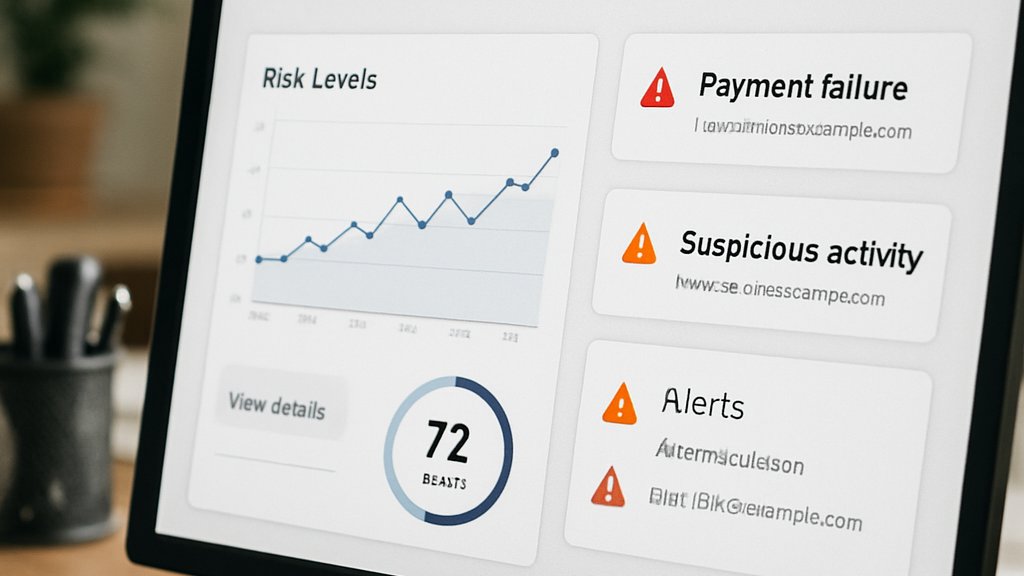
On January 20, the company added CMDB, ASPM, and BCOR modules to its existing engine. The update forms a continuous inventory that maps assets, applications, and dependencies in real time. Additionally, Application Security Posture Management correlates SAST, DAST, and runtime findings with business services. Business Continuity components simulate outages and validate recovery playbooks against service-level targets. Consequently, the platform feeds continuous evidence into automated GRC reporting workflows.
The vendor stresses that a single data model eliminates fragile spreadsheet joins. Nevertheless, integration quality depends on the fidelity of 250-plus supported connectors. Analyst Phil Harris notes the approach accelerates results while simplifying operation. The expansion unifies inventory, posture, and continuity within one console. However, connector completeness will decide real-world accuracy. Next, we explore the Risk Management scoring layer built atop these feeds.
Digital Trust Score Explained
Released February 6, Digital Trust Score positions itself as a cybersecurity analogue to consumer credit ratings. The metric merges security posture, compliance status, third-party exposure, and operational resilience into one number. Moreover, the X-ROC engine recalibrates the score whenever telemetry shifts. In contrast, critics like Brian Krebs warn that oversimplified scoring can obscure nuanced control gaps.
Nevertheless, early customers cite reduced presentation time during quarterly audit committees. Consequently, the score may thrive as a Risk Management communications aid rather than a definitive assurance stamp. Digital Trust Score simplifies board dialogue. Yet, transparency questions persist among independent observers. Governance modules aim to strengthen that credibility, as discussed next.
AI Governance Module Depth
The AI-focused bundle inventories every model, dataset, and pipeline across the enterprise. Subsequently, guardrails enforce deployment policies aligned with NIST AI RMF guidance. Bias, drift, and lineage metrics feed the continuous scoring logic. Furthermore, AI Risk Watch correlates threat intelligence with model behaviour anomalies. The vendor claims these controls help regulated sectors advance proactive Risk Management for forthcoming EU and U.S. rules. TRiSM principles—trust, risk, security management—underpin the workflow design.
Moreover, evidence collected here auto-populates broader GRC dashboards. Independent validation of model guardrails remains limited until regulators finalize audit criteria. The module links AI controls to enterprise oversight by design. However, external certification frameworks are still maturing. Competition will influence whether buyers accept this integrated approach.
Competitive Landscape Snapshot Today
IBM, Microsoft, Google, and AWS each promote responsible AI services but stop short of unified ESRM scope. Meanwhile, OneTrust and Credo AI specialize in governance policy engines. Security rating incumbents BitSight and SecurityScorecard focus on external scanning rather than internal telemetry. Consequently, tool sprawl persists for many enterprises.
The vendor seeks differentiation through its single data model and continuous Digital Trust Score for holistic Risk Management. Nevertheless, buyers must weigh lock-in, pricing, and integration overhead. Independent analysts advise pilot projects before broad adoption. No provider yet covers every lifecycle requirement perfectly. Therefore, comparative testing remains essential. The next section outlines evaluation questions to guide those tests.
Key Buyer Considerations Checklist
Procurement teams should approach platform claims with structured criteria. Below is a concise checklist informed by TRiSM and NIST guidance.
- Validate connector coverage against your asset and application inventories.
- Request Digital Trust Score methodology, weighting, and dispute process documentation.
- Assess AI guardrails alignment with forthcoming EU AI Act provisions.
- Demand quantified savings in audit hours or mean-time-to-recover.
- Compare total cost of ownership versus modular GRC alternatives.
Effective Risk Management hinges on clear ownership of each checklist domain. Professionals can enhance their expertise with the AI Security Compliance™ certification. Additionally, certification signals due diligence when presenting platform proposals to finance committees. TRiSM thinking encourages mapping each checklist item back to measurable business outcomes. A disciplined checklist reduces procurement surprises. Consequently, teams secure faster board approval. We close by summarizing strategic implications.
Conclusion And Strategic Outlook
Unified Enterprise Security and Risk Management platforms are gaining momentum amid regulatory complexity and budget scrutiny. The vendor has delivered a comprehensive vision that resonates with consolidation trends. However, transparent scoring methodologies and connector fidelity remain decisive success factors. Moreover, buyers must verify that AI guardrails satisfy forthcoming regional mandates.
Nevertheless, early adopters report shorter audit cycles and clearer board conversations. Consequently, interest should accelerate as market education grows. Leaders evaluating next-generation Risk Management should combine the provided checklist with independent pilots. Explore the linked certification to strengthen internal capabilities and position your team for resilient growth.
Disclaimer: Some content may be AI-generated or assisted and is provided ‘as is’ for informational purposes only, without warranties of accuracy or completeness, and does not imply endorsement or affiliation.


