

AI CERTS
2 days ago
Hugging Face App Store Reshapes the Robotics Ecosystem
Moreover, it signals an open challenge to closed industrial incumbents. This article unpacks the platform’s mechanics, market implications, and looming security questions for professionals.
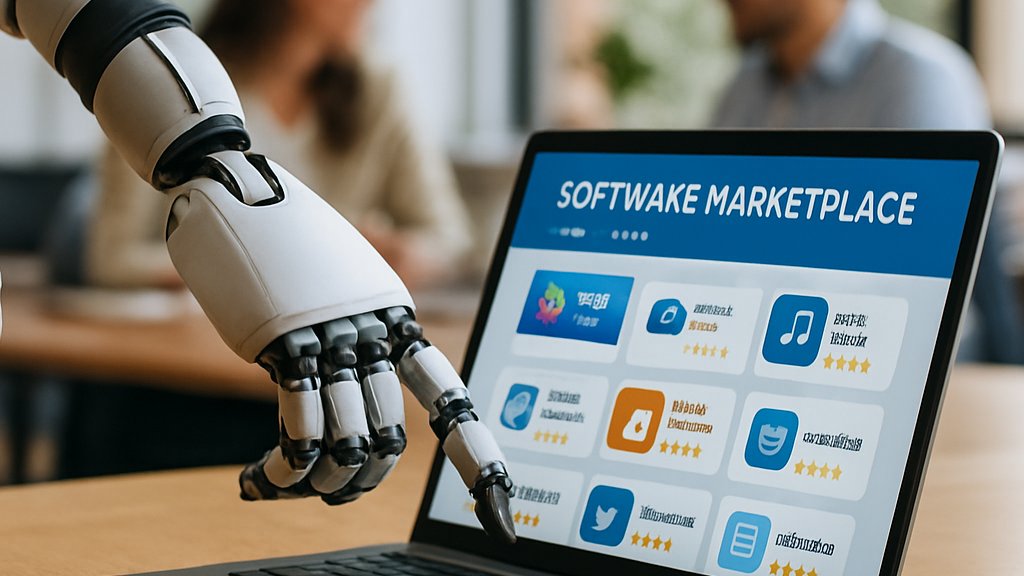
Meanwhile, market research already values consumer Robotics at over $18 billion, with double-digit CAGRs ahead. Therefore, whoever shapes distribution layers could shape returns across the entire stack. Understanding this shift is crucial for engineers, investors, and policy leaders navigating the next decade.
Robotics Ecosystem Shift Accelerates
Global consumer robot shipments keep rising, yet software flexibility long lagged behind hardware advances. In contrast, phone platforms proved that marketplaces multiply value for end-users and creators alike. Now, an analogous dynamic is unfolding in the Robotics Ecosystem as multiple vendors race to host skills.
HF reports 10,000 Reachy Minis shipped or booked, demonstrating early hardware traction. Furthermore, more than 200 community apps already populate the App Store, authored by 150 creators. These figures, though small beside smartphones, still hint at compounding network effects.
Adoption numbers validate market appetite for modular robot skills. However, platform architecture explains why momentum might accelerate further.
Inside Hugging Face Platform
The new App Store lives entirely on the HF Hub and Spaces infrastructure. Consequently, every app remains an Open Source repository that anyone can fork, audit, or extend. Developers push code, documentation, and simulator assets the same way they publish language models. Meanwhile, end-users browse thumbnails, read READMEs, and click install to flash behaviors onto Reachy Mini. Monetization is absent today; nevertheless, Hugging Face pledges no 30-percent gate if payments eventually arrive.
App Store Mechanics Explained
ML Intern, the agentic assistant, sits at the heart of the workflow. Users describe tasks in English, for example, “track my dog and wave.” Subsequently, the agent writes Python, tests in browser simulation, and packages an installable app. Therefore, non-programmers quickly convert ideas into tangible motions without touching firmware. Additionally, the simulator supports people lacking hardware, expanding contributor pools globally. The Robotics Ecosystem benefits because learning cycles shorten and creativity compounds across forks. Such ease mirrors early mobile development kits that spawned viral apps within months.
Hugging Face fuses cloud tooling, agentic code generation, and affordable hardware into one coherent pipeline. Next, we explore how this lowered barrier reshapes participation demographics.
Agentic Tools Lower Barriers
Historically, robotics demanded kinematics math, firmware flashes, and expensive bench equipment. Moreover, Reachy Mini’s $299 Lite variant eliminates heavy upfront costs. Consequently, hobbyists, teachers, and even a reported 78-year-old retiree have already published apps.
Open Source assets provide transparent starting points, while the simulator supplies instant feedback loops. In contrast, proprietary industrial arms still require vendor SDK licenses and onsite training. The Robotics Ecosystem thus widens as fresh voices join discussions formerly dominated by PhDs. Consequently, pace of iteration should rise, potentially compressing innovation timelines from years to weeks.
- Reachy Mini units shipped: nearly 10,000, including 3,000 dispatched last week.
- Community apps available: 200 plus, created by over 150 contributors worldwide.
- Price range: $299 Lite model to $449 Wireless version, far below humanoid systems.
Lower prices and code automation together attract previously excluded demographics. However, rising openness also introduces new security and safety responsibilities.
Security And Trust Questions
Robot skills manipulate physical actuators, so malicious code poses tangible risks. Bitdefender researchers recently found Android malware hosted on Hugging Face repositories unrelated to robots. Although those datasets were removed, the episode exposes scanning gaps for executable payloads. Furthermore, no formal vetting yet exists for Reachy Mini apps controlling motors or cameras.
Moreover, the company states that future attestations, automated static analysis, and optional human code reviews are being evaluated. Open Source design eases community audits; nevertheless, most users lack bandwidth to inspect every commit. Consequently, a layered defense combining signatures, sandboxing, and permission prompts appears necessary.
Trust frameworks will decide whether robot marketplaces mature or stall. Subsequently, we examine competing platforms contending for developer mindshare.
Competitive Landscape Heats Up
Unitree launched its G1 Robot App Store months earlier, but focuses on premium humanoids. OpenMind positions a hardware-agnostic catalog, aiming to sidestep fragmentation. Meanwhile, industrial giants like Boston Dynamics still ship closed bundles with high recurring fees. Differentiation centres on openness, pricing, and agentic tooling. The platform leans on Open Source ethos, no proprietary SDK lock-ins, and flexible model choices. In contrast, rivals treat revenue splits and binary distribution as non-negotiable.
- Open Source repos, forkable by anyone, vs closed binaries on rival stores.
- Natural-language ML Intern coding compared with manual C++ SDKs elsewhere.
- Sub-$500 hardware contrasting with multi-thousand humanoid competitors.
These contrasts illustrate divergent philosophies shaping the Robotics Ecosystem future. Market share will likely accrue to platforms offering speed, safety, and fair economics. Therefore, developer incentives deserve closer inspection in the next section.
Outlook For Developers
For creators, early entry into a growing Robotics Ecosystem yields portfolio visibility and community credibility. Moreover, Hugging Face hints at optional monetization tools arriving after usage patterns stabilize. Sustainable income demands clear revenue splits, trusted payment rails, and predictable ranking algorithms. Additionally, cross-hardware portability standards could multiply addressable audiences, similar to web frameworks. Open Source licenses further enable consulting, sponsorships, and enterprise support models.
Professionals can enhance leadership skills through the AI Project Manager™ certification. Such credentials align technical vision with project governance, strengthening bids for funded robotics programs. Consequently, combining community exposure with formal expertise positions developers for emerging chief robot officer roles.
Developer opportunity depends on sustained openness, fair economics, and secure runtime guarantees. Nevertheless, vigilance will remain essential as the platform scales globally.
Conclusion
Hugging Face’s App Store signals an inflection point for the Robotics Ecosystem, marrying cloud workflows with affordable hardware. Moreover, the Robotics Ecosystem now invites teachers, retirees, and startups to publish skills from a web browser. Nevertheless, sustaining that Robotics Ecosystem requires rigorous security, clear monetization, and cross-vendor standards.
Consequently, stakeholders should pilot defense layers today while shaping equitable revenue models. Industry professionals eager to lead should formalize project management mastery through the previously mentioned certification. Act now, experiment, and help define the next decade of democratic robotics innovation. Subsequently, your insights will shape safer, smarter robots for home, lab, and enterprise.
Disclaimer: Some content may be AI-generated or assisted and is provided ‘as is’ for informational purposes only, without warranties of accuracy or completeness, and does not imply endorsement or affiliation.


