

AI CERTS
2 days ago
ZAYA1-8B Showcases Next-Level Hardware Optimization
However, excitement must be balanced with rigorous analysis. This article examines ZAYA1-8B’s architecture, benchmark data, and business impact. Each section highlights concrete facts, limitations, and next steps for technical leaders.
ZAYA1 Model Key Overview
Zyphra positions ZAYA1-8B as a high-density reasoning model. Therefore, only 760 million parameters remain active per token, although the total parameter pool reaches 8.4 billion. ZAYA1 appears four times a month among Hugging Face’s trending repositories, reflecting strong early adoption.
Furthermore, licensing under Apache-2.0 permits commercial use without restrictive clauses. That openness aligns with community expectations for transparent research. Hardware Optimization underpins every published design choice, from routing to attention layers.
These fundamentals establish a flexible foundation. Subsequently, we explore the AMD stack enabling those gains.
AMD Stack Advantage Examined
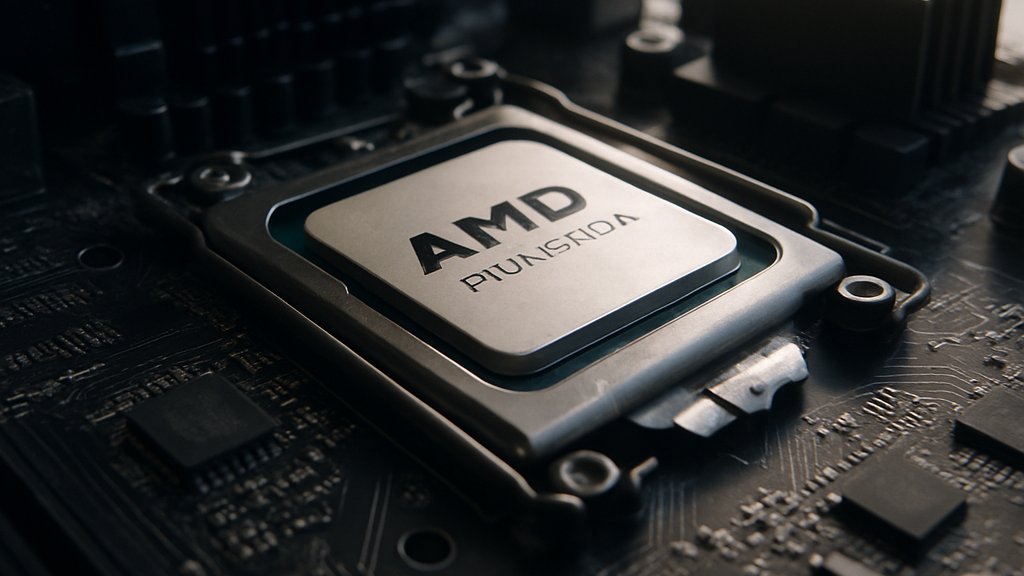
AMD hardware underlies the entire training pipeline. Instinct MI300X accelerators, Pensando Pollara networking, and the ROCm software stack formed a 1,024-node cluster. In contrast, comparable NVIDIA clusters rely on NVLink and CUDA tooling.
Krithik Puthalath states, “ZAYA1-8B demonstrates what is possible when architecture and compute co-evolve.” Moreover, AMD senior vice president Emad Barsoum claims the collaboration proves GPU vendor diversity is now practical.
Consequently, the project highlights Hardware Optimization at infrastructure scale. AMD receives five mentions across press releases, solidifying partner visibility.
These details clarify the physical backbone. Nevertheless, understanding architecture decisions reveals why the model remains efficient.
Mixture Experts Architecture Insights
The model applies a Mixture-of-Experts backbone with a novel MLP router. Consequently, only selected expert sub-networks process each token, slashing inference cost. Compressed Convolutional Attention further cuts memory traffic.
Additionally, Zyphra introduces Markovian RSA test-time compute. The technique prunes older context tokens while retaining recent chain-of-thought fragments. Therefore, reasoning depth increases without ballooning sequence length.
The following list summarizes key architectural levers:
- MoE routing: 2-expert per token gate reduces active parameters.
- CCA layers: 18% lower memory footprint versus standard self-attention.
- Markovian RSA: 6-point average gain on IMO-AnswerBench.
- Active parameter ratio: 760 M active / 8.4 B total.
Each tactic aligns with Hardware Optimization principles. However, quantitative evidence matters, so we next examine benchmarks.
Benchmark Results And Caveats
Zyphra reports strong math and coding scores. AIME ’26 reaches 89.1, while LiveCodeBench-v6 shows 65.8. Moreover, GPQA-Diamond climbs to 71.0.
However, many results depend on Markovian RSA. Independent labs have not yet replicated those numbers. Consequently, caution is advised when comparing against larger closed models.
Despite caveats, Hardware Optimization principles appear validated by energy measurements. Zyphra claims 34% lower inference wattage on MI300X compared with equivalently sized CUDA cards.
These metrics provide an encouraging snapshot. Nevertheless, deployment realities demand equal scrutiny.
Deployment Considerations And Portability
Running ZAYA1-8B requires Zyphra-patched versions of vLLM and Transformers. Consequently, teams must align software dependencies before production rollout. GPU portability remains partially tested because several kernels target ROCm first.
Furthermore, Markovian RSA introduces run-time overhead that may offset latency savings. Optimization experts must weigh trade-offs between accuracy bumps and throughput goals.
Professionals can enhance their expertise with the AI Cloud Specialist™ certification. Moreover, that course covers cluster-level Hardware Optimization patterns directly relevant to AMD deployments.
Portability barriers may shrink as community forks mature. Meanwhile, business leaders assess broader impact.
Business Impact For Developers
Lower active parameters enable edge deployment on 24 GB consumer GPUs. Consequently, ZAYA1 empowers privacy-sensitive workflows without reliance on external APIs.
Moreover, AMD cost advantages could reduce total ownership costs for on-prem clusters. ZAYA1 thus offers a hedge against vendor concentration risks.
In contrast, integration effort might slow adoption timelines. Therefore, project managers should allocate resources for tuning and additional Optimization testing.
These strategic factors inform roadmap decisions. Subsequently, attention turns to independent verification needs.
Future Verification Next Steps
Community members request neutral benchmark runs without Markovian RSA. Additionally, portability testing on NVIDIA GPUs will clarify ecosystem flexibility.
Zyphra promises to publish extended logs, yet timelines remain unconfirmed. Nevertheless, open weights and an Apache-2.0 license enable external replication today.
Hardware Optimization methodologies will mature as more groups audit training data and compute budgets. Moreover, collaborative studies could refine best practices for MoE routing and context truncation.
These steps will strengthen credibility. Consequently, early adopters gain clearer signals for long-term investment.
Conclusion
ZAYA1-8B illustrates what disciplined Hardware Optimization can achieve when paired with AMD’s expanding GPU portfolio. Moreover, Mixture-of-Experts design, Compressed Convolutional Attention, and Markovian RSA together deliver strong math and coding performance. However, independent validation remains essential before definitive judgments. Consequently, technical leaders should pilot the model, collect local benchmarks, and weigh ROI against integration complexity. Professionals seeking deeper skills can, therefore, pursue the linked certification for structured guidance. Act now to harness efficient reasoning models and stay ahead in the evolving AI hardware landscape.
Disclaimer: Some content may be AI-generated or assisted and is provided ‘as is’ for informational purposes only, without warranties of accuracy or completeness, and does not imply endorsement or affiliation.


