

AI CERTS
2 days ago
Philips Titanion Rumors Spark Medical Imaging Debate
This article unpacks the evidence, compares existing platforms, and maps implications for Healthcare stakeholders. Along the way, readers will gain actionable insights into Medical Imaging strategy and certification opportunities. Moreover, quantification trends intersect with AI tools that promise reproducible biomarkers across organs. Regulators, payers, and clinicians increasingly view consistent metrics as critical to value-based care.
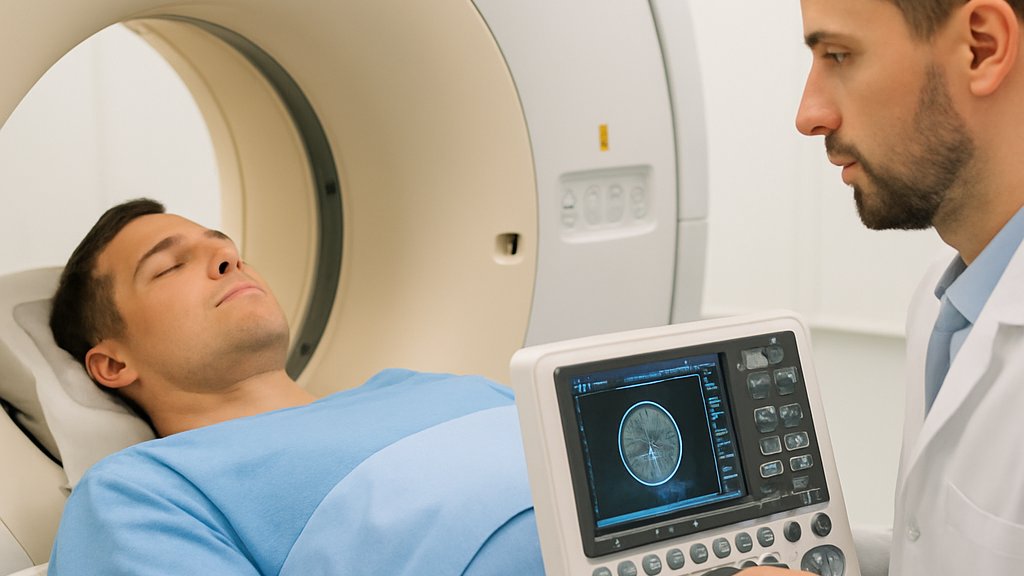
Therefore, any credible launch could signal competitive pressure on incumbents and emerging vendors alike. The following sections dissect context, technology, and next steps. Meanwhile, speculation also underlines the perpetual naming confusion plaguing fast-moving scanner portfolios. Accurate information remains paramount for investors tasked with forecasting capital equipment cycles.
Whole Body Imaging Demand
Whole-body quantification once belonged solely to research facilities. However, reimbursement shifts and oncology pathways now drive broader adoption across routine Medical Imaging workflows. Clinicians request scans that measure fat infiltration, fibrosis, and micro-vascular perfusion in one session. Consequently, vendors race to integrate multiparametric sequences and embedded AI analytics.
Market data from Signify Research forecasts 8% compound annual growth for quantitative MRI segments through 2028. Moreover, hospital groups align these purchases with enterprise Imaging platform refresh cycles. Such timing minimizes disruption and maximizes capital efficiency. Investors track Medical Imaging equipment cycles to forecast margin impact.
Demand trends confirm the commercial opportunity for scalable whole-body solutions. However, uncertainty remains regarding the rumored Titanion launch window. The next section examines what Titanion may actually represent.
Philips Titanion Concept Analysis
Public filings list no Philips product named Titanion. Additionally, patent searches show no application combining those exact terms. In contrast, Philips markets the Ingenia, Ambition, and Spectral MR series emphasizing quantitative accuracy. Therefore, observers suspect Titanion is either misreported branding or an internal development codename.
Canon's Vantage Titan family further complicates the narrative because journalists sometimes conflate vendor lineages. Nevertheless, sources close to Philips deny any cross-licensing with Canon on this front. Meanwhile, trademark databases contain a dormant "Titanion" listing filed by an unrelated materials manufacturer.
Competing Scanner Landscape Overview
GE's SIGNA Premier and Siemens' Vida Fit already market integrated whole-body quantitative packages. Furthermore, Canon positions Vantage Galan as a lower-cost alternative with similar mapping options. These entrants intensify competition and pressure every vendor to accelerate roadmaps.
Evidence suggests Titanion currently lacks formal regulatory documentation. Consequently, commercial release this year appears improbable. Next, we explore quantification technology that any future platform must incorporate.
Quantitative MRI Technology Advances
Quantitative MRI converts signal intensity into reproducible numerical maps. Furthermore, vendors employ multi-echo acquisitions, T1/T2 mapping, and diffusion models to enable organ-wise characterization. Philips implements these methods through its Smart Quant technologies integrated into the Ingenia Elition platform. Moreover, deep-learning reconstruction decreases noise and improves resolution without prolonging table times.
Such innovations illustrate Medical Imaging's pivot toward objective, data-rich reports. Academic studies report coefficient-of-variation reductions of up to 30% when AI-enhanced protocols replace conventional sequences. Subsequently, radiologists can monitor subtle therapy responses earlier, often before anatomical change appears. These capabilities align with precision Healthcare initiatives seeking efficient outcome measures.
Key quantitative biomarkers gaining traction include:
- Proton density fat fraction (PDFF) for liver steatosis
- Extracellular volume (ECV) for cardiac fibrosis
- Apparent diffusion coefficient (ADC) for tumor cellularity
- R2* mapping for iron overload
Quantitative advances create a foundation that any Titanion concept must satisfy. Therefore, technical feasibility rests on integrating fast mapping, AI reconstruction, and robust calibration. Yet, technology alone cannot drive adoption without clear regulatory and market pathways.
Regulatory And Market Uncertainty
Medical device regulators expect explicit evidence that quantitative maps improve clinical decision making. However, accepted endpoints vary between liver disease, neurology, and musculoskeletal indications. Consequently, vendors submit multiple 510(k) updates or CE extensions as new sequences mature. Philips recently secured FDA clearance for MR Touch liver stiffness mapping, reflecting this incremental pathway.
Meanwhile, capital budgets tighten amid broader Healthcare cost containment mandates. Hospitals prioritize systems offering cross-departmental use to justify expenditure. Therefore, whole-body platforms must demonstrate versatile productivity rather than niche performance.
Regulatory timelines and budgetary caution could delay any new Medical Imaging flagship. Nevertheless, first movers with clear value propositions can still capture share. The following recommendations outline strategic responses for stakeholders.
Strategic Recommendations For Stakeholders
Stakeholders should prepare scenario plans covering both genuine Titanion release and continued status quo. Moreover, technology buyers can negotiate conditional pricing tied to future software unlocks. Investors might monitor supply-chain filings to spot early manufacturing signals. Effective Medical Imaging programs balance people, process, and platforms.
Recommended immediate actions include:
- Audit existing MRI fleet for quantitative upgrade compatibility
- Train radiographers on reproducible acquisition workflows
- Pursue collaborative studies that link biomarkers with clinical outcomes
Certification Pathways For Professionals
Workforce capability directly influences quantitative program success. Consequently, managers should budget for structured courses that pair physics foundations with AI applications. Certification also signals commitment to quality during vendor negotiations.
Additionally, professionals can deepen expertise through targeted education. For example, they can earn the AI+ Healthcare Specialization™ to master AI-driven Imaging analytics.
Proactive planning mitigates risk and positions organizations to capitalize on Medical Imaging innovation. Therefore, readiness remains essential regardless of Titanion's fate. The concluding section distills the article's core insights.
Rumors of a next-generation scanner sparked valuable discussion despite limited evidence. Our analysis shows expanding demand for whole-body quantitative MRI and robust regulatory expectations. Moreover, competing systems already address many clinical requirements. Therefore, hospitals should refine procurement strategies while monitoring official Philips announcements. Meanwhile, professionals can build skills through recognized programs such as the previously mentioned AI certification. Staying informed empowers stakeholders to seize upcoming Medical Imaging opportunities. Act now to evaluate assets, educate teams, and maintain competitive advantage.
Disclaimer: Some content may be AI-generated or assisted and is provided ‘as is’ for informational purposes only, without warranties of accuracy or completeness, and does not imply endorsement or affiliation.


