

AI CERTS
5 days ago
Europe’s AI Cyberattack Blind Spot Demands Urgent AI Training for Businesses
This is not just a cybersecurity issue. It is a skills and preparedness crisis. And it signals one clear need; AI training is a must.
Businesses Are Losing Visibility Over AI Threats
There’s a troubling gap in organizational awareness. Around 35% of European organizations cannot even confirm whether they have been targeted by AI-powered cyberattacks.
This lack of visibility is alarming. It means attacks may already be happening without detection, allowing vulnerabilities to persist and escalate. At the same time, 71% of professionals say AI-driven phishing and social engineering attacks are becoming harder to identify, while trust in traditional detection systems is declining.
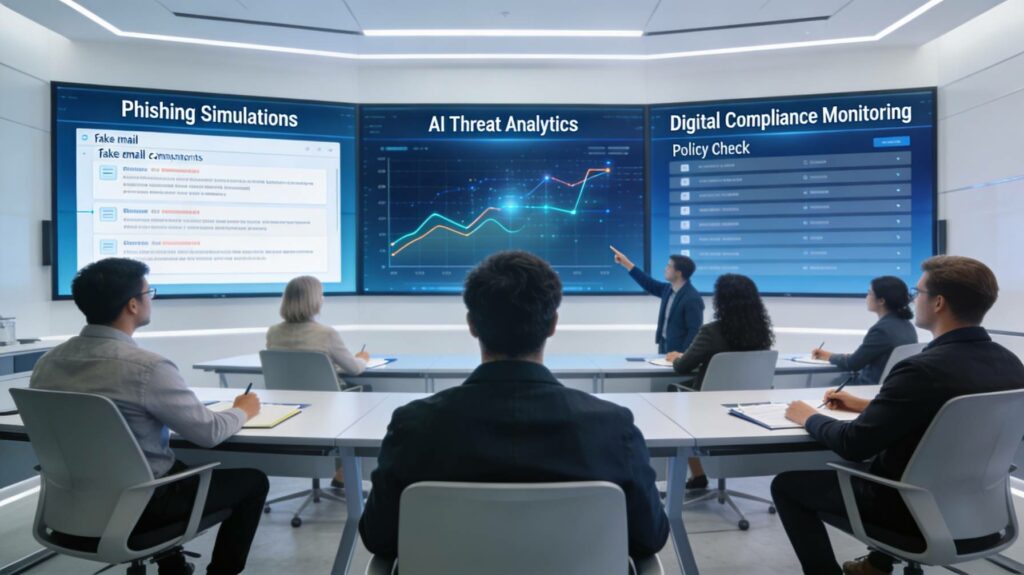
The broader landscape reinforces this concern. Recent reports show that AI is accelerating the speed and complexity of cyberattacks, making them harder to respond to in time.
Even more concerning is the preparedness gap. Only a small percentage of organizations feel fully equipped to manage AI-related risks, despite recognizing them as a top threat.
This combination of rising threats and low readiness is creating a dangerous imbalance.
The Reality: AI Is Changing Cybersecurity Faster Than Companies Can Adapt
The fundamental challenge is that AI is evolving faster than organizational capabilities. Attackers are leveraging AI to automate phishing, generate deepfakes, and exploit vulnerabilities at unprecedented speed.
For example, recent findings show that AI can accelerate exploit creation within hours or days, far faster than traditional patch cycles.
At the same time, employees are increasingly using AI tools in their workflows, often without proper governance or understanding of the risks. This creates new vulnerabilities inside organizations, not just from external threats.
The result is a dual challenge. Companies must defend against AI-driven attacks while also managing the risks of their own AI usage.
The Core Problem: A Growing AI Skills Gap
What is driving this vulnerability is not just technology—it is a lack of skills and awareness.
Many organizations are investing in AI tools but not in the training required to use them safely. Employees may not recognize AI-generated phishing attempts, understand how data is exposed through AI tools, or know how to respond to AI-enabled threats.
Research consistently shows that organizations are struggling to keep up with the skills required to manage AI systems effectively.
This gap is particularly dangerous because AI threats are not always visible. Unlike traditional cyberattacks, AI-driven attacks can mimic human behavior, making them harder to detect without specialized knowledge.
Why AI Training Is the Missing Link
This is where AI training becomes critical.
AI training is not just about learning how to use tools. It is about understanding how AI systems work, where risks emerge, and how to respond effectively. It equips professionals with the ability to detect anomalies, evaluate AI outputs, and make informed decisions in real time.
Organizations that invest in AI training gain three major advantages. First, they improve threat detection by enabling employees to recognize AI-driven attacks early. Second, they strengthen governance by ensuring responsible AI usage across teams. Third, they build resilience by preparing their workforce to respond quickly and effectively to emerging threats.
Without training, even the most advanced AI tools cannot protect an organization.
Bridging the Gap: From Awareness to Capability
The current situation highlights a critical transition point. Businesses are aware of AI risks, but awareness alone is not enough.
To move forward, organizations must shift from passive adoption to active capability building. This means embedding AI knowledge into their workforce, aligning teams with security best practices, and ensuring continuous learning as technologies evolve.
AI is not a one-time implementation. It is an ongoing transformation that requires continuous upskilling.
The gap between AI adoption and AI preparedness is widening, and organizations that fail to act risk falling behind or becoming vulnerable to unseen threats.
This is where the AI CERTs Authorized Training Partner (ATP) Program plays a crucial role. It provides structured, industry-recognized training that equips professionals with the skills needed to manage AI securely, responsibly, and effectively. Through globally aligned curricula and expert-led programs, ATP helps organizations build a workforce that is not only AI-enabled but also AI-aware and resilient.
In a world where threats are evolving faster than ever, the real competitive advantage lies in knowledge.
FAQs
1. Why are AI cyberattacks harder to detect than traditional attacks?
AI cyberattacks use advanced techniques like deepfakes, automation, and behavioral mimicry, making them more sophisticated and difficult to identify using traditional tools.
2. What is the biggest risk organizations face with AI adoption?
The biggest risk is the lack of visibility and understanding of AI systems, which can lead to undetected threats and misuse of AI tools internally.
3. How does AI training improve cybersecurity?
AI training helps employees recognize threats, understand AI behavior, and respond effectively, reducing the chances of successful attacks.
4. Who should undergo AI training in an organization?
AI training is essential for IT teams, cybersecurity professionals, leadership, and even non-technical staff who interact with AI tools.
5. What is the role of an Authorized Training Partner (ATP)?
An ATP provides certified, up-to-date AI training programs that help organizations build skills, ensure compliance, and stay ahead of evolving AI risks.
Disclaimer: Some content may be AI-generated or assisted and is provided ‘as is’ for informational purposes only, without warranties of accuracy or completeness, and does not imply endorsement or affiliation.


