

AI CERTS
3 days ago
US-India Defense AI Cooperation Accelerates Supply Chains
However, supply-chain security remains the crucial enabler for scalable deployments. This article unpacks milestones, industry engines, risks, and future directions. Readers will learn why Defense AI Cooperation now defines the next Indo-Pacific playbook. Furthermore, the piece maps out certification paths for professionals seeking policy fluency. Let us begin by charting recent milestone events. First, we examine the new ten-year partnership framework signed last October. Subsequently, we explore how Pax Silica fortifies silicon lines of communication.
Defense AI Cooperation Milestones
October 2025 delivered a cornerstone. The US released a ten-year Major Defense Partnership Framework with India. Importantly, the document lists artificial intelligence, human-machine teaming, and advanced materials as priorities. Therefore, Defense AI Cooperation now enjoys formal Cabinet-level sponsorship.
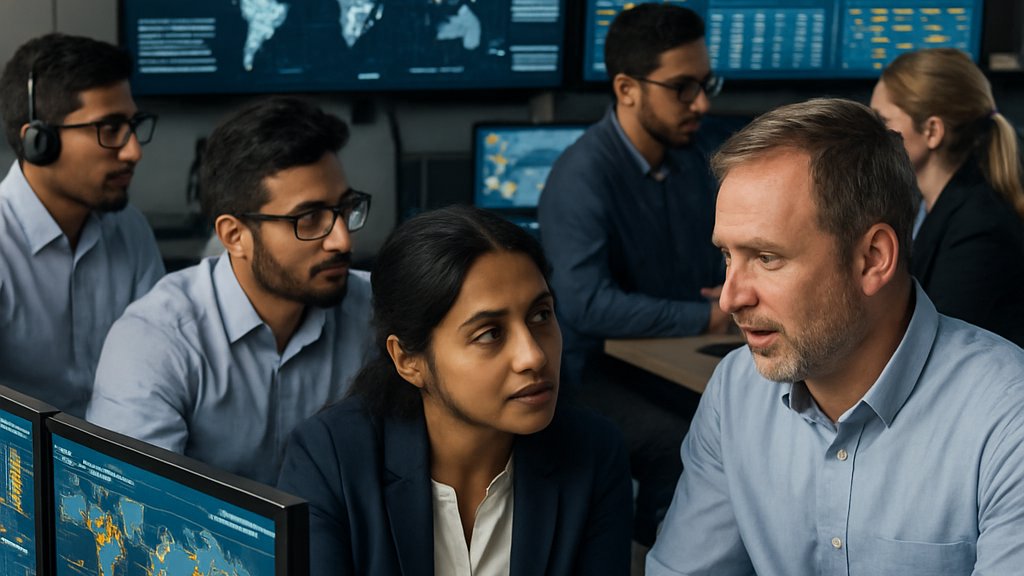
February 2026 then showcased multilateral momentum. India joined Pax Silica during the India AI Impact Summit. Under Secretary Jacob Helberg declared economic security inseparable from national security. Consequently, silicon supply chains entered the same strategic ledger as missiles.
Strategic Context Rapidly Expands
Parallel diplomatic tracks accelerated operational alignment. AD3 tabletop exercises paired Indian and US officers with Pentagon AI experts. Meanwhile, INDUS-X linked over 120 startups to joint challenges across maritime ISR and space sensing. Such activity transforms Defense AI Cooperation from policy concept to procurement reality.
These milestones confirm high-level commitment and early operational gains. However, industry powerhouses must now translate vision into scalable platforms. The next section profiles those engines.
Industry Engines Actively Engage
Large defense primes quickly positioned themselves. General Atomics offered co-production of MQ-9B systems with Indian partners. In contrast, Anduril and Mahindra pursued modular autonomous vessels for littoral surveillance. Moreover, L3Harris and Bharat Electronics advanced sensor fusion packages.
Investors welcomed clarity around reciprocal procurement avenues. Consequently, venture funding flowed toward dual-use algorithms addressing maritime domain awareness and electronic warfare. USISPF reported record attendance at closed-door pitch sessions during the summit.
- INDUS-X workshops engaged over 120 startups across five domains.
- Pax Silica added India as the 11th signatory on 20 February 2026.
- Framework lists AI in every operational domain, including space and undersea warfare.
Startups value predictable testing ranges and faster bureaucracy. Therefore, INDUS-X agreements include mutual data-sharing and sandbox access.
Defense Startups Gain Momentum
Early winners illustrate the model. Indian firm 114AI partnered with DIU for autonomous swarm algorithms. Meanwhile, California-based Skydio secured drone evaluation slots at Indian test sites. These cases show Defense AI Cooperation rewarding agile engineering houses.
Partnerships now span sensors, airframes, and decision support algorithms. Next, we explore how Pax Silica strengthens supply resilience underpinning these programs.
Supply Chain Shielding Efforts
Semiconductors remain the oxygen for modern algorithms and warfare systems. Pax Silica responds by coordinating critical mineral sourcing, chip fabrication, and cloud infrastructure investment. Consequently, India and the US pledged to co-design GPU data centers under the TRUST roadmap.
Officials stress that compute deficits throttle Defense AI Cooperation at scale. Therefore, supply security talks now happen alongside missile procurement negotiations. General Atomics executives publicly welcomed diversified chip supply, citing planned autonomy upgrades.
- Reduced single-point dependency on East Asian fabs.
- Lower latency for real-time battlefield algorithms.
- Shared cost for sovereign, hardened cloud zones.
These benefits outweigh the upfront infrastructure cost according to Carnegie analysts.
Supply resilience undergirds every autonomous platform now entering testing. Yet regulatory speed bumps could slow momentum, as discussed next.
Policy Hurdles Still Persist
Export control regimes remain complex. ITAR reviews can extend prototype timelines by months, frustrating both India and US teams. Moreover, intellectual property protection frameworks differ across jurisdictions.
Negotiators inside the Framework promised reciprocal procurement reforms and faster licensing. Nevertheless, strategic autonomy rhetoric occasionally collides with alliance expectations. Regional observers warn of AI warfare escalation if transparency lags.
Responsible AI pledges, endorsed by nearly 60 militaries, offer partial reassurance. However, some activists note gaps around lethal decision algorithms.
Policy alignment now represents the critical path for enduring Defense AI Cooperation. Once streamlined, collaboration can accelerate again, as the outlook section illustrates.
Future Outlook And Directions
Experts anticipate larger co-production announcements at upcoming INDUS-X summits. General Atomics hinted at advanced swarm drone assembly inside Hyderabad facilities. Furthermore, TRUST is drafting an AI infrastructure roadmap with quantified GPU targets. Subsequently, defense planners expect joint operational demonstrations during 2027 exercises.
Talent development will determine ultimate scale. Practitioners may boost expertise through the AI in Government™ certification. Consequently, shared human capital will reinforce technical interoperability.
Upcoming roadmaps, talent pipelines, and financing structures point to sustained Defense AI Cooperation growth. Finally, stakeholders must watch delivery against timelines.
Defense AI Cooperation has progressed from rhetoric to real hardware on test ranges. Furthermore, India and US partners now share silicon, data, and doctrine. Consequently, code written in Bengaluru could soon guide patrol drones in Guam. Nevertheless, export bottlenecks and governance gaps remain unresolved. Stakeholders should demand transparent metrics at every upcoming INDUS-X checkpoint. Meanwhile, professionals can influence debates by mastering technical policy details. Therefore, earn the AI in Government™ certification and join the next cooperation wave. Sustained Defense AI Cooperation will ultimately shape deterrence across the Indo-Pacific.
Disclaimer: Some content may be AI-generated or assisted and is provided ‘as is’ for informational purposes only, without warranties of accuracy or completeness, and does not imply endorsement or affiliation.


