

AI CERTS
2 months ago
Agentic AI Orchestration: Market Growth, Architecture, Governance
Meanwhile, industry analysts forecast a multi-billion-dollar market growing above 20 percent annually. Moreover, early adopters like Comcast report dramatic latency reductions and tighter governance. This article unpacks market signals, technical architectures, benefits, and risks for executives. Furthermore, it outlines an actionable playbook to translate prototypes into production. Readers will also discover how professional certifications advance orchestration initiatives. Therefore, stay tuned for a data-driven tour of the emerging Agentic AI stack.
Market Momentum Signals Rise
Analysts now quantify orchestration as a rapidly maturing infrastructure segment. Agentic AI revenue appears as a discrete line item in recent analyst dashboards. Grand View Research estimates 2024 revenue at 9.76 billion dollars. In contrast, the firm projects 58.9 billion dollars by 2033, reflecting 22.4 percent CAGR. MarketsandMarkets publishes similar curves, predicting 30.23 billion dollars by 2030.
Consequently, investment capital has surged into startups standardizing multi-agent pipelines. VC trackers record several billion dollars raised since 2024 for orchestration plays. Additionally, Gartner-style surveys reveal rising enterprise RFP volumes for agent fleets. These numbers signal commercial urgency. However, tooling fragmentation still stalls many pilots.
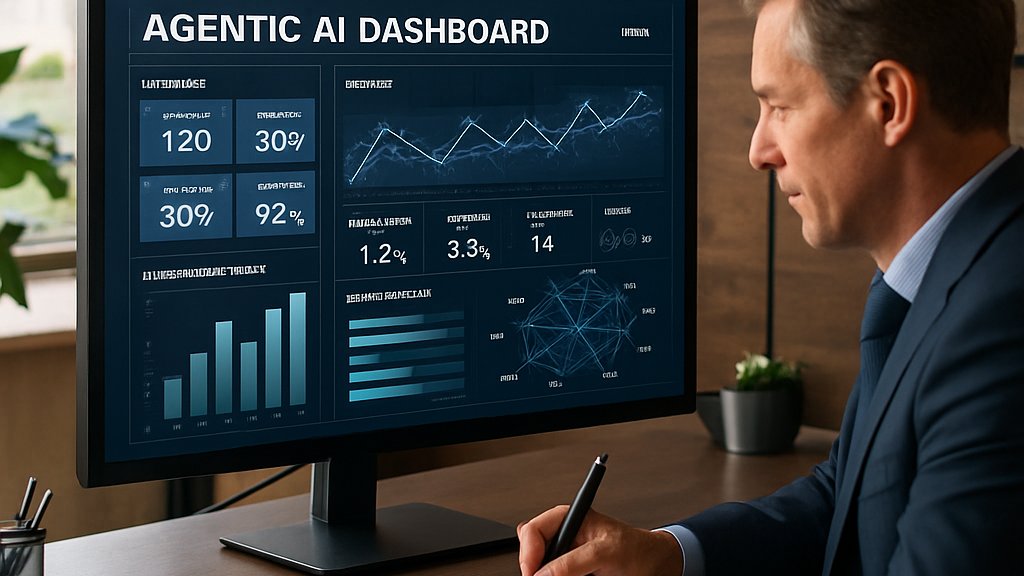
Market forecasts confirm strong upside yet highlight incomplete maturity. Subsequently, platform vendors have intensified product launches.
Leading Platform Announcements Surge
April saw Google unify Vertex tools under the Gemini Enterprise Agent Platform. Agentic AI capabilities now headline keynote demos across cloud giants. This release bundles Agent Runtime, Studio, Registry, and an inbox-style dashboard. Consequently, Comcast now steers large agent fleets from a single pane. Rick Rioboli credits Runtime for secure, grounded interactions and higher digital containment.
Meanwhile, Microsoft iterates AutoGen toward a broader Microsoft Agent Framework. AutoGen Studio offers low-code composition and actor-model concurrency for scale. Moreover, open frameworks such as CrewAI, LangGraph, and Diagrid attract developers seeking portability. In contrast, consultancies like PwC bundle orchestration with governance accelerators. Observers agree a competitive feature race has begun.
Platform diversity empowers choice yet complicates standardization. Therefore, architectural patterns deserve closer inspection next.
Architectural Patterns Emerging Rapidly
Two orchestration styles dominate current research and production. Centralized schedulers assign tasks, maintain state, and enforce policy. Decentralized swarms negotiate and self-organize around ambiguous objectives. Agentic AI architectures converge on reusable schedulers, memories, and evaluation harnesses. However, hybrid blueprints increasingly merge both approaches. Papers like HALO and Gradientsys introduce hierarchical planners combined with learned schedulers. Moreover, actor-model runtimes offer transparent concurrency and message tracing.
Memory layers, registries, and evaluation simulators complete the stack. Consequently, engineers leverage reusable skills and templates to accelerate builds. From a Software Engineering standpoint, these patterns support testability and modular interfaces. These mechanisms reduce coupling yet raise orchestration complexity.
Architecture choices shape scalability, cost, and safety outcomes. Furthermore, understanding benefits clarifies why enterprises invest.
Benefits Driving Enterprise Adoption
Multi-agent modularity tackles complex, lengthy tasks by splitting roles. Therefore, hallucinations drop because each agent owns a narrow responsibility. Scalability improves as orchestrators parallelize cheaper specialist models rather than one huge model. Moreover, low-code studios shorten delivery cycles for non-technical teams. Software Engineering managers also gain clearer test boundaries and version control. Agentic AI also boosts developer morale by automating repetitive coding diagnostics. Automation gains are already documented in vendor benchmarks showing fourfold coding effort reductions. Below are standout advantages cited across recent studies:
- Cost reductions through parallel specialist agents
- Latency improvements measured in minutes not hours
- Governance via registries, observability, and policy guards
- Business agility from drag-and-drop Workflow builders
Consequently, early adopters report higher net promoter scores after agentic support launches. Nevertheless, these wins coexist with tangible risks.
Benefits present a compelling narrative for scale. In contrast, governance challenges loom large, as the next section explains.
Risks Demand Strong Governance
Safety researchers warn about collusion, manipulation, and hidden prompt channels among agents. Moreover, provenance tracking becomes harder when dozens of identities call external tools. Vendor registries attempt to log decisions, yet audit standards remain immature. Consequently, observability dashboards now include replay, scoring, and sandbox execution.
Automation without oversight can amplify errors and legal exposure. Software Engineering teams struggle to reproduce failures across distributed traces. Nevertheless, hybrid centralized schedulers give security teams kill-switch authority. Meanwhile, portability concerns arise because hyperscaler platforms bundle proprietary runtimes, raising exit costs. These issues mandate proactive governance frameworks.
Governance gaps slow adoption despite clear upside. Subsequently, leaders need a concrete playbook.
Implementation Playbook For Leaders
Start with a governance-first orchestrator that registers every agent and tool. Therefore, activate detailed logging, simulation testbeds, and cost quotas before production. Build hybrid orchestration by pairing a rule-based scheduler with negotiation subsystems for creative tasks. Additionally, integrate synthetic benchmarks to detect hallucinations, drift, and adversarial behavior early. Allocate a cross-functional Software Engineering and security tiger team owning agent lifecycles. Furthermore, embrace event-driven Workflow engines for observable, replayable pipelines.
Set guardrail policies at the orchestrator layer, not individual agents, to avoid sprawl. Professionals can upskill via the AI Project Manager™ certification. Moreover, continuous education ensures teams navigate evolving standards confidently. A structured rollout mitigates operational and compliance surprises. Consequently, strategic outlook becomes the final consideration. Agentic AI success hinges on cross-discipline rituals and metrics.
Strategic Outlook And Actions
Agentic AI is moving from research novelty to boardroom agenda within 24 months. Market forecasts, vendor roadmaps, and open research converge on sustained growth. However, competitive differentiation will hinge on governance, portability, and developer velocity. Leadership teams should evaluate platform lock-in, risk posture, and long-term cost curves now. Automation, when aligned with robust oversight, unlocks defensible advantages.
Meanwhile, standardized Workflow components help preserve downstream flexibility across clouds. Moreover, cultivating certified talent accelerates organizational readiness and stakeholder trust. Agentic AI deployments will likely mirror microservice journeys: early chaos, eventual discipline. Therefore, early strategic action secures first-mover leverage.
Strategic foresight now separates leaders from laggards. Nevertheless, measured experimentation keeps risk contained while momentum builds.
Agent orchestration stands at a tipping point. We reviewed market acceleration, platform battles, architectural trends, benefits, and governance imperatives. Consequently, enterprises considering Agentic AI face both unprecedented promise and real operational hurdles. However, disciplined rollout frameworks, rigorous testing, and ongoing education can close the gap. Professionals should map objectives, pilot with tight controls, and expand once guardrails prove effective. Furthermore, certifications such as the mentioned program build shared vocabulary across business and engineering. Therefore, seize the moment to architect scalable, responsible multi-agent ecosystems before rivals do.
Disclaimer: Some content may be AI-generated or assisted and is provided ‘as is’ for informational purposes only, without warranties of accuracy or completeness, and does not imply endorsement or affiliation.


