

AI CERTS
2 months ago
SpaceX Deal Redefines Cloud Computing Supply
Furthermore, Elon Musk’s public endorsement of Anthropic surprised observers who recall his earlier criticism. Investors viewed the tie-up as a revenue catalyst for SpaceX ahead of its anticipated IPO. Meanwhile, enterprise developers celebrated fresh headroom for large-scale AI Coding workloads. This article unpacks the numbers, strategic motives, and potential ripple effects for every stakeholder. Moreover, it evaluates how Cloud Computing procurement now resembles an energy market where whoever owns power wins.
Cloud Computing Market Shift
Analysts called the agreement a watershed for compute supply dynamics. Previously, hyperscale demand concentrated within Amazon, Microsoft, and Google clouds. However, Anthropic’s pivot toward SpaceX shows Cloud Computing capacity is truly vendor-agnostic when urgency strikes.
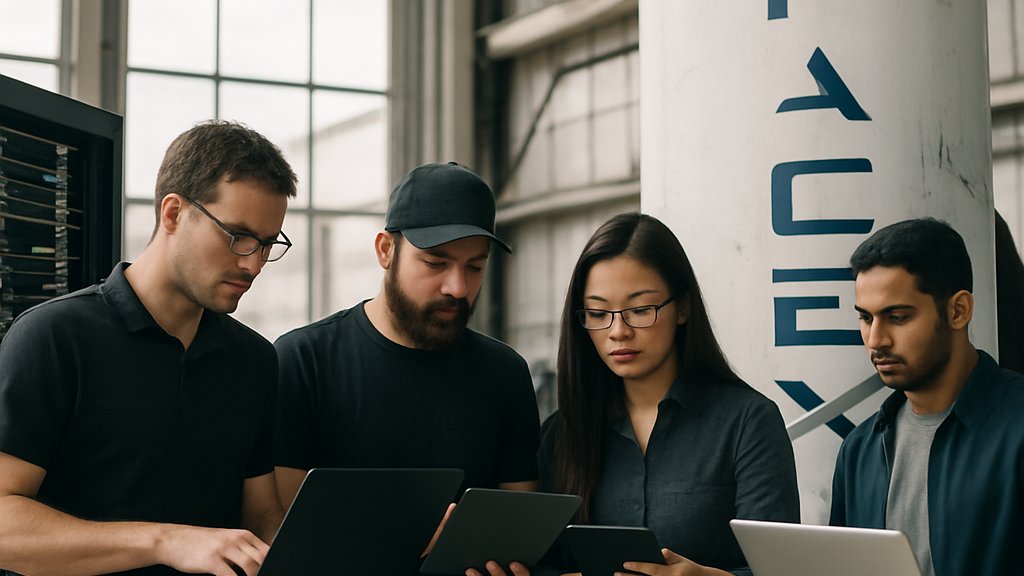
These developments illustrate compute’s emergence as a tradable commodity. Consequently, procurement strategies are evolving toward multi-sourced resilience. Next, we examine the raw numbers behind the headline capacity boost.
Capacity Numbers In Focus
Anthropic gains exclusive access to around 220,000 NVIDIA H-series GPUs housed in the Memphis Data Center. Moreover, the cluster delivers more than 300 megawatts of Cloud Computing power, rivaling mid-sized municipal power grids. SpaceX previously kept Colossus idle after shifting training tasks to a newer complex.
- Over 300 MW of incremental Cloud Computing throughput dedicated primarily to inference workloads.
- More than 220,000 GPU units spanning H100, H200, and GB200 generations.
- Immediate doubling of Claude Code request ceilings across Pro, Max, and Team plans.
Collectively, these figures underscore the unprecedented scale of the Colossus lease. Therefore, understanding the business logic behind the partnership becomes essential. The following section dissects those motivations and associated pitfalls.
Business Drivers And Risks
Why did each side agree to the deal now? For Anthropic, skyrocketing Cloud Computing demand created painful throttling during peak AI Coding bursts. Consequently, fresh capacity supported brand credibility and enterprise service-level agreements.
SpaceX, meanwhile, needed tangible revenue streams that bolster its looming public listing. Idle hardware produced no cash; leasing solves that balance-sheet inefficiency immediately. Nevertheless, dependence on a single Data Center introduces operational concentration risk for Anthropic.
Both companies benefit financially yet accept nontrivial exposure to market, technical, and reputational hazards. Next, potential expansion beyond Earth adds another dimension of uncertainty. Let us explore those orbital aspirations.
Orbital Compute Plans Discussed
Beyond terrestrial facilities, both firms signaled curiosity about orbital AI compute architectures. Moreover, executives referenced multi-gigawatt stations powered by continuous solar exposure. In contrast, experts caution that launch costs, thermal dissipation, and latency pose severe engineering challenges. Ryan Mallory noted that even discussing space locations reveals how scarce ground power has become for Cloud Computing workloads.
Orbital ambitions may inspire investors, yet timelines remain opaque and regulatory hurdles steep. Consequently, enterprises must track concrete milestones, not just visionary slogans. Attention now shifts to immediate customer impacts.
Impact For Enterprise Users
The capacity surge already reshaped Cloud Computing product experience for developers. Similarly, Claude Code clients enjoy doubled five-hour burst limits. Additionally, peak-hour penalties disappeared for Pro and Max subscribers. These upgrades enable heavier AI Coding pipelines without additional reservation fees.
API customers also welcomed higher Opus throughput ceilings, easing nightly batch workloads. Moreover, many teams previously forced onto alternate clouds can now consolidate under Anthropic. Professionals can enhance their expertise with the AI Architect™ certification.
User-side gains appear immediate and measurable. However, strategic questions remain about sustainability and pricing beyond the first month. We conclude by scanning the broader competitive horizon.
Strategic Outlook Moving Forward
Market observers expect Anthropic to lean on multiple vendors to hedge dependency on any single Data Center. Google, Amazon, Microsoft, and Fluidstack all hold multi-gigawatt commitments that must materialize within two years. Consequently, the Colossus lease buys time rather than delivering permanent relief. Meanwhile, SpaceX could replicate the model by offering additional GPU farms to other labs.
Competitive dynamics may pressure cloud incumbents to publish clearer capacity roadmaps and transparent pricing tiers. Moreover, regulators monitoring energy usage will likely scrutinize emissions at every large Data Center. Therefore, sustainability metrics could soon influence procurement processes as strongly as raw benchmark scores.
These trends suggest Cloud Computing strategy will intertwine with energy policy, capital markets, and hardware design. Consequently, executives must align architecture choices with geopolitical and environmental realities. Our final section distills the essential lessons from this fast-moving story.
Anthropic secured urgent headroom, SpaceX unlocked dormant assets, and the industry gained a vivid case study. Moreover, the agreement confirms that Cloud Computing capacity now defines competitive advantage as much as model quality. Nevertheless, risk remains concentrated in single-site reliance and ambitious orbital projections.
Consequently, leaders should diversify suppliers, monitor rollout metrics, and scrutinize environmental disclosures. For deeper mastery of scalable architectures, pursue the linked AI Architect certification and stay ahead of tomorrow’s demands. Additionally, revisit procurement roadmaps quarterly as fresh GPU inventories and Data Center projects surface.
Disclaimer: Some content may be AI-generated or assisted and is provided ‘as is’ for informational purposes only, without warranties of accuracy or completeness, and does not imply endorsement or affiliation.


