

AI CERTS
3 hours ago
Acer Edu Summit 2026 Signals Urgent Need for AI Training as Asia Pacific Education transforms
Held in Jakarta on April 22–23, the summit brought together educators, policymakers, and technology leaders from across Asia Pacific to discuss one central idea: education must evolve quickly to stay relevant in an AI-powered world
A new era of AI-powered learning begins
The theme of the summit, “Future-Ready Learning: AI, Innovation, and Human-Centered Education,” set the tone for a deeper conversation about how AI is reshaping education systems. The event highlighted how artificial intelligence can move classrooms beyond traditional teaching methods into a more adaptive, personalized, and student-centric experience.
Leaders emphasized that AI is not here to replace teachers, but to enhance their capabilities. From personalized learning paths to real-time feedback systems, AI is enabling educators to better understand individual student needs and deliver more meaningful outcomes.
However, one key insight stood out across sessions: without proper training, even the most advanced AI tools risk being underutilized or misapplied.
Collaboration across countries drives momentum
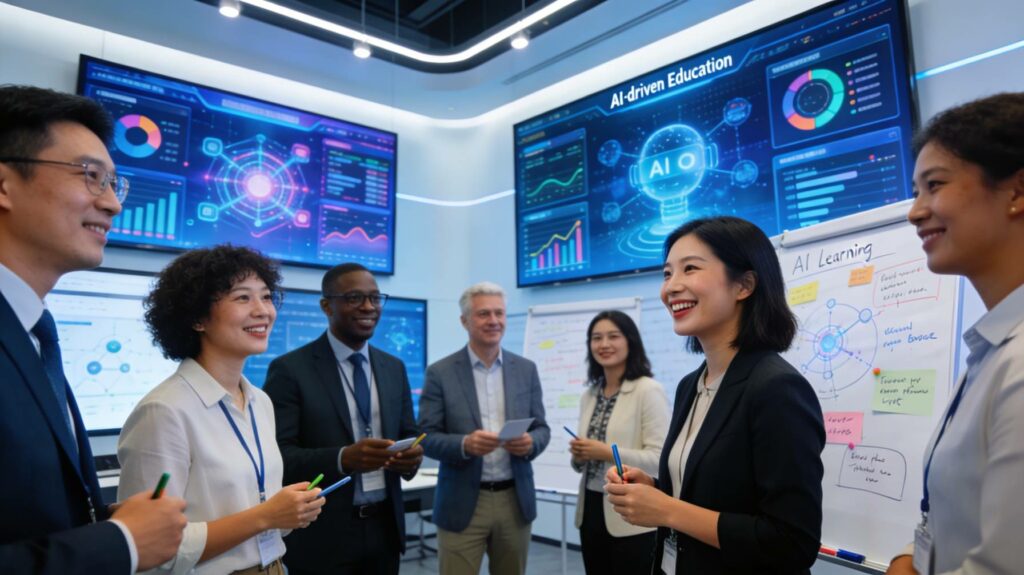
The summit saw participation from multiple countries including India, Singapore, Australia, and Indonesia, reflecting a shared regional urgency to modernize education.
This cross-border collaboration signals a shift from isolated innovation to collective progress. Governments, institutions, and tech providers are now aligning their strategies to ensure that AI adoption in education is both inclusive and scalable.
Discussions focused on building digital literacy, strengthening AI infrastructure, and preparing educators to work alongside intelligent systems. The consensus was clear: AI adoption is not just a technology upgrade, it is a workforce transformation challenge.
From research to real-world application
One of the most compelling aspects of the summit was its focus on practical implementation. Research from institutions like MIT Media Lab introduced frameworks such as AI-driven learning models that can scale personalized education across diverse student populations.
Sessions explored how AI can help shift education away from rote memorization toward critical thinking and real-world problem-solving. For example, innovations in AI-powered clinical training and urban problem-solving demonstrated how students can apply knowledge in dynamic environments.
At the same time, companies showcased advanced AI infrastructure, including high-performance computing systems and AI deployment platforms designed to support large-scale educational transformation.
This blend of research and application reinforced a critical message: the tools are ready, but the workforce must catch up.
Why AI training is no longer optional
The biggest takeaway from the Acer Edu Summit is not just about innovation, but readiness. As AI becomes embedded in education systems, the demand for trained professionals who understand how to deploy, manage, and scale these technologies is rising rapidly.
Educators need to learn how to integrate AI into their teaching methods. Institutions must build teams capable of managing AI infrastructure. Policymakers must understand the ethical and operational implications of AI in education.
This is where structured programs like the AI CERTs Authorized Training Partner Program play a crucial role. Unlike fragmented learning approaches, such programs provide a comprehensive framework that equips professionals and organizations with practical, industry-relevant AI skills.
By enabling training providers to deliver standardized, high-quality AI education, these partnerships help bridge the gap between innovation and implementation. In a landscape where AI is evolving faster than traditional education systems, this kind of structured upskilling is essential.
Technology meets human-centered education
Despite the heavy focus on AI, the summit consistently returned to one core principle: education must remain human-centered. Technology should empower educators, not replace them.
Acer’s leadership emphasized that meaningful transformation happens when innovation aligns with human needs.
This perspective is critical. Without the right training, there is a risk that AI could widen gaps rather than close them. But with the right skills and frameworks, AI can make education more inclusive, accessible, and effective.
The road ahead for future-ready learning
The Acer Edu Summit Asia Pacific 2026 has made one thing clear: the future of education is not just about adopting AI, but about preparing people to use it effectively.
As countries across the region accelerate their digital transformation efforts, the focus must shift from tools to talent. Investments in AI infrastructure must be matched by investments in AI education and training.
The institutions that succeed will be those that recognize this early and act decisively. Because in the age of AI, the real competitive advantage is not technology, it is the ability to use it well.
FAQs
What was the main focus of the Acer Edu Summit Asia Pacific 2026
The summit focused on how artificial intelligence can transform education through personalized learning, digital literacy, and human-centered teaching approaches, while emphasizing collaboration across countries.
Why is AI important in education today
AI enables more adaptive and personalized learning experiences, helps educators analyze student performance, and prepares learners for real-world challenges in an increasingly digital economy.
What challenges were highlighted at the summit
One of the biggest challenges discussed was the lack of AI readiness among educators and institutions, particularly in terms of skills, infrastructure, and implementation strategies.
How can organizations prepare for AI in education
Organizations can invest in structured training programs, build AI-focused teams, and adopt scalable learning frameworks to ensure smooth integration of AI technologies.
What is the role of AI training programs like ATP
Programs like the AI CERTs Authorized Training Partner Program help institutions and professionals gain practical AI skills, ensuring they can effectively implement and benefit from AI-driven transformation in education.


