

AI CERTs
3 months ago
Fraud Industry Investigation Exposes AI Review Manipulation
Ratings drive clicks. Yet many ratings are lies. Today's Fraud Industry Investigation reveals a thriving cottage economy producing fake praise at industrial speed. Moreover, large language models now craft persuasive narratives that blur fiction and reality. Consequently, buyers face greater risk while platforms scramble to keep trust intact. Regulators have sharpened tools too. The FTC final rule, active since 2024, now threatens heavy fines against synthetic endorsements. Meanwhile, Google and Amazon publicize massive takedowns, illustrating both progress and scale. Nevertheless, academic evidence shows humans detect AI fakes no better than chance. Therefore, businesses must understand the new manipulation economy and plan countermeasures.
AI Fuels Review Manipulation
Cheap computing lowered barriers for fraudsters. Moreover, generative models compose hundreds of plausible comments within minutes. In contrast, manual review farms once relied on low-paid writers. Automation removed that bottleneck and expanded profit margins. Originality.ai estimated that 23.7% of Zillow agent feedback in 2025 was machine written. Consequently, trust signals eroded across property marketplaces. This Fraud Industry Investigation notes that language models even insert product specifics, defeating simple keyword filters. Nevertheless, stylistic fingerprints still appear, so platforms chase new detection algorithms. Crypto payments further anonymize transactions between brokers and clients, complicating law-enforcement subpoenas. Therefore, revenue continues flowing into opaque wallets.
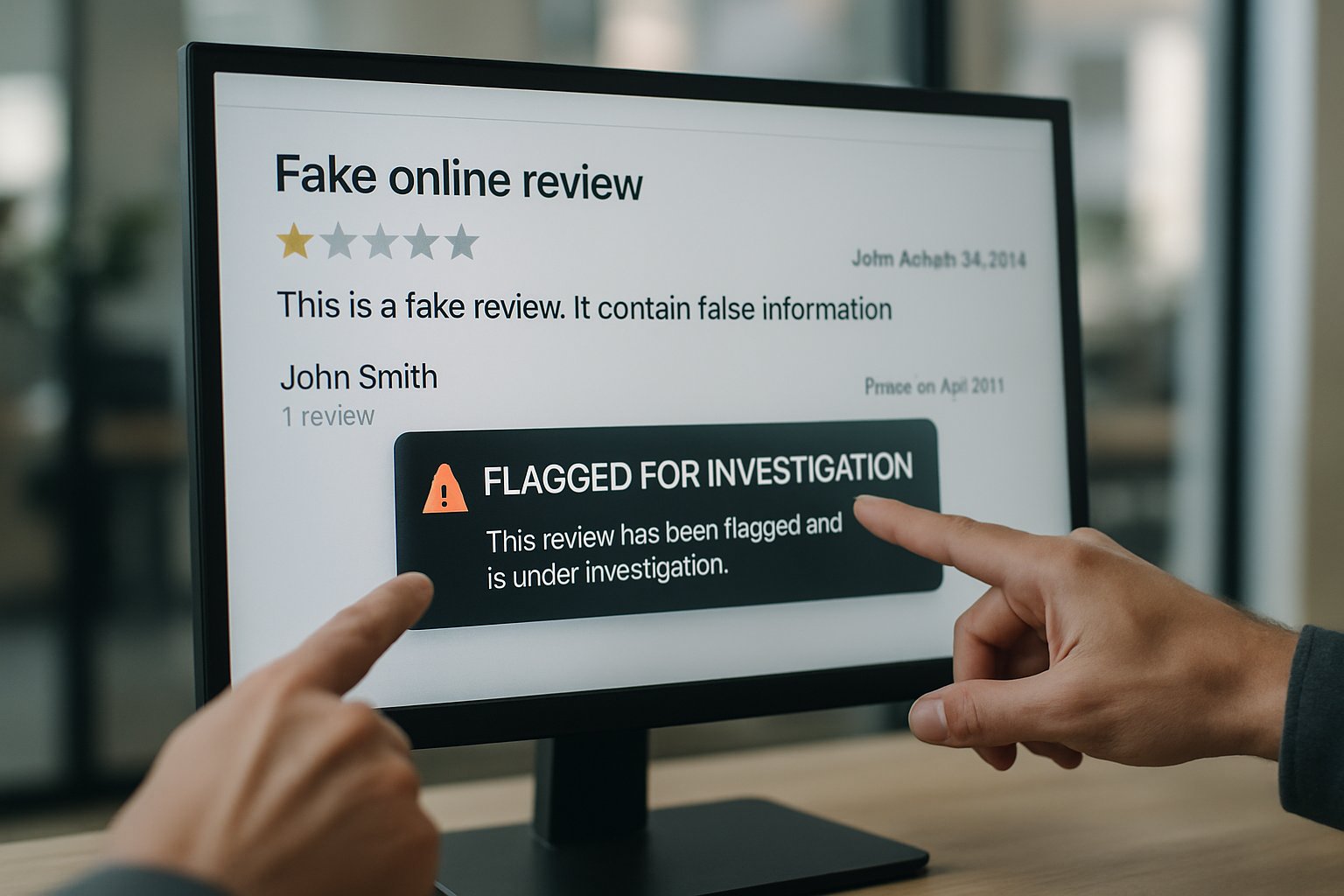
AI lowered content costs dramatically. However, anonymity tools keep profits hidden. Regulatory action now aims to raise those hidden costs.
Regulatory Teeth And Penalties
The FTC final rule became effective in late 2024. Moreover, it bans paid, deceptive, or AI-generated endorsements outright. Consequently, violators face civil penalties exceeding $50,000 per fake review. Fraud Industry Investigation sources highlight Chair Lina Khan’s warning that fake reviews pollute markets. Meanwhile, state attorneys general coordinate with the agency to pursue cross-border scams. In contrast, earlier enforcement relied on piecemeal settlements without deterrent fines. The rule also forbids review suppression and insider testimonials. Therefore, companies must audit marketing partners and contract clauses immediately.
Sweeping penalties now shift incentives. Nevertheless, fraud schemes evolve faster than court dockets. Platforms have responded by expanding detection firepower.
Platform Countermeasures Arms Race
Amazon, Google, and Trustpilot publish transparency reports detailing massive removals. Trustpilot removed 4.5 million fake reviews in 2024, 90% via automated filters. Consequently, 7.4% of all incoming feedback vanished from the site. Our Fraud Industry Investigation tracks those escalating takedown figures. Amazon claims to have blocked over 250 million suspect posts during 2023. Furthermore, it filed suits against Telegram-based review brokers. Google promised the UK CMA it would ban repeat offenders and boost consumer reporting tools. Meanwhile, the Coalition for Trusted Reviews now shares detection signals across member platforms. However, academic studies reveal that existing classifiers miss many AI reviews. Therefore, platforms iterate models rapidly, yet false positives remain contentious.
Countermeasures improve but never close the gap. Consequently, reliable detection stays elusive. Understanding the scope of lost trust requires hard numbers.
Scale Statistics Stark Costs
Hard data underscores systemic harm. UK government research estimates 11–15% of online product reviews are fake. Moreover, annual consumer welfare losses reach hundreds of millions of pounds.
- Trustpilot removed 4.5 million fake reviews in 2024.
- Amazon blocked over 250 million suspicious posts in 2023.
- Originality.ai flagged 23.7% of Zillow feedback as likely AI in 2025.
- Humans detect AI fakes with only 50.8% accuracy.
This Fraud Industry Investigation shows how inflated ratings distort buyer decisions. Consequently, honest sellers lose visibility despite genuine quality. Scams divert traffic and revenue, creating uneven competition.
The numbers reveal staggering inefficiency. Nevertheless, better metrics guide targeted defenses. Next, we examine why detection remains imperfect.
Detection Limits And Research
Academic teams have probed classifier weaknesses since 2025. In one arXiv study, humans identified AI reviews at chance level. Moreover, many machine detectors collapsed when faced with newer language models. Researchers therefore recommend provenance metadata alongside text analysis. Google engineers now test graph signals, while Amazon blends stylometry with purchase verification. Nevertheless, adversaries mix human editing and AI output, reducing predictable patterns. This Fraud Industry Investigation found that such hybrid attacks bypass many blacklists. Consequently, detection accuracy lags adversarial creativity.
Research confirms a widening gap. Therefore, layered defenses become essential. Understanding broker operations clarifies where to apply those layers.
Broker Tactics And Economics
Telegram channels advertise five-star packages for as little as five dollars. Furthermore, brokers promise verified purchase badges to dodge algorithmic filters. Payment happens via crypto to avoid chargebacks and regulator subpoenas. Scams flourish because sellers fear being outranked more than being fined. In contrast, honest merchants struggle to match artificially boosted metrics. Our Fraud Industry Investigation reviewed court filings describing margins above 70% for review farms. Consequently, the incentive loop remains powerful.
Cheap services meet desperate sellers. Nevertheless, enforcement pressure is rising. Stakeholders now plan strategic responses.
Future Outlook And Strategy
Regulators will likely test their new authority through headline cases this year. Moreover, platforms intend to publish richer audit trails and open fraud APIs. Google hinted at provenance labels that reveal whether reviewers actually purchased products. Consequently, transparency may discourage manipulation before it begins. Investors expect detection vendors to integrate generative AI deeply, creating adaptive filters. This Fraud Industry Investigation recommends proactive education for marketing, compliance, and engineering teams. Professionals can enhance their expertise with the AI+ Human Resources™ certification. Furthermore, companies should run red-team simulations to test internal review pipelines.
The battle will intensify quickly. Nevertheless, coordinated strategy can preserve consumer trust. Key lessons now deserve concise reflection.
Conclusion And Action Plan
Fake reviews no longer look amateur. They now represent industrialized persuasion backed by sophisticated AI. Our Fraud Industry Investigation shows regulators, platforms, and researchers aligning for a protracted fight. Nevertheless, constant model upgrades give fraud rings fresh advantages. Consequently, businesses must monitor manipulation vectors, vet partners, and budget for compliance tooling. Crypto transactions will likely remain central funding rails for review scams. Therefore, leaders should pursue skills and certifications that strengthen organizational defenses. Explore additional training paths and revisit this Fraud Industry Investigation regularly for updated guidance.
Disclaimer: Some content may be AI-generated or assisted and is provided ‘as is’ for informational purposes only, without warranties of accuracy or completeness, and does not imply endorsement or affiliation.


