

AI CERTs
2 months ago
CarPlay Ads Offer New High-intent Signal Frontier
Drivers may soon see sponsored pins guiding them to the nearest coffee shop rather than random stops. However, Apple has not officially confirmed the move. Industry insiders still expect paid placements to hit Apple Maps in 2026. Because CarPlay mirrors Maps onto dashboards, the effect will be immediate. Consequently, advertisers are watching closely. The possibility of tapping a driver’s location and mood offers a potent High-intent Signal. Moreover, Apple secures another High-intent Signal that rivals may struggle to match. Apple’s privacy positioning nevertheless raises unique questions for the in-car space. Bloomberg’s Mark Gurman reported the internal project was “gaining traction” last October. Subsequently, market chatter has intensified. This article unpacks the landscape, mechanics, threats, and opportunities.
Apple Maps Ads Emerging
Bloomberg’s October report outlined Apple’s next revenue play: paid listings inside Apple Maps. Furthermore, the article compared the concept to App Store search ads that already run on an auction basis. Apple, therefore, holds most of the needed technology and sales infrastructure. In contrast, Maps introduces real-world safety constraints unseen in app downloads.
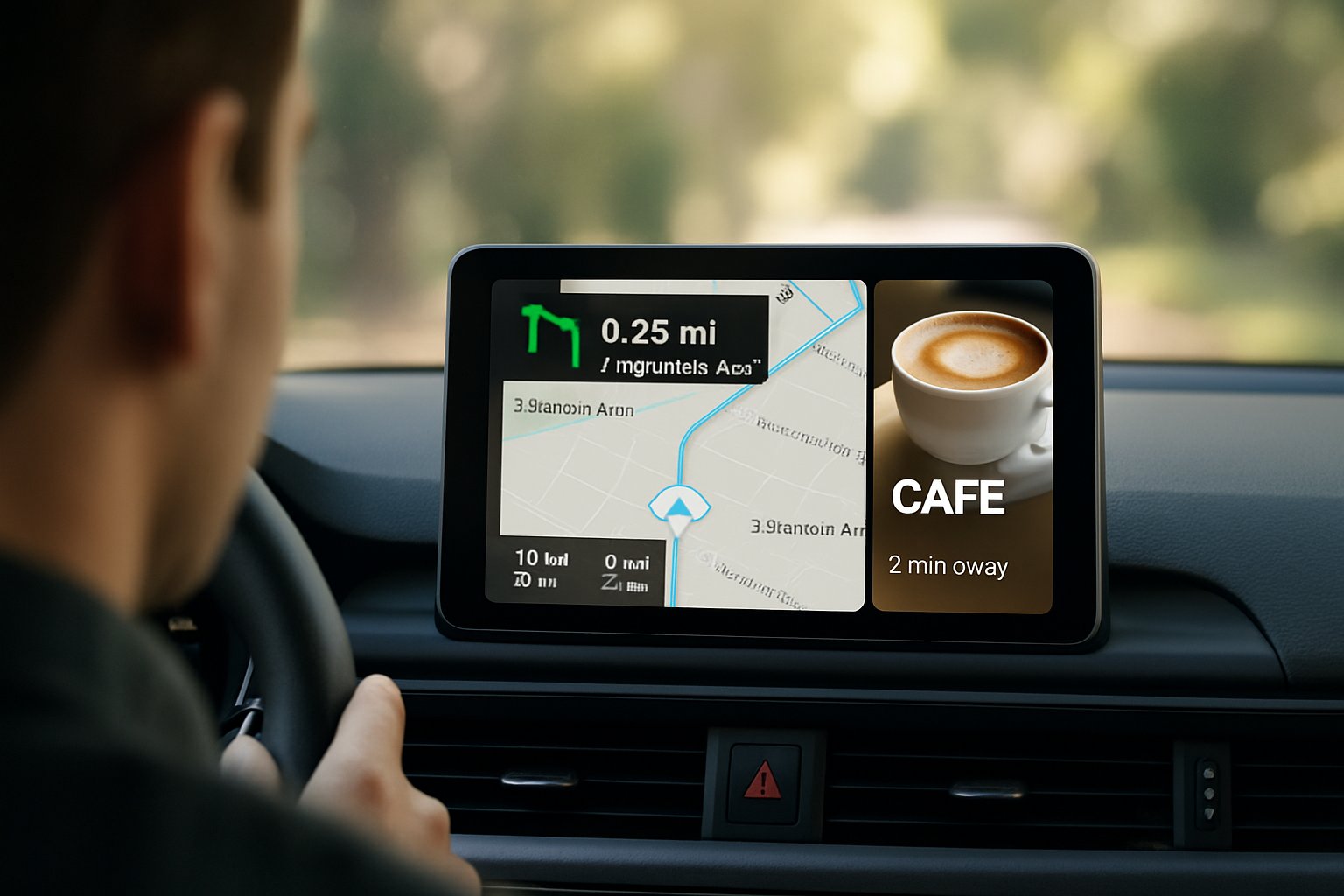
Gurman’s sources say engineering teams target a 2026 launch. Meanwhile, advertisers expect an interface showing one or two promoted results above organic listings. That potential placement sits where user attention naturally rests, delivering another High-intent Signal for brands eager to convert last-mile shoppers. Apple has declined to comment publicly, yet the silence rarely halts speculation. These early signals matter for planning. However, many details remain fluid.
Early evidence shows Apple intends to monetize navigation. Stakeholders must now evaluate downstream effects. Consequently, CarPlay integration becomes the next focal point.
CarPlay Dashboard Ad Impact
CarPlay sits in more than 80% of new cars sold in the United States, according to research firm Canalys. Moreover, drivers interact with CarPlay an average of 50 minutes daily, Apple revealed during WWDC. Those metrics give Apple unrivaled reach inside the vehicle cockpit.
If promoted map results flow straight to the dashboard, businesses gain instant visibility at the moment of driving intent. Consequently, a pizza chain can bid on “pepperoni nearby” and appear where eyes already glance for safety. That presence yields a measurable High-intent Signal while avoiding additional screens or banners.
Nevertheless, automakers may object. They carefully curate in-car experiences and fear driver distraction. Apple therefore must enforce strict design guardrails: muted colors, minimal text, and voice-first prompts. Regulators will also scrutinize any perceived risk. These constraints could limit creative formats but still allow subtle ads.
CarPlay delivers reach and timing unmatched by smartphones. However, safety demands will shape execution tightly. Next, advertisers must understand auction dynamics.
Auction Mechanics Explained Clearly
Apple historically blends bid size with relevance scores when ranking App Store ads. Consequently, experts anticipate a similar hybrid model for Maps. Advertisers will likely choose keywords, set maximum cost-per-tap bids, and receive suggested ranges from Apple. Such auctions activate exactly at the moment of search intent.
- Real-time auction triggers when a query is entered.
- Bid × Relevance determines rank placement.
- Payment occurs on tap, call, or navigation start.
- Reporting remains aggregated to uphold privacy.
Therefore, deep pockets alone will not guarantee prime slots. Quality landing pages, updated business hours, and positive reviews could raise relevance. Additionally, Apple may penalize overly aggressive creatives to preserve experience integrity. For advertisers, each impression represents a fresh High-intent Signal that justifies higher bids.
Apple’s design rewards balanced strategy over brute spending. Consequently, understanding these levers is critical. The broader market context explains financial stakes.
Market Numbers And Context
Independent research values the in-car advertising platform market between USD 1.9 and 2.4 billion in 2024. Moreover, analysts forecast double-digit compound growth through 2030. Digital advertising overall surpassed USD 600 billion last year, with local search taking a sizable slice.
Consequently, even a modest Apple share could matter. Consider these indicative figures:
- CarPlay penetration: 80% of new U.S. vehicles.
- Daily Maps searches: 200 million globally, per Apple estimates.
- Local search ad CPCs: often 30% above generic queries.
Therefore, a CarPlay listing that converts at higher rates might command premiums unseen in mobile display. Each successful navigation start confirms an unmistakable High-intent Signal, allowing attribution back to spend. Marketers budget constraints will shift to accommodate this fresh inventory.
Numbers reveal a lucrative yet nascent channel. However, opportunity only materializes when strategies align. The next section highlights tactical moves for savvy marketers.
Opportunities For Marketers Now
Early movers frequently enjoy lower bids and data advantages. Furthermore, marketers that already run Apple Search Ads possess transferable skills. They should audit keyword performance, catalog store hours, and ensure Apple Business Connect profiles remain current.
Additionally, campaign planners can map high-traffic routes and evening commute patterns to refine geo-targets. Each resulting navigation start becomes a verifiable High-intent Signal tied to real-world sales. Meanwhile, complementary promotions such as loyalty coupons can boost incremental margin. Accurately mapping consumer intent will sharpen bid strategies and avoid wasted spend.
Professionals can enhance their expertise with the AI Learning Development certification. The coursework covers machine learning fundamentals, measurement frameworks, and location-based optimization. Consequently, certified marketers gain credibility when pitching CarPlay initiatives.
Smart preparation mitigates first-mover risk and speeds execution. In contrast, ignoring groundwork could inflate costs. Still, strategic caution is warranted.
The following section explores looming risks and open questions.
Risks And Open Questions
User backlash represents the most immediate challenge. Premium Apple buyers expect elegant interfaces, not intrusive ads. Moreover, privacy advocates question how location data fuels targeting.
Automakers may seek revenue sharing or veto rights over dashboard placement. Additionally, regulators could impose visibility caps during motion to reduce distraction. Therefore, uncertainty persists.
Apple must also decide auction architecture, billing metrics, and reporting depth. Without clarity, brands cannot forecast return on investment. Nevertheless, every rumor still sends a High-intent Signal to rivals that competition will intensify.
Risks, while serious, appear manageable with transparent policy. Consequently, companies should monitor announcements closely. Next, we outline pragmatic next steps.
Strategic Next Steps Forward
First, subscribe to Bloomberg’s Power On for real-time updates. Secondly, set alerts for Apple Developer release notes detailing Maps API adjustments. Moreover, engage agency partners to model bid scenarios under multiple CPC assumptions and forecast ads spend elasticity.
Meanwhile, outreach to automaker partners can surface contractual constraints before campaigns launch. Marketers should also draft safety-compliant creative templates. Each preparatory action converts speculation into operational readiness and confirms another High-intent Signal to leadership about proactive planning.
Structured preparation balances agility with governance. Therefore, teams will move faster once Apple flips the switch. A final recap cements the big picture.
Apple’s push toward paid map listings could redefine local advertising and reshape in-car experiences. Moreover, CarPlay multiplies reach by projecting those listings onto dashboards during decisive moments. Auction mechanics, market growth, and evolving privacy standards all converge to create both promise and peril. Nevertheless, brands that master relevance, safety, and measurement stand to gain. Every dashboard impression constitutes a fresh High-intent Signal linking digital spend to offline conversion. Consequently, now is the time to refine data, secure budgets, and cultivate expertise. Explore the certification resources above, subscribe to industry updates, and stay ready for Apple’s next announcement.
Disclaimer: Some content may be AI-generated or assisted and is provided ‘as is’ for informational purposes only, without warranties of accuracy or completeness, and does not imply endorsement or affiliation.


