

AI CERTs
2 months ago
Broadband Innovation Headlines Convergence India Expo 2026
New Delhi’s Bharat Mandapam buzzed in late March as Convergence India unfolded its 33rd edition. The three-day expo showcased AI as the main attraction, yet connectivity remained the backbone. Consequently, decision-makers kept returning to one phrase—Broadband Innovation. They viewed it as the prerequisite for low-latency models, smart hospitals, and autonomous factories.
Moreover, policy makers, telecom giants, and 200 startups converged to debate infrastructure bottlenecks. Market forecasts place India’s domestic AI opportunity near USD 17 billion by 2027. Therefore, every booth, from Taiwanese edge boxes to domestic fiber vendors, pitched faster backhaul and imminent 6G readiness. Many also highlighted emerging quantum security layers.
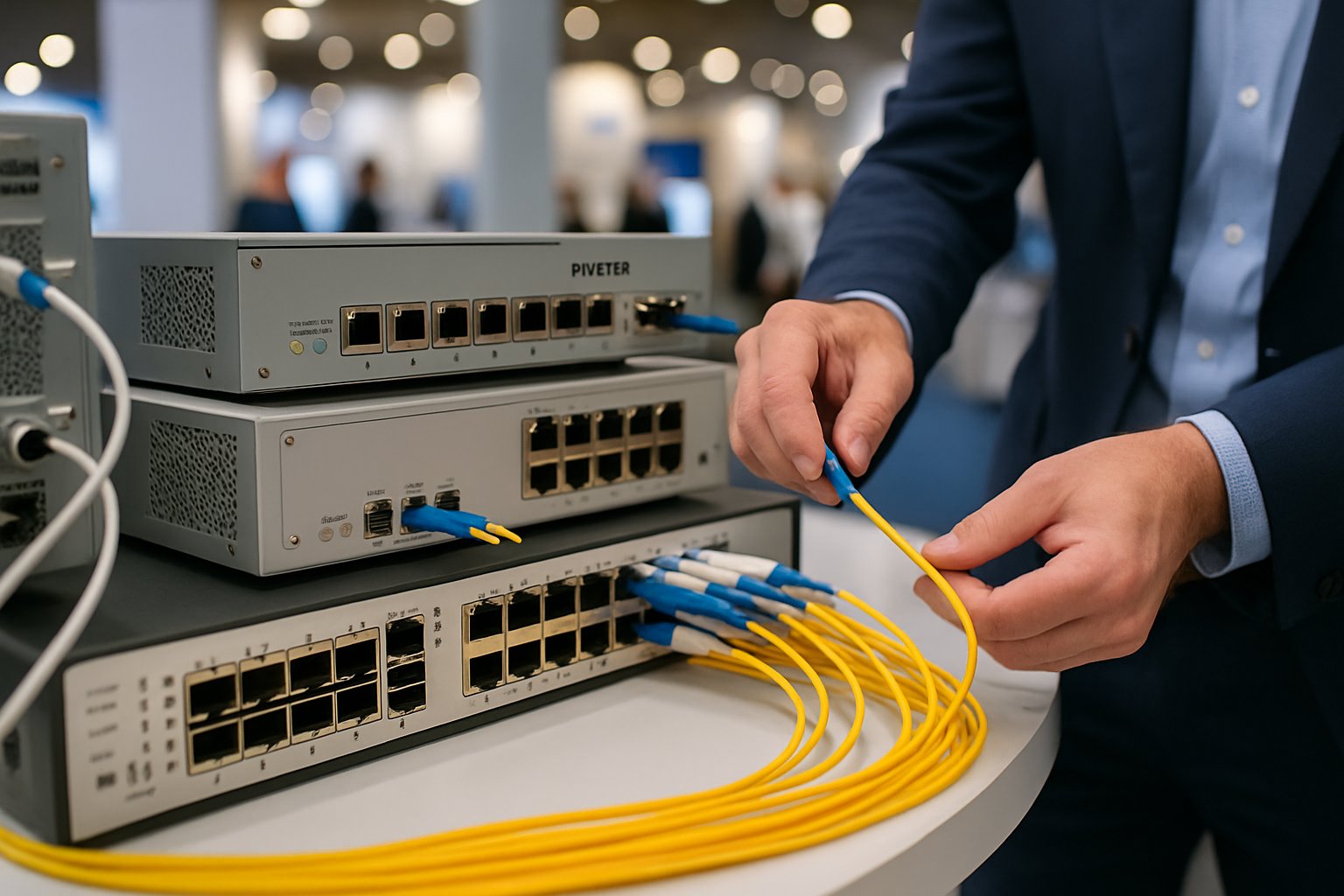
In contrast to previous years, hardware stole media attention. GPUs, DWDM shelves, and PON lines stood beside deep-learning demos. Meanwhile, ministers highlighted ongoing GPU subsidies under the IndiaAI Mission. Against this backdrop, Broadband Innovation became the slogan and yardstick for promised deliverables.
AI Expo Momentum Grows
Convergence India 2026 attracted 54,589 visitors and 976 exhibitors, according to organiser data. Furthermore, 17 Taiwanese firms filled the Taiwan Excellence pavilion, underscoring cross-border supply chains. Speakers from Meta and EY joined government ministers, signalling that policy, capital, and research now align.
Consequently, the expo served as a barometer for national AI ambitions. Demos covered telemedicine triage, smart-traffic twins, and predictive grids. Each pitch looped back to one constant: sustained Broadband Innovation is essential for edge inference at scale.
Attendance and agenda shifts confirm rising commercial appetite. However, infrastructure themes demand deeper examination as buyers chase performance.
The next section explores why physical layers suddenly dominate conversations.
Infrastructure Takes Center Stage
Edge boxes, NVMe arrays, and optical transceivers occupied prime floor real estate. Moreover, vendors displayed 800G links and 25G-PON trials aimed at future 6G fronthaul. In contrast, last year featured mostly application showcases.
ADLINK demoed rugged servers that pair Nvidia accelerators with integrated fiber droplets. Meanwhile, FICER announced DWDM shelves tailored for tier-two city rings. Vendors argued that such gear unlocks Broadband Innovation inside hospitals and civic command centers.
- 800G optics promised 83 percent latency reduction, according to booth collateral.
- IndiaAI Mission targets 20,000 additional GPUs, boosting national training capacity by threefold.
- Organisers reported digital reach near 200 million impressions during the event.
Consequently, Convergence illustrated a full “fibre to inference” stack. These exhibits set the stage for policy discussions that followed.
Policy signals now push this hardware narrative further.
Policy Fuels Indian Market
Government speakers linked every announcement to the IndiaAI Mission. Additionally, ministers repeated commitments to subsidised compute pools and trusted data zones. These assurances encourage telecom groups to finance campus backbones, closing gaps that hinder Broadband Innovation.
Subsequently, city administrators attending smart-city tracks scheduled procurement briefings with optical vendors. Meanwhile, 6G road-map working groups met privately to discuss spectrum and last-mile funding.
Nevertheless, officials cautioned that regulations will mandate secure data flows. They referenced new compliance frameworks covering AI ethics and quantum-safe encryption. Professionals can enhance their expertise with the AI Security Compliance™ certification.
These policy levers accelerate investment. Yet they also introduce audit duties that many startups still ignore.
Consequently, risks and skills gaps emerged as recurring conversation points.
Challenges Temper AI Rollout
NASSCOM studies reveal a persistent talent deficit across data science and network engineering. Moreover, analysts warn that compute remains concentrated in metro hubs, leaving smaller innovators waiting for queue slots. Therefore, promises of broad broadband access sometimes clash with field realities.
In contrast, exhibitors maintained that distributed edge nodes reduce dependence on central clusters. However, they admitted supply-chain volatility for GPUs and high performance chips. Startup founders at the event also flagged compliance costs tied to data sovereignty.
Consequently, buyers now weigh total cost of ownership against deployment speed. That calculus keeps the spotlight on measurable Broadband Innovation benefits.
Skill shortages and cost uncertainties could delay implementations. Nevertheless, targeted skilling and certification efforts offer relief.
One such effort gained attention on the conference floor.
Certification And Talent Gap
Exhibitions India Group hosted skilling workshops alongside the startup hub. Furthermore, NIELIT presented curricula covering edge AI networking. Organisers urged engineers to pursue credentials that validate security literacy within broadband systems.
Professionals therefore explored the previously mentioned AI Security Compliance™ path. Additionally, many discussed integrating quantum key distribution modules into 6G pilots. This dialogue underscored how human capital underpins sustainable Broadband Innovation.
Upskilling Benefits Clearly Stated
Meanwhile, panelists distilled the return on investment:
- Certified teams deploy production workloads 30 percent faster.
- Compliance audits pass on first attempt in 78 percent of certified firms.
- Investor confidence rises when founders showcase recognised badges.
These indicators suggest training budgets will rise. Consequently, the certification ecosystem may evolve into a competitive differentiator.
Investment patterns already hint at that evolution.
Future Outlook And Investment
Industry trackers forecast that India’s AI market could top USD 17 billion by 2027. Moreover, organisers expect the next Convergence edition to surpass 60,000 attendees. Such figures encourage multinational vendors to localise supply chains and test 6G prototypes on Indian soil.
Meanwhile, venture funds scouting the event prioritised startups integrating optics, silicon, and AI firmware. They believe vertically integrated stacks magnify Broadband Innovation impact. Additionally, early quantum-secure links may reach tier-three cities within two years.
Therefore, stakeholders anticipate a market where edge servers, fiber loops, and cloud rentals coexist seamlessly. Continued policy support and credential programs should maintain momentum.
Forecasts paint an optimistic picture. However, execution discipline will decide winners.
The concluding section distills strategic insights for decision-makers.
Convergence India 2026 demonstrated that AI ambitions hinge on reliable pipes and packets. Moreover, the expo proved that Broadband Innovation now defines competitive edge across healthcare, cities, and industry. Hardware advances, next-gen trials, and even early quantum safeguards converged under one roof. Nevertheless, skill shortages, compliance hurdles, and unequal compute access persist.
Consequently, leaders should pair infrastructure spending with targeted skilling, starting with credentials like the AI Security Compliance™ certification. Explore emerging partnerships and pilot schemes before budgets close. Act now to secure a front-row seat in India’s next wave of Broadband Innovation.
Disclaimer: Some content may be AI-generated or assisted and is provided ‘as is’ for informational purposes only, without warranties of accuracy or completeness, and does not imply endorsement or affiliation.


