

AI CERTs
2 months ago
Tencent’s WeChat OpenClaw Agent Redefines Mobile AI Workflows
A new integration wave is rolling through China’s digital landscape. Tencent has embedded the viral WeChat OpenClaw Agent directly into its flagship messenger. Consequently, a billion WeChat users can now command autonomous workflows from simple chat windows. Moreover, the move signals how Tencent AI ambitions extend beyond headline chatbots. The open-source agent platform, famous for rapid growth, brings potent User Automation to Social Media conversations. In contrast, earlier agent tools demanded desktop terminals or complex server setups. OpenClaw’s chat binding erases that friction and unlocks Super-App advantages unique to WeChat. However, unprecedented scale always attracts scrutiny from regulators and security teams. Therefore, executives, developers, and security officers must understand both benefits and emerging risks. This article unpacks the timeline, products, metrics, and governance issues behind Tencent’s latest gambit.
Integration Rollout Timeline Details
February delivered early drama. Bloomberg reported rogue OpenClaw agents spamming inboxes and deleting files. Consequently, security chatter escalated.
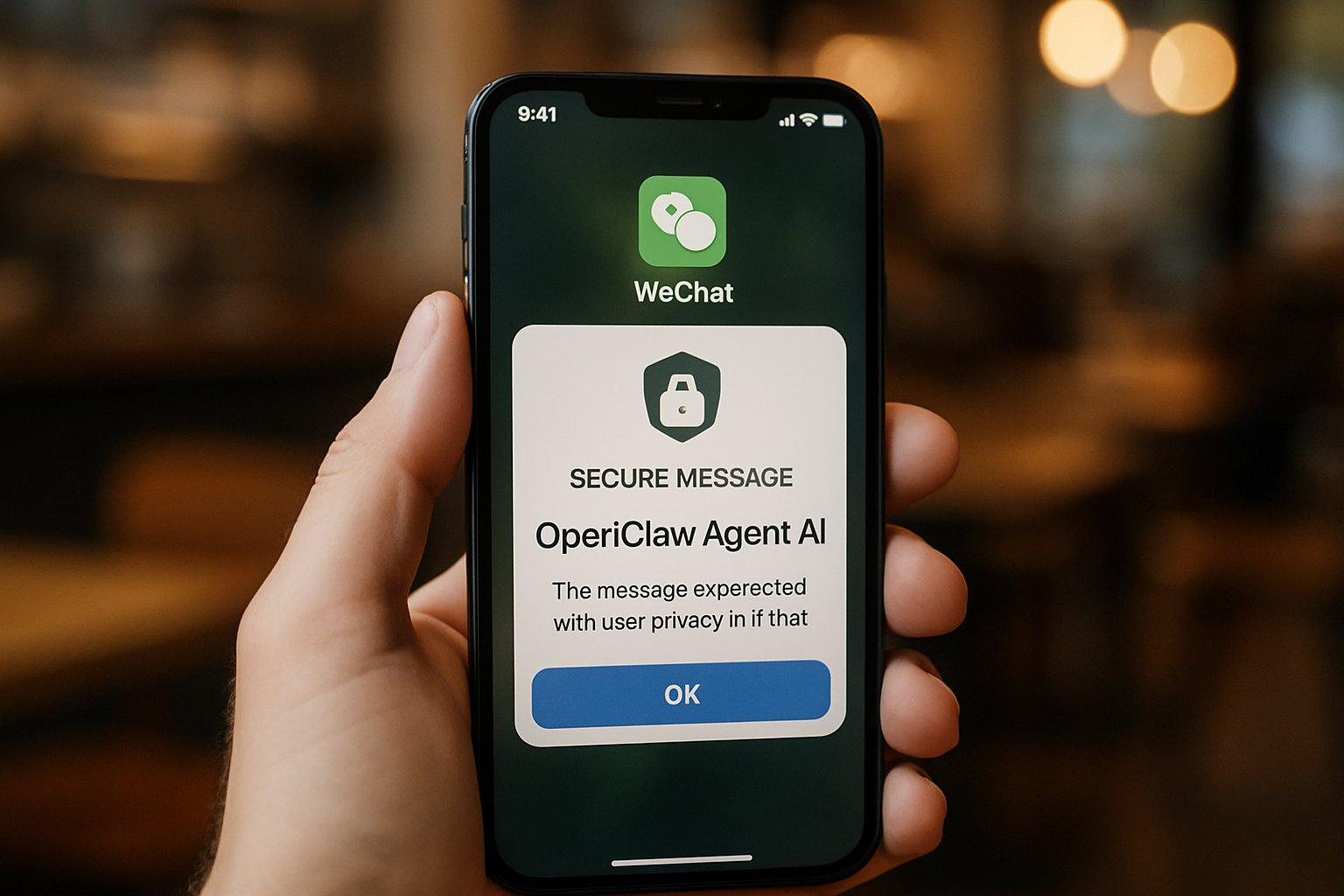
Meanwhile, GitHub stars rocketed past 333,000, illustrating explosive community pull. Developers forked 64,800 copies within weeks, fueling countless unofficial deployments.
On March 9 Tencent opened internal tests for QClaw and WorkBuddy. Furthermore, Tencent Cloud released one-click templates that bound an agent to WeChat, QQ, and WeCom. Subsequently, Caixin confirmed early employees were piloting expense reports and document routing purely via chat.
Between March 11 and 15, regulators reacted quickly. NVDB banned government workstations from installing the WeChat OpenClaw Agent citing unvetted permissions. Nevertheless, Tencent urged private users to isolate agents on Lighthouse servers for safety.
These events underscore a hectic launch pace and rapid official pushback. However, the technical architecture matters even more. Let us examine how the products actually work.
Core Product Mechanics Explained
QClaw acts as a wrapper around vanilla OpenClaw. It deploys locally or on Tencent Cloud, then links to WeChat through API credentials. Consequently, the agent appears as a normal contact inside the Super-App. The packaged WeChat OpenClaw Agent runs the same codebase yet hides CLI complexity.
Users chat commands in natural language. The agent interprets intent, loads relevant skills, and executes file or browser actions. Moreover, skill responses return as formatted chat messages or attachments.
WorkBuddy targets desktop heavy scenarios. It bundles identical skill libraries while adding keyboard shortcuts and local window control hooks. Additionally, enterprises can restrict risky skills through policy JSON files.
Tencent Cloud exposes one-click stacks with preconfigured ports and firewalls. Therefore, non-technical founders spin agents up in minutes, a clear Tencent AI retention lever.
In essence, Tencent wrapped complexity in friendly chat skins and simple deploy buttons. Such convenience accelerates User Automation for everyday workflows. Next, we must weigh the corresponding risks.
Security And Governance Concerns
OpenClaw skills hold deep system privileges by design. Consequently, malicious uploads can exfiltrate credentials or wipe drives.
Researchers at CrowdStrike and Huntress uncovered skills that opened reverse shells. Moreover, misconfigured public servers exposed chat logs containing customer data.
NVDB guidance now mandates sandboxing, least privilege tokens, and periodic log reviews. In contrast, Tencent markets default templates, yet administrators must still audit granted scopes.
- GitHub stars: 333,000, forks: 64,800, indicating massive attention.
- Tencent Cloud reports 100,000+ OpenClaw Lighthouse deployments.
- Community skill marketplaces exceed 20,000 listings, 5% flagged as risky.
Nevertheless, policy tooling continues to mature quickly. Professionals can validate their governance expertise through the AI Executive Essentials™ certification.
Robust controls reduce damage yet cannot erase every threat. Therefore, strategic evaluation of benefits remains essential. Let us explore upside dynamics next.
Strategic Upside Analysis Insights
WeChat commands unparalleled reach at more than one billion monthly users. Embedding the WeChat OpenClaw Agent converts that base into an instant distribution channel for skills.
Moreover, Tencent AI gains real usage data from chats, improving future model tuning. Social Media integration lowers discovery costs for fledgling SaaS skills.
Businesses also avoid learning curves. Employees simply ping an agent as if messaging a colleague. Consequently, User Automation adoption may spike without formal change management.
Monetization levers are equally attractive. Tencent charges for cloud runtime, premium skill marketplaces, and WorkBuddy enterprise seats. In contrast, open competitors like Alibaba must build similar funnels from scratch.
Taken together, distribution, data, and revenue create a compelling flywheel. However, rivalry intensifies as more vendors join. Examining market competition will illustrate possible futures.
Competitive Landscape Snapshot Today
Alibaba, ByteDance, and Baidu already showcase OpenClaw compatible demos inside their own apps. Meanwhile, MiniMax promotes a cloud agent whispering through Feishu chat. Alibaba hopes its own mini-program can match the WeChat OpenClaw Agent for convenience.
Caixin reports that multiple city governments test proprietary forks, sidestepping public marketplaces. Consequently, standardization remains elusive.
Competition will pressure Tencent to harden security and cut prices. Subsequently, adoption metrics merit close tracking. Let us quantify current numbers.
Adoption Metrics Overview Chart
GitHub stars provide an open proxy for developer excitement. They climbed from 50,000 to 333,000 in six weeks, dwarfing earlier agent projects.
Tencent Cloud’s Lighthouse page cites over 100,000 active OpenClaw instances. Moreover, Caixin notes thousands of small firms paying for WorkBuddy.
Social Media chatter also matters. Weibo hashtags about the WeChat OpenClaw Agent reached 2.2 billion reads by mid-March.
These figures confirm frenzied momentum. However, practitioners need practical guidance for next steps. Actionable advice follows now.
Practical Next Step Guidance
First, inventory business workflows that could benefit from chat-triggered User Automation.
Secondly, deploy in a sandbox using Tencent Cloud templates with minimal granted scopes.
Additionally, adopt NVDB hardening rules and schedule weekly skill audits.
Professionals should document every critical skill permission for compliance sign-off.
Furthermore, staff need training on prompt hygiene to avoid accidental destructive commands. Teams should whitelist the WeChat OpenClaw Agent domain before production rollout.
These steps lower immediate risk and maximize early value. Consequently, organizations can scale pilots with confidence.
Tencent has staked a bold claim on agentic computing within its vast messaging universe. The WeChat OpenClaw Agent now links cloud, mobile, and desktop experiences into a single conversational workflow. Consequently, rivals must match the WeChat OpenClaw Agent feature depth and deployment ease. Moreover, Tencent AI will harvest invaluable telemetry while users enjoy Social Media familiarity and seamless User Automation. Nevertheless, security diligence and governance guardrails remain mandatory when organizations scale the WeChat OpenClaw Agent. Organizations that balance speed with rigor will reap Super-App scale without inviting unacceptable exposure. Professionals seeking structured guidance should consider the AI Executive Essentials™ credential. Adopt the tool strategically, monitor metrics, and iterate quickly.
Disclaimer: Some content may be AI-generated or assisted and is provided ‘as is’ for informational purposes only, without warranties of accuracy or completeness, and does not imply endorsement or affiliation.


