

AI CERTs
2 months ago
Fundraising Prediction Tech: Neon One’s Ethical AI Advantage
Black Friday style hype rarely moves donors, but data-driven precision often does. However, many nonprofit teams still drown in spreadsheets. Consequently, leaders crave tools that forecast giving without compromising trust. Fundraising Prediction Tech now promises that balance. Moreover, Neon One’s recent AI rollouts showcase how predictive analytics can respect privacy while boosting revenue. This article unpacks the landscape, examines Neon One’s methods, and weighs benefits against open questions.
AI Landscape Rapid Shifts
Generative models changed fundraising expectations almost overnight. Meanwhile, boards now ask development directors about chatbots and predictive scores. In contrast, sector surveys reveal lingering fear about data breaches. The 2024 GivingTuesday AI Readiness study found experimentation widespread, yet half of respondents worried about bias. Nonprofits must therefore vet vendors carefully.
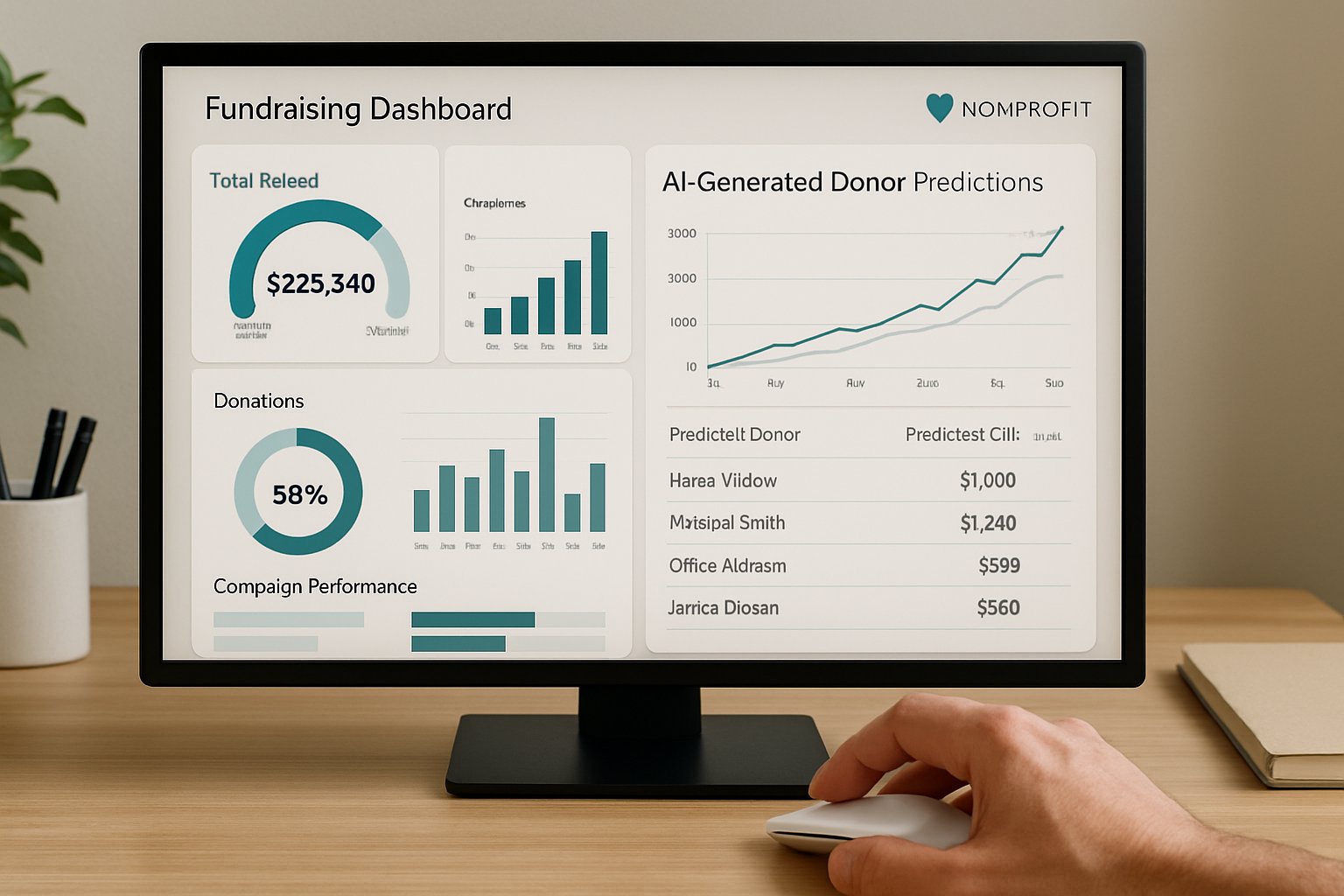
Against this backdrop, Fundraising Prediction Tech gains relevance. Additionally, market analysts note that more than 35,000 organizations raised $13 billion through Neon One products since 2021. Such volume supplies the historical patterns modern algorithms crave. Nevertheless, ethical deployment remains essential. These trends set the stage for Neon One’s latest moves.
These dynamics illustrate why timing matters. Consequently, technology suppliers face pressure to deliver transparent, results-oriented systems.
Fundraising Prediction Tech Outlook
Investor chatter once focused on fintech. Today, Fundraising Prediction Tech headlines capital pitches. Moreover, Gartner’s recent Hype Cycle lists donor intelligence platforms near the "Slope of Enlightenment." Industry momentum accelerated after Neon One customers secured $25,621,043 on GivingTuesday 2025. Keith Reed emphasized that the day reflected years of sustained cultivation.
Analysts therefore expect predictive scoring demand to surge through 2027. However, adoption will hinge on governance assurances. Nonprofits must map donor history, behavior, and capacity while honoring consent. Neon One positions its stack as that safe conduit.
These forecasts highlight opportunity and responsibility. Accordingly, the next section dives into Neon One’s architecture.
Inside Neon One Approach
Product managers at Neon One built their platform around three AI pillars. Firstly, a Retrieval-Augmented Generation assistant called “Gen” surfaces contextual recommendations. Secondly, zero-retention contracts with undisclosed LLM vendors prevent data persistence. Thirdly, the Generosity Indicator provides cross-organization propensity scores.
Abby Jarvis wrote on 19 Feb 2026 that every tool “should enhance your ability to build connections.” Furthermore, administrators can toggle AI features off at any time. Nonprofits therefore maintain sovereignty over constituent records.
Generosity Indicator Core Mechanics
The Generosity Indicator analyzes recency, frequency, monetary value, and affinity signals. Moreover, it references a Global ID that links transactions across 2,748 organizations, covering 99,522 donors between 2020 and 2024. Fundraising Prediction Tech drives the numerical output, rating prospects one through five.
Explainability dashboards show which features influenced each prediction. Nevertheless, independent fairness audits remain unpublished. Professional developers seeking deeper technical grounding can enhance their expertise with the AI Developer™ certification.
Transparent architecture builds confidence. However, privacy controls complete the picture, as explored next.
Privacy Governance Balance Point
Sector guidelines from Fundraising.AI urge privacy-first design. Consequently, Neon One bans training external models on customer information. Additionally, the firm labels AI-generated content and stores no prompts.
Critics still question cross-tenant scoring. In contrast, company spokespeople argue that aggregated donor history retains anonymity. Nevertheless, calls for third-party audits grow louder. Fundraising Prediction Tech cannot thrive if donors perceive surveillance.
These debates underscore a core tension. Therefore, examining real-world impact helps evaluate risk versus reward.
Practical Benefits Delivered Daily
Practitioners report tangible efficiencies once predictive signals flow directly inside the CRM. Moreover, staff avoid manual exports, reducing security exposure. The following list summarizes headline gains:
- 30% faster campaign segmentation, according to internal Neon One benchmarks.
- Seven-point rise in monthly donor retention among early beta users.
- Real-time content prompts that reflect individual donor history and channel preference.
Fundraising Prediction Tech appears to convert insights into action. Additionally, integrated support bots called “Ace” answer configuration questions around the clock. Nonprofits with limited headcount therefore reclaim hours weekly.
These outcomes validate predictive approaches. However, unresolved questions remain, as outlined below.
Future Questions To Ask
Journalists and CIOs should keep pressing for transparency. Moreover, verifying which LLM providers hold temporary data is critical. Stakeholders might ask Neon One to publish model cards detailing bias tests. Furthermore, donors deserve clarity on opt-out mechanisms.
Regulators may soon require algorithmic impact assessments. Consequently, vendors that embrace open documentation will gain competitive edge. Fundraising Prediction Tech vendors, including Neon One, must anticipate that scrutiny.
These inquiries will shape trust trajectories. Therefore, organizations should monitor policy updates closely.
Professionals eager to influence upcoming standards can deepen their technical fluency through the previously mentioned AI Developer™ program.
These forward-looking steps strengthen sector resilience. Nevertheless, summarizing today’s insights clarifies the road ahead.
Conclusion
Predictive analytics now sit at the heart of modern development strategy. Moreover, Neon One offers a privacy-aware blueprint for deploying such tools. Fundraising Prediction Tech, when governed responsibly, can boost revenue, sharpen messaging, and honor donor intent. Nevertheless, independent audits and clearer vendor disclosures remain urgent next steps.
Consequently, nonprofit leaders should trial the features, request documentation, and stay engaged in sector forums. Ready to lead that conversation? Explore the linked certification to build the skills that guide ethical AI adoption.
Disclaimer: Some content may be AI-generated or assisted and is provided ‘as is’ for informational purposes only, without warranties of accuracy or completeness, and does not imply endorsement or affiliation.


