

AI CERTS
2 months ago
Nvidia Agent Toolkit Powers Enterprise Orchestration Framework
This article unpacks the toolkit, the participants, and the business impact for technical decision makers. Moreover, we spotlight certification paths that help teams build production expertise quickly. Read on to see how Adobe, Salesforce, and core integrators structure real deployments today.
Market Shift Signals Adoption
Six months ago, only open-source hobbyists experimented with autonomous agents behind firewalls. Subsequently, corporate architects demanded stability, observability, and compliance. Nvidia answered with the NeMo Agent Toolkit, Nemotron models, and NIM inference microservices. Industry watchers therefore track deployment references rather than raw hype. Press releases cite 17 household brands, yet only some detail production metrics. Still, each confirmed integration treats the stack as an Enterprise Orchestration Framework spanning design, security, and government workloads.
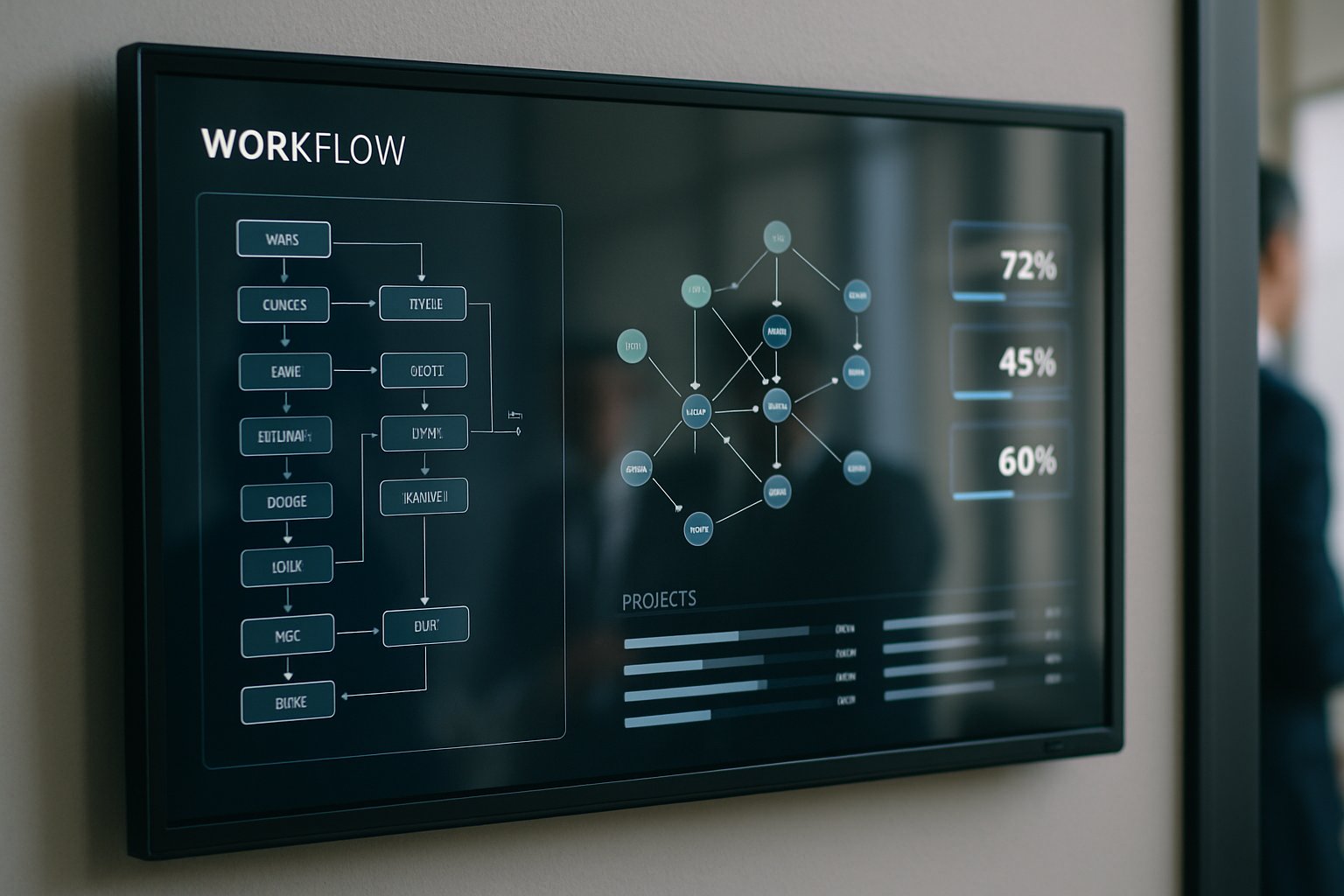
These market signals indicate real momentum. Consequently, enterprise strategists must pay close attention. Meanwhile, partnership dynamics reveal how that momentum converts into spend.
Key Players And Partnerships
Synopsys grabbed headlines first with a $2 billion strategic deal. Furthermore, the EDA leader embedded NeMo components into AgentEngineer workflows for chip verification. CrowdStrike followed, integrating the Agent Toolkit into Falcon pipelines to detect lateral movement. Adobe and Salesforce also announced sandbox pilots that unite creative and CRM data with the same orchestration primitives. Indian integrators Infosys, Wipro, Persistent, and Tech Mahindra contributed turnkey blueprints for regulated sectors. H2O.ai meanwhile packaged a Flood Intelligence solution using Nemotron and the Agent Toolkit to analyze satellite feeds.
Together, these actors reinforce the Enterprise Orchestration Framework narrative across design, security, creative, and public services. Partnership breadth signals cross-domain confidence. Nevertheless, technology depth matters as much as logos. Therefore, the next section dissects the stack's technical layers.
Technology Stack In Depth
At the heart sits the NeMo Agent Toolkit orchestration runtime. It coordinates language models, tool connectors, memory stores, and safety guardrails. Nemotron reasoning models provide the cognitive layer, while NIM microservices deliver efficient GPU inference. Consequently, developers may swap models without rewriting orchestration code. OpenShell guardrails enforce policy decisions and monitor system calls in real time.
This layered architecture forms the technical foundation that enterprises can audit and extend. Each layer plugs into the broader Enterprise Orchestration Framework through well-defined gRPC and REST endpoints.
Hardware Software Synergy Explained
Blackwell-class GPUs accelerate parallel agent swarms with lower latency. Moreover, Nvidia exposes performance counters that feed back into planning loops for efficiency. Such observability reinforces the foundation for auditability. The stack combines modular software and purpose-built hardware. Consequently, teams gain predictable throughput at scale. Ultimately, such harmony underpins the Enterprise Orchestration Framework philosophy. Next, we examine tangible enterprise benefits.
Benefits For Enterprise Teams
Early case studies demonstrate significant productivity gains. ThinkDeep reduced document retrieval from two days to two minutes inside a French ministry. Similarly, Synopsys reported faster verification loops during chip design sprints. Moreover, H2O.ai quantified €2 million annual savings by pairing Nemotron with the Agent Toolkit in flood analytics.
- Faster time to production
- Lower inference cost per request
- Unified governance across clouds
Collectively, these returns validate the Enterprise Orchestration Framework as a repeatable accelerator for digital programs. Therefore, stakeholders view the stack as a strategic foundation for cross-team collaboration. Compelling ROI persuades executive boards quickly. Nevertheless, every advantage brings aligned risks. The following section addresses those concerns head-on.
Risks And Needed Mitigations
Autonomous agents raise obvious security questions. In contrast, OpenShell guardrails intercept questionable tool calls before damage occurs. However, policy tuning still demands human oversight and red-team drills. Vendor influence also surfaces as enterprises standardise on Nvidia GPUs and APIs. Therefore, architects should design modular abstractions to preserve exit options.
Regulated industries face extra compliance tasks, including data residency audits. Subsequently, many partners deploy on-prem clusters to satisfy sovereignty requirements. Even with these actions, every Enterprise Orchestration Framework rollout needs ongoing penetration testing and governance checkpoints. Such discipline forms the foundation of sustainable trust.
Risk mitigation demands a layered strategy. Consequently, planners must align people, process, and platform. With safeguards addressed, leaders can map the road ahead.
Strategic Roadmap Lies Ahead
Short term, enterprises will lift limited agent pilots into controlled production groups. Subsequently, cross-department federations will emerge, sharing prompts, memory, and tool registries. Moreover, Adobe plans creative-suite integrations, while Salesforce eyes sales assistant rollouts tied to conversational data. Analysts expect at least 100 enterprise labs to adopt the Enterprise Orchestration Framework pattern within 18 months. Meanwhile, community ecosystems will cross-pollinate with LangChain and OpenClaw projects. Professionals can enhance their expertise with the AI Engineer™ certification. The credential provides structured guidance on orchestrating multi-agent workflows atop this foundation.
Roadmaps show rapid scaling potential. Consequently, the Enterprise Orchestration Framework will likely become a default pattern. Therefore, continuous learning will separate winners from observers. Let us close with key insights.
Conclusion And Next Steps
Enterprise AI is entering its orchestration phase, and Nvidia has set the pace. Because the NeMo stack is open-source, vendor ecosystems can flourish while still anchoring on proven guardrails. Moreover, confirmed partners such as Adobe, Salesforce, Synopsys, and CrowdStrike already translate hype into operational value. Nevertheless, success depends on disciplined governance and skills development. Consequently, organisations should benchmark pilots against clear KPIs, enforce layered security, and invest in specialised training.
Professionals seeking an edge should explore the linked AI Engineer™ certification. Then, they can build the next Enterprise Orchestration Framework deployment. The moment demands informed action; the tools and knowledge now exist.
Disclaimer: Some content may be AI-generated or assisted and is provided ‘as is’ for informational purposes only, without warranties of accuracy or completeness, and does not imply endorsement or affiliation.


