

AI CERTS
2 months ago
Railway Automation reshapes global rail
Railway Automation therefore represents not only a technology shift but also a governance test for every Ministry overseeing national railways.
Stakeholders face uneven progress across continents. However, recent European reports and United States rulemakings clarify priorities, costs, and lingering safety gaps. This feature distils the latest Tech developments, policy moves, and market signals, offering professionals a clear portal into 2026’s operational landscape.
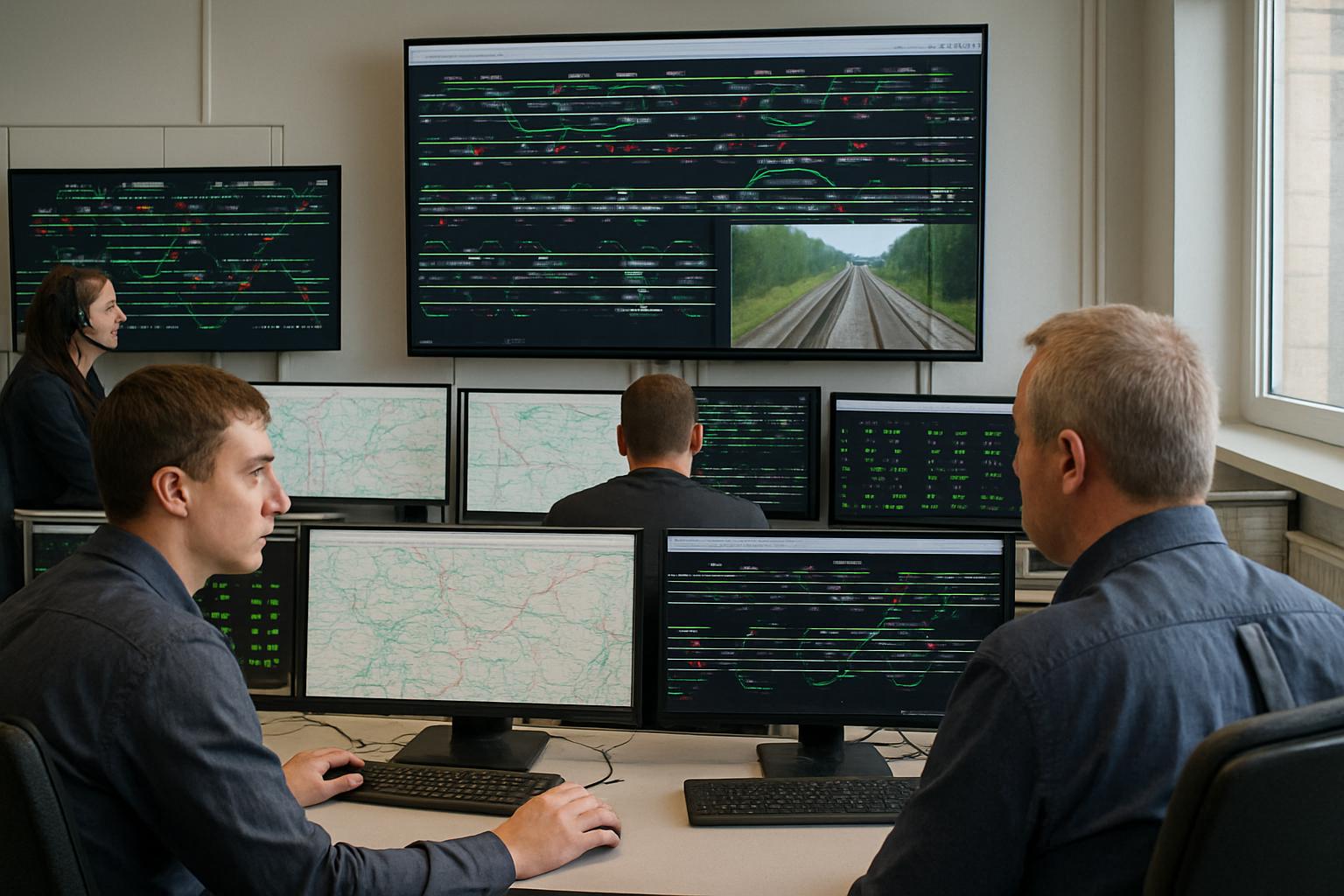
Digital Signalling Urgency Grows
European railways remain under pressure to accelerate ERTMS and ETCS rollouts. Furthermore, the Third Work Plan released in February 2026 revealed only 10 % core-network coverage and 19 % fleet fitment by end-2024. Matthias Ruete stressed, “The debate is now about how and when.” Therefore, Ministries must resolve financing and governance bottlenecks quickly.
Interoperable in-cab signalling promises higher capacity, fewer delays, and better cross-border freight paths. Nevertheless, multi-decadal migration produces hybrid operations that complicate dispatching and maintenance. Railway Automation solutions mitigate many conflicts by integrating Automatic Train Operation layers above ETCS.
These deployment gaps highlight urgent strategic choices. Subsequently, the discussion shifts to communications infrastructure supporting that signalling.
FRMCS Powers Connected Operations
Future Railway Mobile Communication System (FRMCS) uses 5G standards to replace aging GSM-R. Moreover, recent UIC tests proved dedicated 5G bands can meet stringent rail latency needs. Vendors such as Nokia and Ericsson now market private 5G kits tailored for railways.
Dual-mode radios will run during 2025-2035, ensuring legacy trains remain connected. In contrast, new fleets already embed FRMCS-ready modems, easing future upgrades. Railway Automation relies on consistent, high-bandwidth links for real-time data, video, and ATO commands. Consequently, spectrum policy debates intensify because Ministries must secure clean channels before telecom auctions close windows.
Strong connectivity underpins safer operating models. However, North American regulators approach automation through a different lens.
PTC Rules Under Review
The Federal Railroad Administration issued a Notice of Proposed Rulemaking in October 2024 addressing Positive Train Control outages. Additionally, an April 2024 technical paper studied restricted-speed enforcement, informing policymakers. Industry leaders like BNSF report 17,000 PTC-equipped miles, yet watchdogs cite safety gaps.
Public comments argue the draft policy must prevent loopholes, not endorse relaxed standards. Nevertheless, Railway Automation advocates note that stricter analytics and cloud telemetry can detect failures faster than human oversight. Therefore, FRA faces pressure to balance innovation with accountability.
These regulatory debates foreshadow broader cybersecurity mandates discussed next.
Cybersecurity Stakes Intensify Rapidly
Digitalisation expands the rail attack surface. EU Rail’s System Pillar therefore released a rail-specific cybersecurity specification in 2025, mapping NIS2, RED, and IEC controls. Moreover, the spec prepares for inclusion in future Technical Specifications for Interoperability.
Operators must now audit legacy assets, segment networks, and deploy continuous monitoring portals. Consequently, procurement rules increasingly require suppliers to certify compliance. Railway Automation platforms embed zero-trust architectures, yet real-world integration remains patchy.
Enhanced security reduces systemic risks. However, decision-makers still question commercial viability, especially when market projections vary wildly.
Market Forecasts Remain Volatile
Analyst firms disagree on digital-rail valuations. Some scope signalling only, estimating a 2024 Railway Automation market near US$10 billion with 6 % CAGR. Conversely, broader “connected rail” reports cite multi-tens-of-billions revenues.
For quick comparison, consider:
- ERTMS retrofits: ~8,730 vehicles completed by 2024 (ERA).
- PTC installations: ~17,000 miles on BNSF alone.
- Private 5G pilots: over 15 European corridors tested by 2025.
Investors therefore demand granular cost-benefit evidence. Ministries stress socio-economic returns such as modal shift and emission cuts, while railways highlight capacity uplift. Tech suppliers, meanwhile, pitch subscription portals for analytics, aiming to stabilise revenue streams.
These diverging numbers blur strategic hiring plans, a matter explored below.
Skills Fuel Automation Success
Workforce readiness can accelerate or derail Railway Automation projects. Moreover, retiring signalling engineers leave a talent vacuum. Organisations consequently invest in upskilling programmes combining operational know-how with software fluency.
Professionals can enhance their expertise with the AI Engineer™ certification. Additionally, rail-specific bootcamps now teach 5G systems, cybersecurity, and ATO algorithm tuning. Railway Automation demands multidisciplinary collaboration across safety, data science, and control theory.
Training priorities typically include:
- Safety-critical coding standards.
- Resilient network architecture design.
- Predictive maintenance model deployment.
Skilled teams therefore shorten commissioning cycles and satisfy stringent policy audits. Consequently, investors view human-capital strategies as leading indicators for programme success.
These capacity-building measures position organisations for forthcoming strategic milestones.
Strategic Moves Ahead Now
Digital signalling acceleration, 5G migration, and robust cybersecurity define 2026 rail priorities. Furthermore, Ministries tighten policy timelines while vendors push mature Railway Automation suites. Consequently, operators that integrate skills, Tech platforms, and funding streams will capture early advantages.
Continued attention to spectrum policy, portal security, and market transparency remains essential. Nevertheless, collaborative governance and certified talent can convert automation rhetoric into reliable service improvements.
Adopt a forward-leaning posture today. Explore advanced certifications, upgrade organisational skill sets, and join pilot consortia to lead the next era of safe, efficient, and sustainable railways.
Disclaimer: Some content may be AI-generated or assisted and is provided ‘as is’ for informational purposes only, without warranties of accuracy or completeness, and does not imply endorsement or affiliation.


