

AI CERTS
4 months ago
AI Tech Investment Shifts Toward Storage
Consequently, hyperscalers are racing to secure every available terabyte. Investors, meanwhile, are recalibrating models to capture the storage upside. Therefore, understanding how data growth, supply constraints, and conference signals intersect is critical for anyone tracking AI Tech Investment.
Cantor Conference Sets Stage
The investment bank opened its Global Technology & Industrial Growth forum with an explicit AI/HPC Infrastructure track. Subsequently, the agenda featured back-to-back sessions on storage technology, networking, and power design. Seagate’s CFO used a morning investor meeting to confirm participation in multiyear capacity agreements. In contrast, Western Digital scheduled closed-door chats that analysts labeled “sold-out 2026.” Furthermore, the research head C.J. Muse argued that memory and storage-tech markets remain undersupplied through 2027.
His comment echoed a June 2025 note that lifted price targets across the sector. Nevertheless, the conference tone balanced optimism with warnings about power constraints and capital intensity. These nuanced signals shaped early trading in Seagate shares. Consequently, AI Tech Investment narratives now highlight storage as a parallel play to accelerators. In summary, conference discussions cemented storage’s strategic role in AI buildouts. Next, hyperscalers explain why their data growth forces that pivot.
Hyperscalers Drive Storage Demand
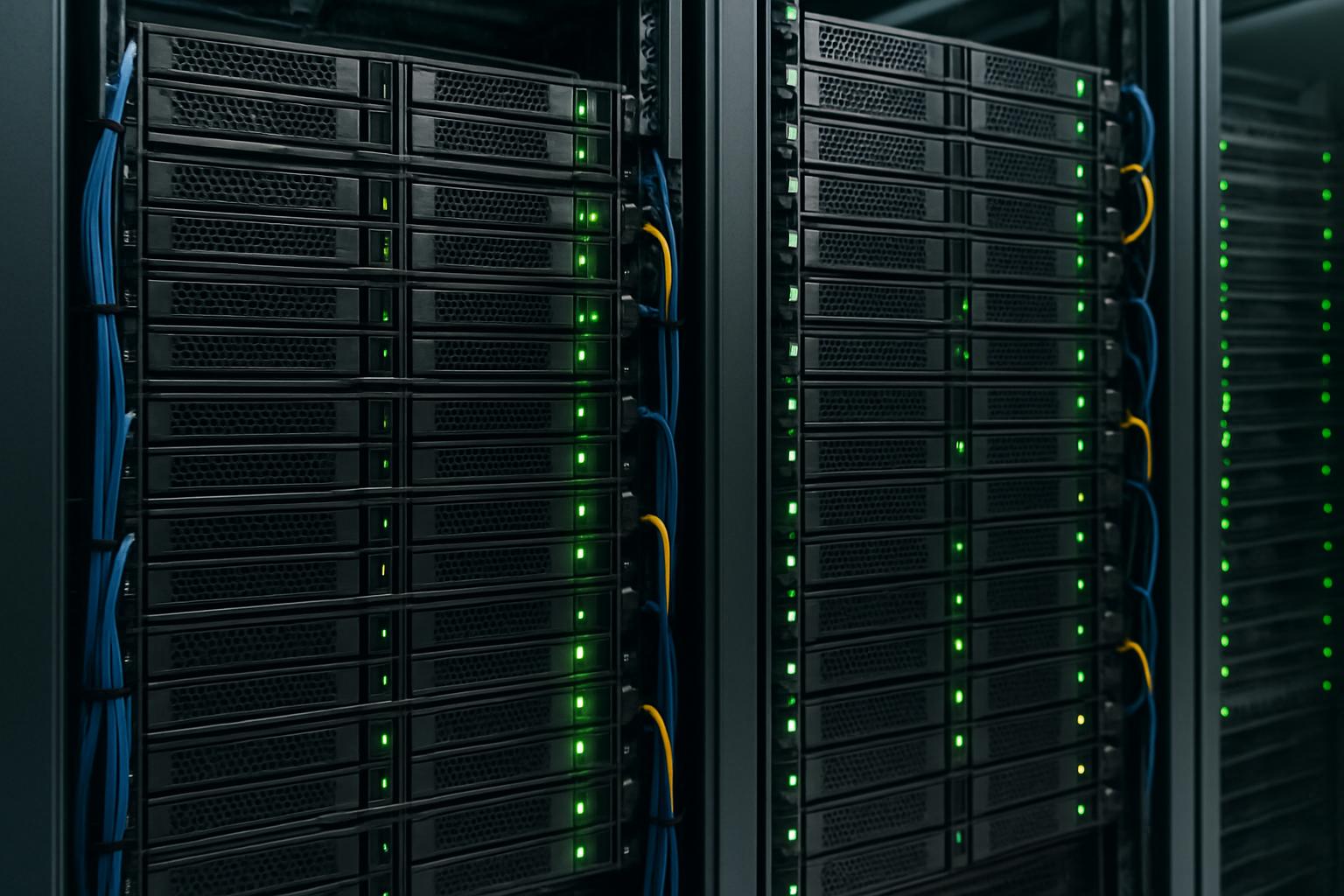
Hyperscalers dominate today’s capacity purchases. Moreover, Microsoft, Meta, and Amazon broadcast record training cluster budgets during recent investor meeting updates. IDC data, cited by brokerage analysts, projects global data creation hitting 527,469 exabytes by 2029. Consequently, storage technology must keep pace. Seagate CEO Dave Mosley told attendees, “AI applications amplify data’s economic value, pushing exabyte-scale requirements.”
His words match Western Digital guidance that its nearline drives are already reserved for calendar 2026. Furthermore, research shows model checkpointing creates persistent write bursts that traditional tiering never anticipated. The following figures illustrate scale pressure:
- Data created in 2025: 213,557 exabytes, up 25% year over year.
- Installed storage-tech capacity in 2025: 11,243 exabytes; projected 19,341 exabytes by 2029.
- Seagate quarterly revenue guidance, 2026: $2.90B, attributed to AI storage demand.
Additionally, hyperscalers sign long-term agreements that remove spot supply. In contrast, smaller enterprises face price volatility and longer lead times. Therefore, AI Tech Investment strategies now incorporate forward contracts for disks, not just GPUs. To summarize, hyperscalers’ data appetite locks most high-capacity inventory. Consequently, vendor roadmaps now chase larger platters and faster interfaces, a shift explored next.
Vendors Signal Tight Supply
Storage vendors responded to demand with record capacity launches. Seagate introduced 32-terabyte drives in January 2026, branding them ideal for AI pipelines. Meanwhile, Western Digital executives, during a separate investor meeting, declared they were “pretty much sold out for calendar 2026.” Moreover, the company confirmed firm purchase orders with its top seven customers. Analysts noted that such commitments convert to predictable cash flows yet aggravate shortages for smaller buyers. Consequently, supply bottlenecks strengthen pricing power across storage-tech segments.
Furthermore, product roadmaps emphasize areal density improvements rather than radical media shifts. Such incremental advances keep HDDs positioned as the lowest-cost storage technology for exabyte clusters. Nevertheless, power and cooling limits still constrain deployment velocity. Therefore, AI Tech Investment models must weigh energy budgets alongside terabyte costs. In brief, vendor commentary confirms a supply crunch lasting into 2027. Next, we dissect how tiered architectures soften latency penalties while capturing capacity economics.
Technology Stack Explained Simply
Modern AI workloads span three storage layers. Firstly, HBM and DRAM feed GPUs during active training. Secondly, NVMe SSDs provide high-throughput “hot” data staging. Finally, nearline HDDs archive massive checkpoints and embeddings. Moreover, hyperscalers fine-tune ratios between these tiers to balance latency, power, and budget. In contrast, many enterprises overinvest in flash because planning models ignore retention habits. Research warns that checkpoint hoarding multiplies capacity needs by up to five times. Consequently, a layered approach maximizes performance while minimizing spend.
Additionally, storage-tech innovations such as heat-assisted magnetic recording push HDD capacities past 30 terabytes. Western Digital and Seagate both target 40-terabyte milestones within two years. Meanwhile, PCIe Gen5 SSDs secure bandwidth for inference clusters. Therefore, architects evaluating AI Tech Investment must assess workload patterns before locking component contracts. The following checklist synthesizes best practices:
- Profile data lifecycles before choosing capacity tiers.
- Set retention rules to curb unneeded model checkpoints.
- Align power envelopes with rack-level thermal budgets.
Collectively, these practices reduce total cost of ownership by double-digit percentages. However, investors still care most about margin expansion, a topic examined next.
Investment Implications Rise Sharply
Capital markets have started repricing storage names. For example, Cantor raised Seagate’s target price to $400 after the March conference. Moreover, strong guidance drove a 15% weekly rally. Similarly, Western Digital gained as traders absorbed its sold-out statement. Consequently, AI Tech Investment themes extend beyond semiconductor plays. Furthermore, option volumes suggest investors expect continued volatility as supply dynamics evolve.
Institutional desks now join every relevant investor meeting to glean clues about backlog conversion. Additionally, field notes from the brokerage highlight a growing preference for vendors with vertically integrated storage technology. Nevertheless, risks persist. Power availability, rapid obsolescence, and concentrated hyperscaler bargaining power can compress margins if demand softens. Therefore, storage-tech valuations will hinge on execution and disciplined capital allocation. In essence, Wall Street sees storage as the pick-and-shovel trade behind AI. Next, professionals must consider skills that let them capitalize personally.
Skills And Certifications Matter
The talent market mirrors hardware trends. Moreover, employers increasingly request hands-on expertise with tiered architectures and data durability policies. Consequently, professionals who complement coding skills with infrastructure knowledge command premiums. Individuals can enhance their expertise with the AI Engineer™ certification. This program covers workload profiling, storage-tech fundamentals, and cost modeling. Furthermore, the credential signals readiness to guide AI Tech Investment decisions.
Nevertheless, certification alone is not enough. Practitioners should attend at least one industry conference or virtual investor meeting annually. These events reveal emerging storage technology roadmaps before public earnings calls. Therefore, continuous learning keeps architects aligned with rapidly shifting vendor offerings. Ultimately, sharpening skills fortifies career resilience while boosting organizational ROI. However, strategic thinking must translate into execution, a theme echoed throughout this discussion.
AI storage demand is neither hype nor temporary. Cantor sessions, vendor roadmaps, and hyperscaler contracts align to confirm lasting momentum. Moreover, supply constraints promise elevated margins for disciplined manufacturers. Consequently, AI Tech Investment strategies that overlook disks risk mispricing opportunity and threat alike. Investors should monitor quarterly capacity updates, power-availability disclosures, and product launches to validate theses.
Similarly, engineers must master tiered design and cost control. Therefore, pursuing the linked certification and attending future industry events form a practical action plan. In conclusion, storage may appear mundane, yet it now anchors AI’s next growth chapter. Stakeholders who act early will shape, and share, the upside of AI Tech Investment.
Disclaimer: Some content may be AI-generated or assisted and is provided ‘as is’ for informational purposes only, without warranties of accuracy or completeness, and does not imply endorsement or affiliation.


