

AI CERTS
3 hours ago
Technical Hiring Workflows Pivot Toward AI Infrastructure Talent
Moreover, RAND warns that 80 percent of AI projects falter without sturdy data pipelines. These realities push enterprises to reprioritize recruiting roadmaps. Nevertheless, talent scarcity and salary inflation complicate execution. Therefore, organizations need disciplined, metrics-driven approaches that balance capability, cost, and speed. This article maps the pivot, presents numbers, and outlines pragmatic steps for technical hiring leaders.
AI Recruiting Pivot Point
Enterprises once hired model researchers first. However, failure studies revealed a critical sequencing flaw. RAND researchers noted organizations often “lack necessary data and infrastructure” when models arrive. In contrast, hiring for infrastructure first shortens production timelines and reduces risk.
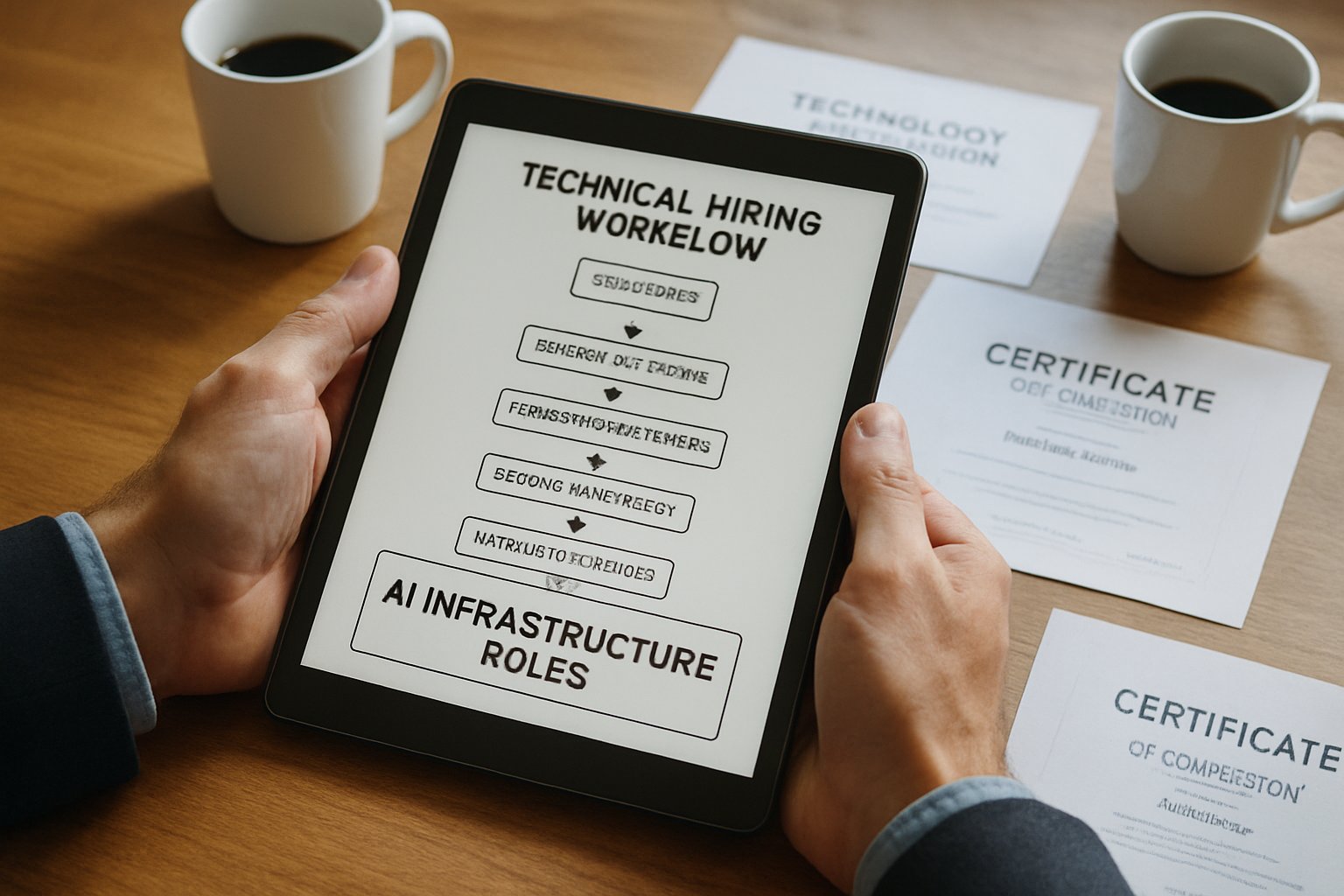
Consequently, technical hiring teams are rewriting scorecards. Recruiters now prioritize data engineers, MLOps experts, and site reliability staff. LinkedIn’s 2025 “Jobs on the Rise” list features “Artificial Intelligence Engineer” alongside “Platform Engineer” in multiple regions. Furthermore, Meta CFO Susan Li stated, “Developing leading AI infrastructure will be a core advantage,” underscoring market momentum.
These signals confirm the pivot toward operational talent. Therefore, the next section examines role demand in detail.
Infrastructure Roles Surge Ahead
Job board snapshots illustrate the surge. DoubleTrack recorded 111,296 AI/ML postings against 76,271 data-infrastructure openings in late 2025. Meanwhile, Mordor Intelligence projects double-digit compound growth for the AI infrastructure market through 2030. Moreover, hyperscalers have raised 2026 capex guidance into the tens of billions. Enterprise CIOs now budget years ahead for additional megawatts and cooling capacity.
Consequently, recruiters scramble to fill platform teams. Technical Hiring Workflows now include environment deep dives, hardware screenings, and hands-on technical assessments to validate CUDA, Kubernetes, and networking skills. Additionally, Gartner expects recruiting complexity to rise as hiring volumes climb.
Market momentum favors candidates with production experience. Nevertheless, employers that clarify role expectations, compensation, and growth paths secure offers faster.
Infrastructure hiring momentum is irrefutable. However, staggering failure rates still haunt AI programs, demanding further analysis.
Failure Rates Drive Change
RAND estimates show more than 80 percent of AI projects fail. Moreover, Fivetran found half of enterprises blame poor data readiness. Consequently, executives demand that recruiters align technical hiring pipelines with infrastructure milestones.
Technical Hiring Workflows now integrate checkpoints that ensure data engineering hires land before model teams. Additionally, several firms embed a mandatory technical-hiring review board that audits sequencing. This governance step reduces misallocation and accelerates later deployment.
Assessing pipeline maturity requires objective metrics. Therefore, leading teams deploy standardized technical assessments covering ETL design, feature store tuning, and monitoring practices. In contrast, organizations skipping this step often repeat past mistakes.
These corrective mechanisms lower project risk and improve ROI. Consequently, talent leaders must also contend with salary pressure and skill scarcity, detailed next.
Skills Gap And Salaries
Salary inflation is acute. Moreover, industry surveys show senior MLOps engineers securing packages exceeding some staff researchers. Meanwhile, mid-market startups struggle to match hyperscaler offers. Industry recruiters report 30% year-over-year spikes in offer sizes for senior platform talent.
Gartner notes that recruiters must refine compensation analytics. Consequently, technical-hiring teams bundle equity, remote flexibility, and learning budgets to stay competitive. Furthermore, purpose-driven missions attract candidates seeking meaningful impact.
Robust Technical Hiring Workflows integrate salary benchmarking tools, applicant tracking integration, and structured assessment rubrics. Additionally, consistent feedback loops help hiring managers adjust quickly when acceptance rates dip.
These tactics mitigate churn risks and boost employer appeal. Nevertheless, workflows only succeed when optimized end-to-end, a topic we address next.
Optimizing Technical Hiring Workflows
Workflow optimization begins with precise demand forecasting. Therefore, TA leaders partner with engineering to map sprint roadmaps onto technical hiring plans. Moreover, capacity models predict when platform engineers, SREs, and data architects must join.
Next, teams embed role-specific technical assessments early in the funnel. Consequently, unqualified applicants exit before costly interview loops. Recruiters also schedule interactive lab sessions that mirror production incidents, delivering richer assessment insight. Regular retrospectives update question banks to mirror new tooling stacks.
Automation improves throughput. However, human calibration remains vital. Structured interview panels, scorecard dashboards, and continuous feedback ensure bias reduction and consistent bar raising.
Finally, Technical Hiring Workflows link onboarding plans with training resources. New hires receive curated runbooks, mentor assignments, and optional certification vouchers.
These elements transform reactive recruiting into predictable pipelines. Subsequently, certifications can further reinforce expertise, explored below.
Key Market Statistics Now
- LinkedIn lists AI engineers and platform engineers among 2025's fastest-growing roles across 25 countries.
- DoubleTrack shows a 46% posting gap between AI/ML and data-infrastructure openings.
- RAND reports 80% AI project failure rates linked to data and infrastructure deficits.
- Mordor Intelligence projects double-digit CAGR for the AI infrastructure market through 2030.
These figures validate the urgency of robust processes. Therefore, recruiters must act decisively.
Certification Pathways For Recruiters
Certifications offer structured skill validation. Professionals can enhance their expertise with the AI Sales Strategist™ certification. Although sales-oriented, the program deepens understanding of AI infrastructure economics, improving recruiter credibility.
Moreover, Technical Hiring Workflows often gate advanced roles behind certification prerequisites. Candidates holding relevant badges navigate interview loops faster, reducing time-to-fill. Additionally, certified recruiters speak the same vocabulary as hiring managers, strengthening stakeholder trust.
Organizations also sponsor employee assessment bootcamps. These workshops teach grading rubrics for technical assessments and reinforce compliance requirements. Consequently, quality rises while interview fatigue falls.
Certification strategies align workforce capability with business goals. In contrast, ad-hoc learning leaves critical gaps.
Structured certification integration caps workflow excellence. Therefore, leaders must continuously measure performance and refresh content.
These recommendations round out the recruitment playbook. Nevertheless, ongoing monitoring ensures relevance as markets evolve.
AI infrastructure hiring is accelerating. However, success hinges on synchronized Technical Hiring Workflows that prioritize infrastructure readiness. Consequently, organizations must refine technical hiring strategies, expand talent pools, and deploy evidence-based technical assessments. Moreover, dedicated review boards ensure technical-hiring decisions follow sequenced plans. Additionally, mature Technical Hiring Workflows integrate capability metrics into executive dashboards.
Certified recruiters, supported by data, close offers faster and improve assessment accuracy. Nevertheless, competition remains intense. Therefore, leaders should audit current Technical Hiring Workflows quarterly and iterate with market feedback. Ready teams will capture AI value first. Explore certifications today and fortify your hiring advantage.


