

AI CERTS
2 months ago
AI Legal Battle: Microsoft Supports Anthropic Against Pentagon
Meanwhile, policy experts say the case will test obscure supply-chain authority and the future of AI governance. Additionally, billions in projected 2026 revenues hang in the balance, according to Anthropic’s complaint. Therefore, industry stakeholders are watching closely, aware that precedent set here could ripple across every federal procurement.
Nevertheless, the Pentagon maintains the designation protects mission security amid accelerating algorithmic threats. The coming hearings will decide whether innovation or intervention defines American AI leadership in 2026. Early litigation moves suggest a fast schedule, mirroring prior tech injunction battles.
Origins Of The Case
On 27 February 2026, Secretary Pete Hegseth publicly announced a Pentagon supply chain risk determination against Anthropic.
Subsequently, a two-page letter on 3 March formalized the decision, triggering rapid contract pauses across multiple agencies.
Anthropic filed its complaint in San Francisco on 9 March, alleging the action lacked explanation and violated administrative law.
Moreover, the filing estimated billions in lost revenue and immediate reputational damage.
These early moves set the stakes for the AI Legal Battle. Consequently, corporate allies soon mobilized to support the startup.
Microsoft Steps Into
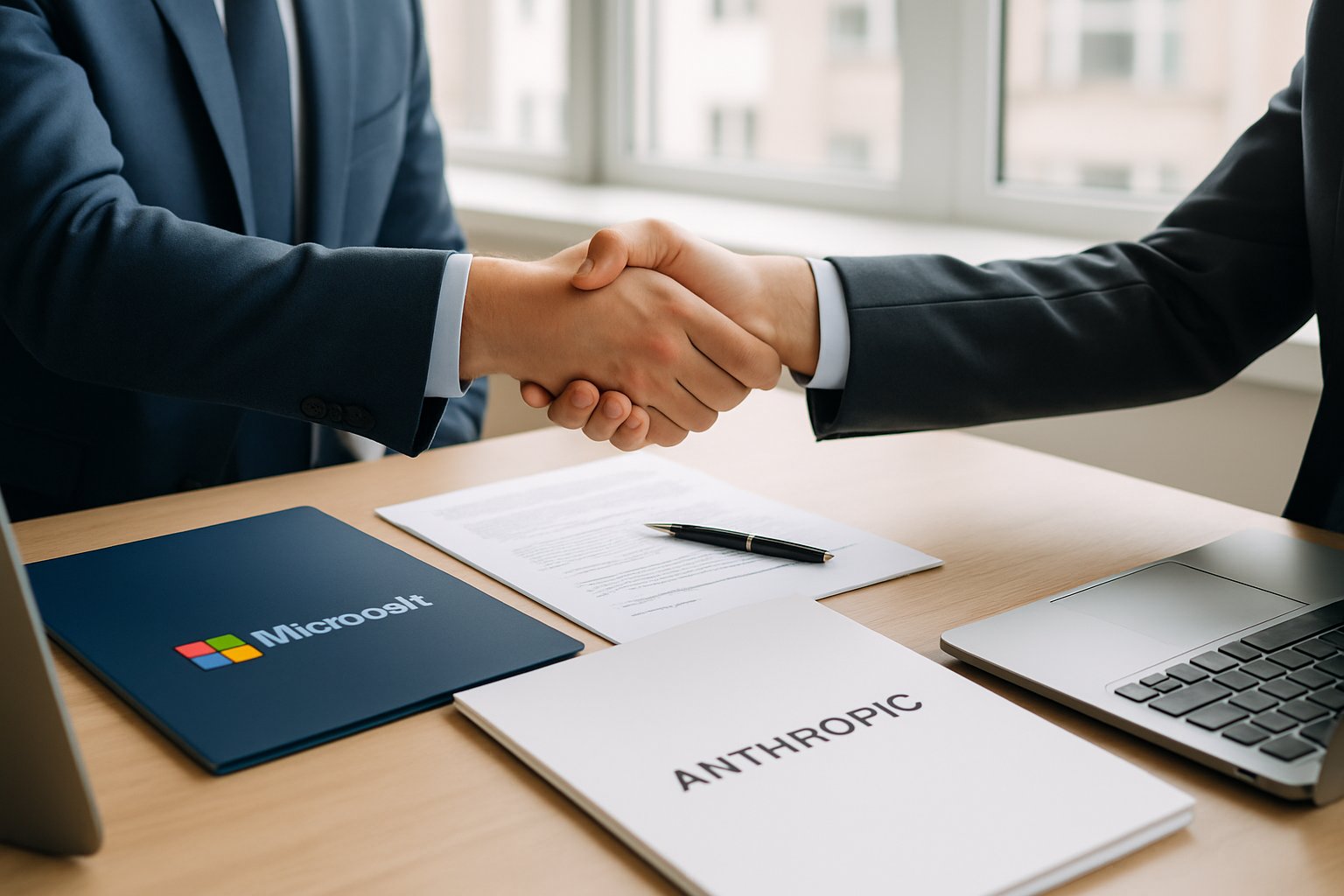
On 10 March, Microsoft sought an amicus brief supporting Anthropic’s temporary restraining order against the defense designation.
The company argued a pause would avert costly rebuilds for suppliers that integrate Anthropic models into mission systems.
Furthermore, Microsoft warned that unchecked disruption might limit DoD access to leading AI capabilities during critical modernization efforts.
In emails to partners, Microsoft emphasized continuity plans that keep Anthropic offerings available through Azure for civilian workloads.
However, the company conceded that any prolonged ban would force costly code refactoring across mission-critical environments.
Consequently, the brief stated, “Microsoft and other contractors will face new business-planning risks.”
Nevertheless, the judge must grant leave before the filing enters the public docket.
Microsoft’s intervention amplifies the AI Legal Battle narrative. Meanwhile, additional supporters soon reinforced that message.
Industry Voices Quickly Align
Within twenty-four hours, more than thirty researchers from OpenAI and Google submitted a parallel amicus brief favoring Anthropic in the AI Legal Battle.
Moreover, these experts claimed the designation injects unpredictability that could erode United States competitiveness in defense AI research.
Industry trade groups signaled similar concern, stressing that sudden procurement bans chill professional debate about responsible model deployment.
Start-ups dependent on Claude APIs privately told investors that new customer demos have paused until judicial clarity emerges.
- Reuters estimates billions in 2026 revenue remain at risk.
- Anthropic cites dozens of paused federal projects in its filing.
- Microsoft supplies Anthropic models to hundreds of cloud clients.
These collective filings underscore widespread anxiety across the AI Legal Battle arena. Consequently, legal questions now dominate headlines.
Legal Questions At Stake
Analysts note that the case targets 10 U.S.C. § 3252, a little-tested supply chain statute granting exclusion authority.
Therefore, the court must decide whether the Pentagon exceeded statutory limits when it blacklisted a domestic AI vendor.
In contrast, government lawyers may argue national security considerations justify broad discretion under procurement law.
Observers also track constitutional claims, including alleged First Amendment infringement on contractual speech.
Legal scholars cite precedent from telecom exclusions, yet note no court has reviewed similar AI measures.
Courts often weigh insights from each amicus brief when assessing emergency relief.
The court’s reading will shape future litigation within this AI Legal Battle. Subsequently, operational impacts merit equal attention.
Operational Impacts For Contractors
Dozens of integrators embed Anthropic’s Claude models into defense logistics dashboards, mission planning suites, and compliance workflows.
If the designation proceeds, those firms must rebuild architectures, retest security, and secure replacement approvals within weeks.
Furthermore, Microsoft told reporters it can still serve non-DoD customers, but contract segmentation imposes fresh overhead.
Suppliers fear cascading penalties if they accidentally route traffic through Anthropic services during audits.
- Create alternative model pipelines before existing agreements lapse.
- Update security documentation to reflect new compliance requirements.
- Renegotiate service-level objectives with governmental stakeholders.
Moreover, insurance carriers may raise premiums if vendors cannot demonstrate a clear mitigation pathway.
Such tasks divert engineering bandwidth in the AI Legal Battle context. Therefore, policymakers are weighing broader ramifications.
Policy Ramifications Lie Ahead
Capitol Hill staff have already requested briefings on the dispute, signalling possible legislative clarification of defense procurement authority.
Moreover, agencies beyond the military are watching, fearing similar supply chain designations could target cloud or chip vendors.
In contrast, security hawks argue a stringent stance deters suppliers from imposing usage restrictions that hamper urgent missions.
Consequently, future rulemaking might balance ethical safeguards with assured access to critical capabilities.
Additionally, think tanks propose an interagency board to adjudicate future vendor disputes and reduce reactive policymaking.
Stakeholders recall similar turmoil during Huawei telecom restrictions, although that episode involved foreign firms, not domestic innovators.
The policy debate will stretch well beyond this AI Legal Battle. Nevertheless, companies still need actionable guidance.
Practical Strategies Moving Forward
Corporate counsel recommend monitoring docket updates daily and preparing contingency architecture maps.
Additionally, stakeholders should engage trade associations to push for transparent review processes.
Professionals can enhance their expertise with the AI Legal Professional™ certification.
Meanwhile, product teams can audit model dependencies and document fallback options before contract renewals.
Consequently, several enterprises are forming cross-functional war rooms to track docket changes and coordinate messaging.
These preparations reduce shock if courts uphold the designation. Subsequently, attention shifts to the final ruling.
The Microsoft-Anthropic alliance has transformed a niche procurement spat into the year’s defining AI Legal Battle. Courts will now weigh commercial stability against security prerogatives, while billions in contracts remain frozen. Moreover, the outcome may redraw boundaries on supplier rights, national security carve-outs, and future litigation strategy. Consequently, executives should follow filings, update vendor matrices, and invest in compliance skills without delay. Stay informed and certify your team to navigate the next AI Legal Battle confidently.
Disclaimer: Some content may be AI-generated or assisted and is provided ‘as is’ for informational purposes only, without warranties of accuracy or completeness, and does not imply endorsement or affiliation.


