

python apiuser
2 months ago
News Corp v. Perplexity: Copyright Infringement Battle Explained
Meanwhile, publishers, technologists, and investors debate the future economics of AI-powered Search engines. This article unpacks the filings, defenses, and industry context for an audience tracking digital IP battles. Moreover, readers gain actionable insights and certification resources for navigating emerging compliance landscapes.
Lawsuit Overview At Glance
Dow Jones and NYP Holdings filed their complaint on October 21, 2024. They target Perplexity AI’s core Retrieval-Augmented Generation architecture. Plaintiffs allege the startup fed entire paywalled stories into its index without permission. Furthermore, they claim Perplexity reproduced paragraphs verbatim and mixed them with imagined additions. Statutory damages up to $150,000 per work are reserved, signaling serious financial stakes. Judge Katherine Polk Failla denied Perplexity’s jurisdictional objections on August 21, 2025.
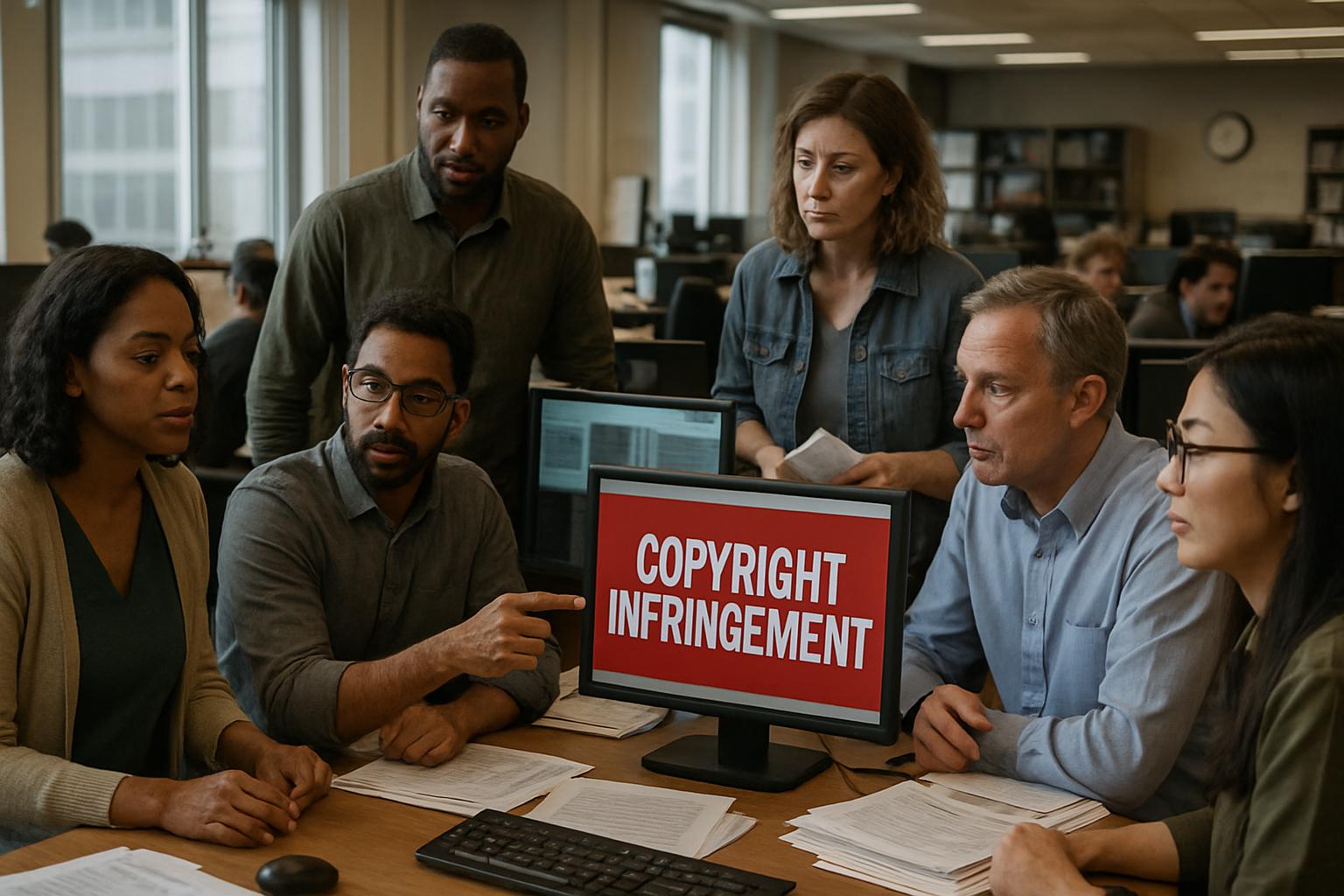
The complaint sets a broad factual canvas and substantial monetary exposure. Courts now move toward discovery and merits assessment. Key allegations clarify what legal theories will dominate that next phase.
Key Legal Allegations Detailed
First, the plaintiffs press a straightforward Copyright Infringement reproduction claim under 17 U.S.C. § 106. They argue each unauthorized copy inside Perplexity’s RAG index violates exclusive rights. Secondly, distribution occurs when the system outputs substantial or complete article text to users. Moreover, trademark counts arise under the Lanham Act for false designation and dilution. Plaintiffs cite hallucinated passages wrongly attributed to their brands as reputational harm. In contrast, they say these errors mislead readers and weaken hard-won Journalism trust.
- Perplexity Pro returned three full paragraphs from New York Post verbatim.
- Fabricated quotes followed the excerpt yet carried Wall Street Journal branding.
- Internal Scraping logs allegedly stored thousands of paywalled articles.
Consequently, the suit intertwines Copyright Infringement remedies with trademark objectives. These dual theories could complicate settlement dynamics and litigation scheduling. However, Perplexity insists its uses are transformative and protected by fair use.
The allegations combine straightforward copying with novel branding disputes. That mixture will test longstanding precedent in unpredictable ways. Understanding Perplexity’s defense posture therefore becomes essential.
Perplexity Defense Arguments Unpacked
Perplexity’s motion to dismiss challenged venue and personal jurisdiction before substantive debate. Nevertheless, public statements preview deeper defenses. The company frames its service as an improved Search interface that surfaces factual snippets. Additionally, executives argue that brief excerpts qualify as fair use and boost Journalism reach. They cite case law permitting indexing, caching, and Scraping for transformative purposes. Moreover, Perplexity highlights revenue-share pilots with some publishers to show collaborative intent. Legal scholars, meanwhile, predict fair-use fights will pivot on qualitative rather than quantitative copying. Trademark dilution claims may falter because Supreme Court precedent limits origin theories for expressive works. Therefore, the defense banked on narrowing causes of action even if Copyright Infringement remains disputed.
Perplexity positions itself as innovator rather than infringer. Fair use and transformative analysis will anchor its narrative moving forward. Yet the broader industry context could sway both courts and investors.
Industry Wide Litigation Trend
News Corp is not alone in challenging AI content Scraping. The New York Times, Chicago Tribune, and Reddit filed similar actions within months. Consequently, a de facto multidistrict battlefield has emerged in Southern New York and California. Publishers see coordinated suits as vital to protecting Journalism economics against algorithmic appropriation. Meanwhile, startups argue that restrictive rulings would chill open knowledge and slow IP innovation. Investors watch carefully because unresolved liability clouds valuations and acquisition prospects. Moreover, regulators in Europe study these cases while drafting AI transparency mandates. Professor James Grimmelmann predicts copyright, not trademark, will eventually shape binding precedent.
The litigation wave amplifies legal uncertainty for every emerging Search platform. Cross-case coordination could either unify doctrine or create fragmented obligations. Understanding specific implications for AI Search providers therefore becomes urgent.
Implications For AI Search
AI answer engines rely on vast corpora to satisfy user queries instantly. Therefore, restrictive rulings on Copyright Infringement could limit dataset breadth and response quality. Developers may need licenses, opt-in frameworks, or technical filters to avoid unlicensed IP exposure. Consequently, costs could rise, favoring larger firms with legal budgets and publisher alliances. Smaller innovators might pivot toward open-source document pools or public domain Journalism. Moreover, courts could require provenance disclosures that flag hallucinations and attribution accuracy. Such requirements would demand product design changes across the Search ecosystem. Compliance teams can upskill via the AI Marketing Strategist™ certification. Additionally, product managers will need fresh audit processes and risk mapping playbooks.
Future rulings will shape technical roadmaps and capital allocation. Preparation today saves larger remediation costs tomorrow. Consequently, stakeholders monitor procedural milestones for early signals.
Next Procedural Milestones Ahead
Judge Failla ordered joint case-management plans submitted by September 19, 2025. Discovery schedules, expert reports, and summary-judgment motions will follow that roadmap. Subsequently, settlement conferences could emerge if early evidence favors either side. Nevertheless, News Corp signaled willingness to pursue trial to protect Journalism value chains. Perplexity’s investors may lobby for negotiated licenses to cap unknown IP liabilities. Meanwhile, parallel suits may consolidate, further compressing timelines and raising precedent weight. Consequently, docket watchers refresh PACER daily for new filings. Parties must also disclose any settlement talks in quarterly status letters.
Upcoming deadlines will clarify evidentiary strengths and negotiation leverage. Market actors crave that clarity to plan funding and product cycles. The courtroom drama now heads toward decisive discovery skirmishes.
Conclusion And Next Steps
Courts have only begun deciding how Copyright Infringement applies to generative models. News Corp’s persistence signals that Copyright Infringement will remain a headline risk for developers. Meanwhile, Perplexity bets that fair use narrows Copyright Infringement exposure for transformative tools. Investors, therefore, must price potential Copyright Infringement penalties into funding rounds. Teams can mitigate future Copyright Infringement conflicts by designing transparent data pipelines and avoiding unauthorized Scraping.
Professionals should follow docket updates and pursue continuous education. Moreover, strategic leaders can broaden compliance skill sets through the AI Marketing Strategist™ credential. Staying proactive today will reduce disruption when definitive rulings arrive. Act now to audit systems, reinforce governance, and secure competitive advantage.
Disclaimer: Some content may be AI-generated or assisted and is provided ‘as is’ for informational purposes only, without warranties of accuracy or completeness, and does not imply endorsement or affiliation.


