

AI CERTs
2 months ago
Amazon OpenAI Investment Reshapes AI Cloud Power
Investors, developers, and regulators dissect the newest Amazon OpenAI Investment. The February 27 announcement shocked even seasoned analysts. Consequently, expectations for AI growth surged across markets. Moreover, observers noted the round dwarfs previous tech raises.
OpenAI revealed a colossal $110B funding round at a $730 billion pre-money valuation. Amazon led with $50 billion, while NVIDIA and SoftBank each supplied $30 billion. In contrast, the March 2025 raise was only $40 billion, underscoring accelerating capital needs.
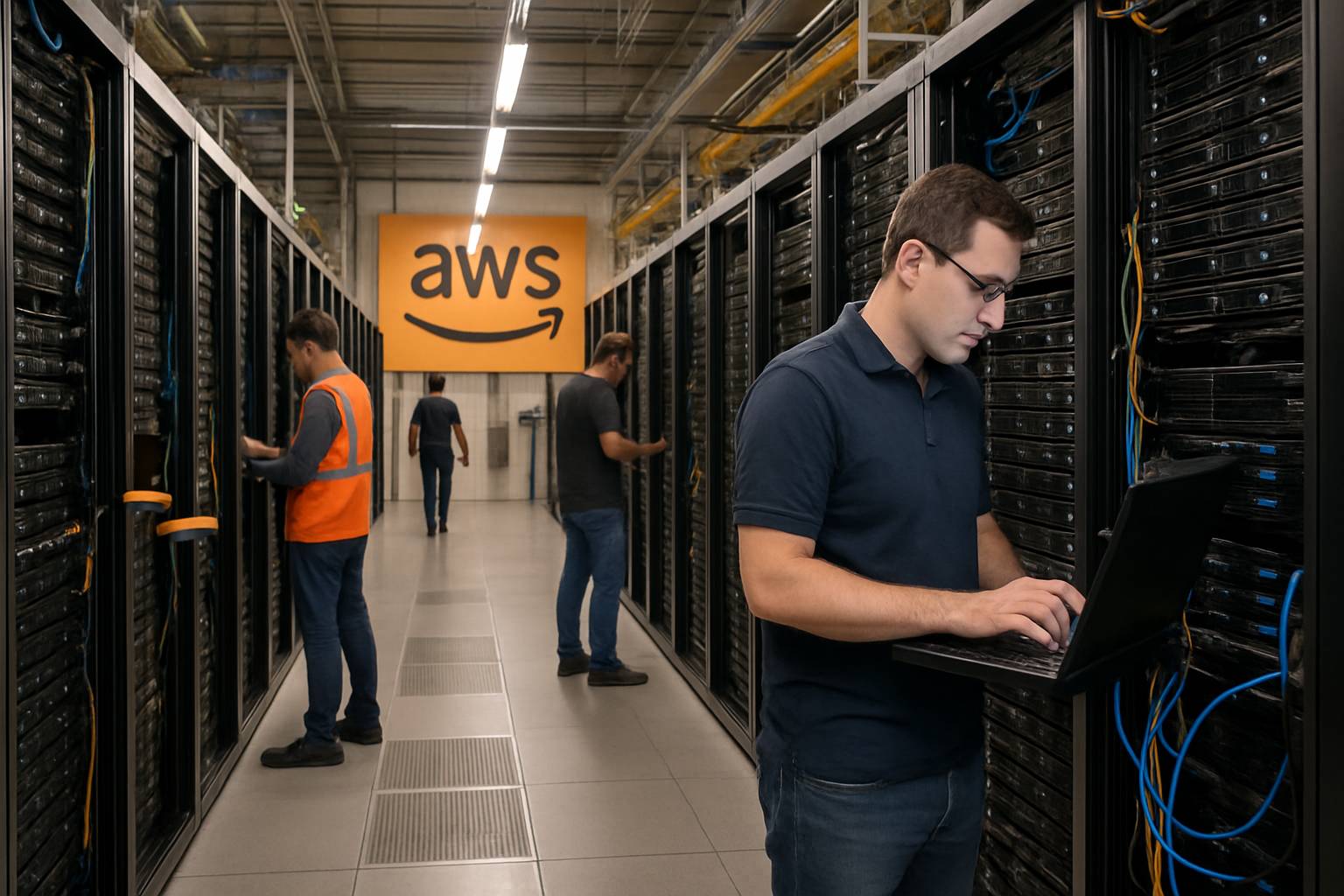
Record Funding Round Details
OpenAI structured the cash in two Amazon tranches. Initially, $15 billion closes immediately. Subsequently, $35 billion activates after milestone or IPO triggers. Meanwhile, market watchers debate the conditional timeline.
Major press coverage framed the news as historic. Furthermore, analysts compared it with other mega-raises, noting few match the sheer Infrastructure scope.
These facts clarify scale and timing. Nevertheless, deeper strategic drivers merit focus.
Therefore, the next section explores goals behind the move.
Amazon OpenAI Investment Objectives
Amazon signaled three clear motives for the Amazon OpenAI Investment. First, it cements AWS as a core AI platform. Secondly, it secures preferential access to frontier models. Finally, it promises recurring cloud revenue.
Andy Jassy highlighted developer demand for stateful runtimes on AWS. Consequently, Amazon agreed to become the exclusive third-party distributor for OpenAI Frontier.
Moreover, the deal strengthens Amazon’s chip roadmap. Trainium accelerators will host roughly two gigawatts of training capacity for OpenAI workloads. This commitment aligns hardware ambitions with software leadership.
These objectives reveal symbiotic benefits. However, delivering compute at scale requires vast resources, explored next.
Expanded AWS Compute Commitments
The commercial portion rivals the equity stake. OpenAI extended a previous $38 billion contract by another $100 billion spread across eight years. Therefore, total AWS spend could reach $138 billion.
The agreement covers power, silicon, and data center build-outs. Additionally, it repositions Amazon against Microsoft by hosting stateful services.
- 2 GW of Trainium capacity reserved
- $100B extra cloud consumption promised
- Exclusive Frontier distribution via AWS
- Potential $17 billion annual AWS revenue lift
William Blair estimates suggest double-digit percentage revenue upside for AWS. In contrast, Azure retains stateless API exclusivity, maintaining competitive tension.
These commitments intensify the Infrastructure race. Consequently, execution risks emerge, as discussed below.
Infrastructure Deployment Challenges Ahead
Supplying two gigawatts of AI power demands land, grid access, and skilled labor. Moreover, local communities question environmental impacts.
Analysts warn that chip supply remains tight despite ramped production. Nevertheless, Amazon insists Trainium roadmaps can scale.
Execution hurdles could delay capacity timelines. However, proactive permitting and renewable sourcing may mitigate backlash.
These challenges highlight critical gaps. Subsequently, competitive dynamics add further complexity.
Market And Competitive Landscape
Markets reacted swiftly to the Amazon OpenAI Investment. Bloomberg reported cloud and chip stocks rallying minutes after the release. Furthermore, analysts believe AWS reclaimed narrative leadership in AI infrastructure.
Microsoft issued a statement affirming cooperation with OpenAI. In contrast, some observers foresee intensified rivalry as clients choose between stateful and stateless offerings.
Regulators also noticed. Consequently, questions arose about exclusive distribution terms and potential antitrust triggers.
These dynamics influence strategic positioning. Nevertheless, regulatory scrutiny could reshape agreements, explored next.
Regulatory And Antitrust Watch
Antitrust experts study the deal’s exclusivity clauses. Moreover, European authorities already requested preliminary information from Amazon and OpenAI.
Critics argue massive cross-investment in cloud and AI could entrench dominant players. However, supporters cite diversification away from single-vendor dependence.
Consequently, future concessions or transparency commitments remain possible. Nevertheless, current timelines proceed while reviews unfold.
These watchdog actions create uncertainty. Therefore, professionals should consider upskilling to stay ahead.
Professional Upskilling Opportunities Emerging
Talent demand surges alongside the Amazon OpenAI Investment. Engineers, architects, and compliance leads need updated skills.
Professionals can enhance their expertise with the AI Executive™ certification. Additionally, business leaders gain strategic insight into AI governance through structured coursework.
Moreover, familiarity with Infrastructure scaling, funding structures, and regulatory frameworks will remain lucrative.
These programs prepare workforces for evolving demands. Consequently, organizations can capture value from emerging platforms.
The upskilling imperative underscores the deal’s ripple effects. Subsequently, the conclusion distills overarching lessons.
Conclusion
The Amazon OpenAI Investment injects unprecedented capital, compute, and commercial heft into generative AI. Furthermore, expanded AWS commitments promise long-term revenue streams while challenging Microsoft’s dominance.
However, power constraints, chip supply, and regulatory reviews threaten timelines. Nevertheless, OpenAI’s record $110B funding signals relentless investor confidence.
Consequently, professionals must track evolving Infrastructure deployments and compliance landscapes. Therefore, now is the moment to pursue advanced credentials and secure strategic advantage.
Explore certifications and deepen expertise today to capitalize on this transformative era.
Disclaimer: Some content may be AI-generated or assisted and is provided ‘as is’ for informational purposes only, without warranties of accuracy or completeness, and does not imply endorsement or affiliation.


