

AI CERTs
2 months ago
Spur Coalition reshapes UK NATO news
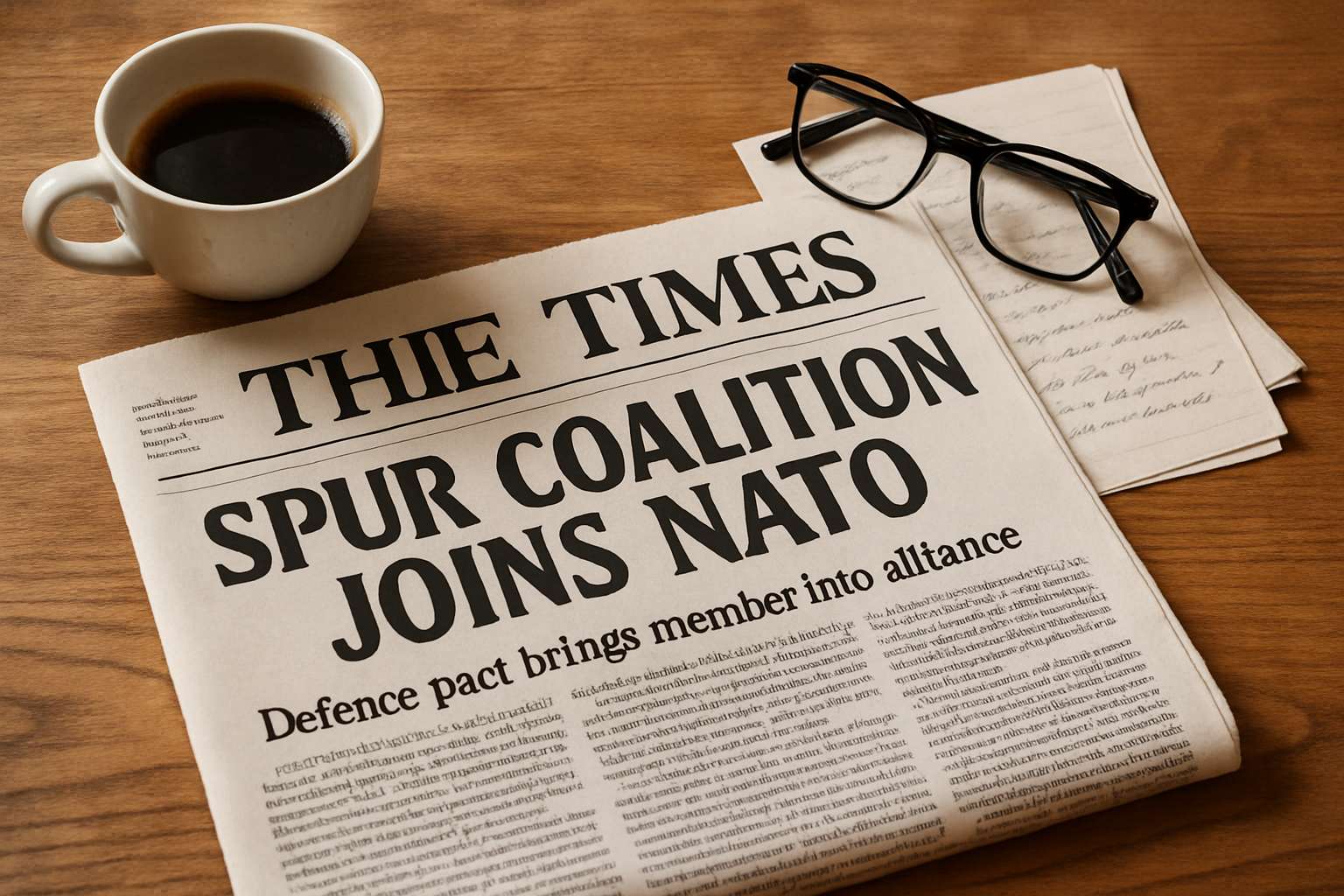
Britain’s newsrooms spent the last year dissecting NATO’s rising agenda. However, the debate now stretches beyond Westminster corridors. From primetime BBC bulletins to encrypted defence forums, every platform dissects strategy, budgets, and alliance cohesion. Consequently, a fresh media alignment emerges, which many insiders call the Spur Coalition.
That label captures editors, analysts, and digital producers who seek coordinated, evidence-led NATO coverage. Moreover, it reflects growing pressure on outlets to verify data, honour Licensing rules, and respect Copyright obligations while juggling speed. Therefore, understanding how UK media forms handle NATO news is essential for policy leaders and Journalism professionals.
This article maps the landscape, tracks policy catalysts, and examines economic tensions. Additionally, it explores how technology reshapes reach and suggests compliance steps, including the AI Security Compliance certification. Professionals can deepen compliance skills through the AI Security Compliance™ certification.
UK NATO Coverage Landscape
Public-service broadcasters still dominate initial NATO framing. The BBC secures unmatched reach, offering live debates with ministers and commanders. Meanwhile, Sky News, ITV, and Channel 4 provide rolling updates that supplement in-depth newspaper pieces.
National broadsheets, including the Financial Times and The Guardian, translate policy jargon into accessible economic angles. Digital-native outlets and specialist defence sites break procurement scoops using detailed datasets. In contrast, social platforms remix headlines, sometimes stripping vital context and Licensing notices.
These varied forms feed an information loop. Consequently, audiences receive parallel storylines, each coloured by editorial priority. The Spur Coalition seeks to harmonise factual baselines across all channels.
UK audiences therefore face both richness and fragmentation. Nevertheless, policy signals often set the tempo for every newsroom.
Policy Drives Media Narratives
Government white papers released in 2025 placed NATO at the heart of British security. Moreover, Mark Rutte’s Chatham House speech amplified calls for higher allied spending. Journalists quickly pulled headline quotes and statistics, ensuring stories aligned with new directives.
BBC correspondents highlighted the Strategic Defence Review’s promise of the largest investment since the Cold War. Additionally, print commentators questioned whether accounting methods masked softer numbers. Consequently, the Spur Coalition urged transparent figures that withstand international comparison.
Expert think-tanks such as RUSI and Chatham House offered instant analysis that news outlets integrated. Therefore, policy documents became both source material and litmus test for editorial independence.
Policy texts remain a narrative anchor. However, digital distribution shifts how those texts reach citizens.
Platforms Reshape News Reach
Ofcom data show online news surpassing television for the first time. Consequently, platform algorithms now decide which NATO stories trend. Facebook, X, and TikTok reward concise clips, often detached from Licensing or Copyright context.
BBC clips appear side by side with opinionated memes, blurring provenance. Moreover, younger audiences rely on influencers who may lack Journalism training. The Spur Coalition therefore champions verification labels and clearer source attribution.
Digital-first outlets exploit analytics dashboards to test multiple headlines within minutes. Nevertheless, public-service broadcasters struggle with slower editorial workflows.
Algorithmic curation amplifies reach but dilutes nuance. Subsequently, spending controversies gain viral momentum.
Budget Debate Sparks Scrutiny
Financial Times modelling suggests UK core defence spending could near 2.3% of GDP. However, ministers frequently cite broader totals above 2.5%. This accounting gap fuels commentary across newspapers and BBC radio shows.
Moreover, NATO leadership pushes for even higher targets, framing them as collective insurance. Journalists convert percentages into tangible figures like warship orders and munitions stockpiles. Consequently, the Spur Coalition gathers economists and defence editors to cross-check spreadsheets.
- 2025 Strategic Defence Review headline pledge: £65 billion annually
- Projected core spend share: 2.1-2.6% of GDP
- NATO common-funded 2026 budget: €3.1 billion
These figures appear across channels, yet definitions differ by outlet.
Budget framing shapes voter perception of credibility. Meanwhile, legal considerations also influence coverage decisions.
Licensing Copyright Pressures Mount
Rapid digital republishing intensifies permission headaches. Additionally, outlets must monitor Copyright compliance while chasing speed. BBC lawyers routinely issue reminders about embedding third-party footage.
Moreover, social creators sometimes lift graphics without attribution, risking infringement claims. Journalism unions therefore lobby platforms for stronger takedown mechanisms. Consequently, the Spur Coalition lists compliance training as a core pillar.
Professionals seeking formal guidance can pursue the previously mentioned AI Security Compliance certification. It blends legal, technical, and editorial modules relevant to automated content workflows.
Legal guardrails protect intellectual property and trust. Therefore, strategic collaboration becomes vital.
Spur Coalition Media Strategy
The Spur Coalition now outlines joint editorial standards covering sourcing, data verification, and transparent corrections. Furthermore, members schedule quarterly drills simulating misinformation surges.
Participants include BBC teams, regional publishers, and digital-native start-ups. Consequently, shared dashboards flag anomalies across social feeds within minutes.
Moreover, the initiative promotes cross-permission frameworks that let outlets exchange verified footage without complex paperwork. This model reduces Copyright friction and accelerates Journalism collaboration.
Coordinated standards improve resilience against narrative manipulation. Nevertheless, the future will test their scalability.
Future Outlook And Conclusion
Geopolitical turbulence shows no sign of easing. Consequently, NATO decisions will keep dominating British headlines, demanding agile, compliant storytelling.
Moreover, shifting consumption patterns require continuous platform experiments, especially as Licensing enforcement tightens. Journalists must therefore blend investigative rigour with algorithmic literacy.
Coalition partners, boosted by formal certifications, can lead this adaptation wave. Additionally, readers can strengthen personal compliance skills through the earlier linked programme.
In summary, UK media must balance speed, accuracy, and legality. However, coordinated strategies and sustained investment offer a viable path forward.
Engage with coalition outlets, pursue recognised certifications, and help craft informed NATO discourse for the next decade.
Disclaimer: Some content may be AI-generated or assisted and is provided ‘as is’ for informational purposes only, without warranties of accuracy or completeness, and does not imply endorsement or affiliation.


