

AI CERTS
3 months ago
Perplexity API Redefines Search Infrastructure for Developers
The launch signals a strategic pivot from consumer answer engine to foundational search technology provider. Moreover, Perplexity positions the service as an AI-optimized retrieval layer for RAG and agentic workflows. This article dissects the architecture, economics, risks, and roadmap shaping the Perplexity API offering. Industry analysts already debate sustainability, yet early adopters praise the speed and relevance gains. Furthermore, enterprise developers see newfound third-party independence from incumbent engines. Understanding these dynamics helps technology leaders assess whether integration should follow.
Evolving Search Infrastructure Landscape
Google and Bing long dominated large-scale crawling and ranking. Nevertheless, generative AI created demand for passage-level retrieval optimized for model context windows. Consequently, smaller startups began building vector databases, embeddings, and custom indexes. Perplexity joined that cohort but quickly expanded, serving about 200 million daily queries inside its consumer app. In contrast, the Sept. launch opened the same web index to outside developers through the Perplexity API.
Analysts observe that access to a fresh, neutral corpus grants teams valuable third-party independence during experimentation. Moreover, companies avoid scraping legal uncertainties by outsourcing crawling to Perplexity. Thomas Randall of Info-Tech argued that such services could become default retrieval layers for internal tools. However, he cautioned that independent benchmarks are still sparse.
The market now recognizes retrieval as critical infrastructure. Therefore, Perplexity’s entrance shifts competitive power toward specialized search technology suppliers. Next, we examine how the system works under the hood.
Inside Perplexity API Architecture
Perplexity engineered a hybrid lexical plus semantic pipeline that balances recall and precision. Initially, keyword scorers gather candidate documents. Subsequently, embedding similarities expand recall for conceptual matches. Later, cross-encoder re-rankers sort spans at passage level, delivering concise evidence. Such multi-stage optimization reduces token waste and improves answer grounding.
The company’s technical post details "tens of thousands" of CPUs and hundreds of terabytes of RAM powering the pipeline. Meanwhile, indexing throughput reaches tens of thousands of operations each second, according to Perplexity. Moreover, the web index already stores over 200 billion unique URLs and continues expanding. Latency remains low because span data stays resident in memory shards close to ranking models.
Key performance metrics highlight the scale:
- ~200 million search queries processed daily.
- Over 200 billion URLs held in the index.
- Tens of thousands of indexing operations each second.
- Per-request latency designed to stay under 300 milliseconds.
Collectively, these figures illustrate production readiness for demanding enterprise loads. Hybrid retrieval and span ranking exemplify deliberate optimization choices. Consequently, the Perplexity API promises precise, memory-efficient outputs for downstream models. Still, capacity means little without sustainable pricing, which we review next.
Pricing And Economic Realities
Perplexity bills the Search endpoint at $5 for every 1,000 requests. Developers on Pro plans receive a $5 monthly credit that offsets the first thousand queries. Furthermore, Sonar language model endpoints follow token pricing, separating retrieval costs from generation costs. In contrast, Google Custom Search charges on a per-query basis with stricter rate caps. Consequently, Perplexity positions its fee as predictable for scaling experiments.
Skeptics question whether unit economics work when crawling bandwidth and storage churn grow. Thomas Randall noted that large-scale indexing remains expensive even with cloud discounts. Nevertheless, Perplexity argues that multi-stage optimization lowers compute per request and preserves margins. Independent cost audits have not yet appeared, leaving open questions.
Transparent pricing encourages trial but sustainability awaits third-party verification. Therefore, economic clarity will influence adoption decisions discussed below. Let us explore competitive pressures and legal exposure.
Competitive And Legal Risks
Perplexity now competes with Google, Bing, and smaller SERP-scraper services. However, incumbents guard proprietary ranking signals and carry deep pockets. Consequently, differentiation rests on AI-centric features like span extraction and developer ergonomics.
Legal scrutiny from publishers remains another hurdle. Barron’s reported ongoing disputes regarding content use and potential copyright infringement claims. Perplexity states that opt-out mechanisms and takedown workflows are in place. Nevertheless, lawsuits could escalate costs or limit content coverage, affecting the web index quality.
Early adopters also worry about bias introduced through partner filters. In contrast, open benchmarking tools may expose weaknesses before production rollouts.
Competitive and legal forces could reshape service reliability and cost. Yet, third-party independence remains attractive for many firms seeking control. The next section profiles practical adoption patterns.
Developer Adoption Use Cases
Enterprises integrate the Perplexity API into retrieval-augmented generation chatbots, search bars, and analytic dashboards. For example, media platforms embed passage snippets to fact-check breaking news. Meanwhile, pharmaceutical researchers use domain filters to compare new studies rapidly. Startups building autonomous agents appreciate immediate third-party independence from closed engines.
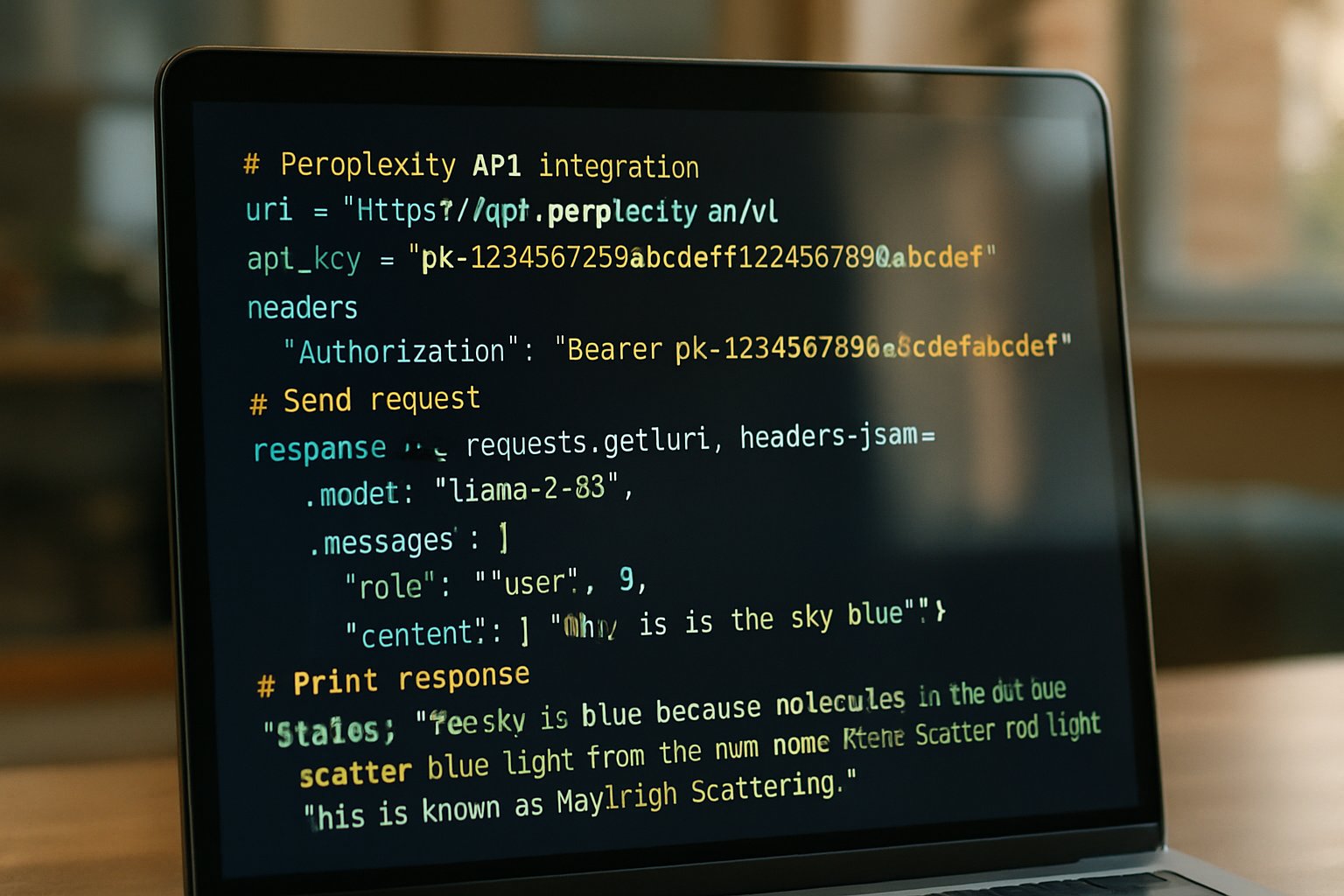
Typical integration requires only an SDK call that returns JSON with ranked spans, metadata, and relevance scores. Moreover, developers can chain Sonar summarization on top for natural language answers. Professionals can enhance their expertise with the AI Architect™ certification. Such credentials help teams validate architectural choices around search technology stacks.
Key adoption benefits include:
- Rapid prototyping without crawler maintenance.
- Consistent ranking tuned for language models.
- Lower risk through outsourced compliance safeguards.
Collectively, these perks accelerate product cycles and foster continuous optimization. Real-world projects show tangible latency and relevance improvements. Consequently, attention now shifts to future roadmap signals.
Future Roadmap Questions Ahead
Perplexity promises continual expansion of academic, finance, and location filters. Additionally, the company hints at streaming updates for near-real-time events. Analysts want clearer public benchmarks comparing recall against major engines. Subsequently, developers call for integration with vector databases and orchestration frameworks.
Cost transparency also remains on the wish list. Furthermore, enterprises await signed publisher licenses that reduce legal headwinds. Independent audits of bias, coverage, and latency would strengthen trust in the Perplexity API. Meanwhile, competitors may counter with cheaper tiers or bundled credits.
Roadmap clarity will govern long-term platform momentum. Therefore, stakeholders should monitor technical and commercial milestones closely. We conclude with strategic recommendations.
The Perplexity API arrives during a pivotal shift toward retrieval-augmented enterprise applications. Its expansive web index, hybrid ranking, and pricing simplicity offer credible search technology alternatives. Nevertheless, independent audits and publisher negotiations will define long-term trust in the Perplexity API. Consequently, engineering leaders should prototype early, benchmark thoroughly, and watch economic signals closely.
Teams benefiting from third-party independence can reduce infrastructure toil and focus on product differentiation. Meanwhile, ongoing optimization by Perplexity could lower costs and further boost relevance. Professionals should leverage certifications and community forums to master integration patterns around the Perplexity API. Act now to explore the Perplexity API, evaluate performance, and future-proof your intelligent products.
Disclaimer: Some content may be AI-generated or assisted and is provided ‘as is’ for informational purposes only, without warranties of accuracy or completeness, and does not imply endorsement or affiliation.


