

AI CERTs
2 months ago
SES AI bets on AI-driven Material Sourcing for battery leap
Robust energy storage underpins electrification. Nevertheless, legacy discovery pipelines move slowly. Consequently, innovators now deploy AI to compress experimentation timelines. SES AI has entered the spotlight by applying AI-driven Material Sourcing to lithium-metal chemistry. The company frames its approach as a “superintelligent” shortcut from hypothesis to prototype. Analysts watch closely because software margins could finally arrive in the battery sector.
Meanwhile, customers demand safer, lighter cells for drones, EVs, and grids. Moreover, government incentives reward rapid scale-up. These pressures create fertile ground for SES AI’s combined software, joint ventures, and manufacturing deals. Subsequent sections examine the moving parts and the remaining verification gaps.
Market Forces Accelerate Growth
Global battery energy-storage demand keeps rising. MarketsandMarkets projects USD 106 billion by 2030 for BESS alone. In contrast, SES AI cites a wider USD 300 billion opportunity that includes full energy-storage systems. Both estimates confirm strong momentum.
Furthermore, decarbonization policies tighten project schedules. Utilities therefore prioritize suppliers who can validate chemistries quickly. Here, AI-driven Material Sourcing promises predictive screening within hours, not years. Such speed could unlock faster revenue recognition.
- 2025 grid-storage deployments exceeded 50 GWh worldwide
- Average lithium-ion pack prices fell below USD 100 kWh in 2025
- Li-metal research funding rose 28 % year-over-year
These data points reveal a dynamic arena. However, competitors also chase similar breakthroughs, which raises execution pressure on SES AI.
These market trends highlight urgency. Consequently, technology differentiation becomes vital for sustained advantage.
Inside Molecular Universe Platform
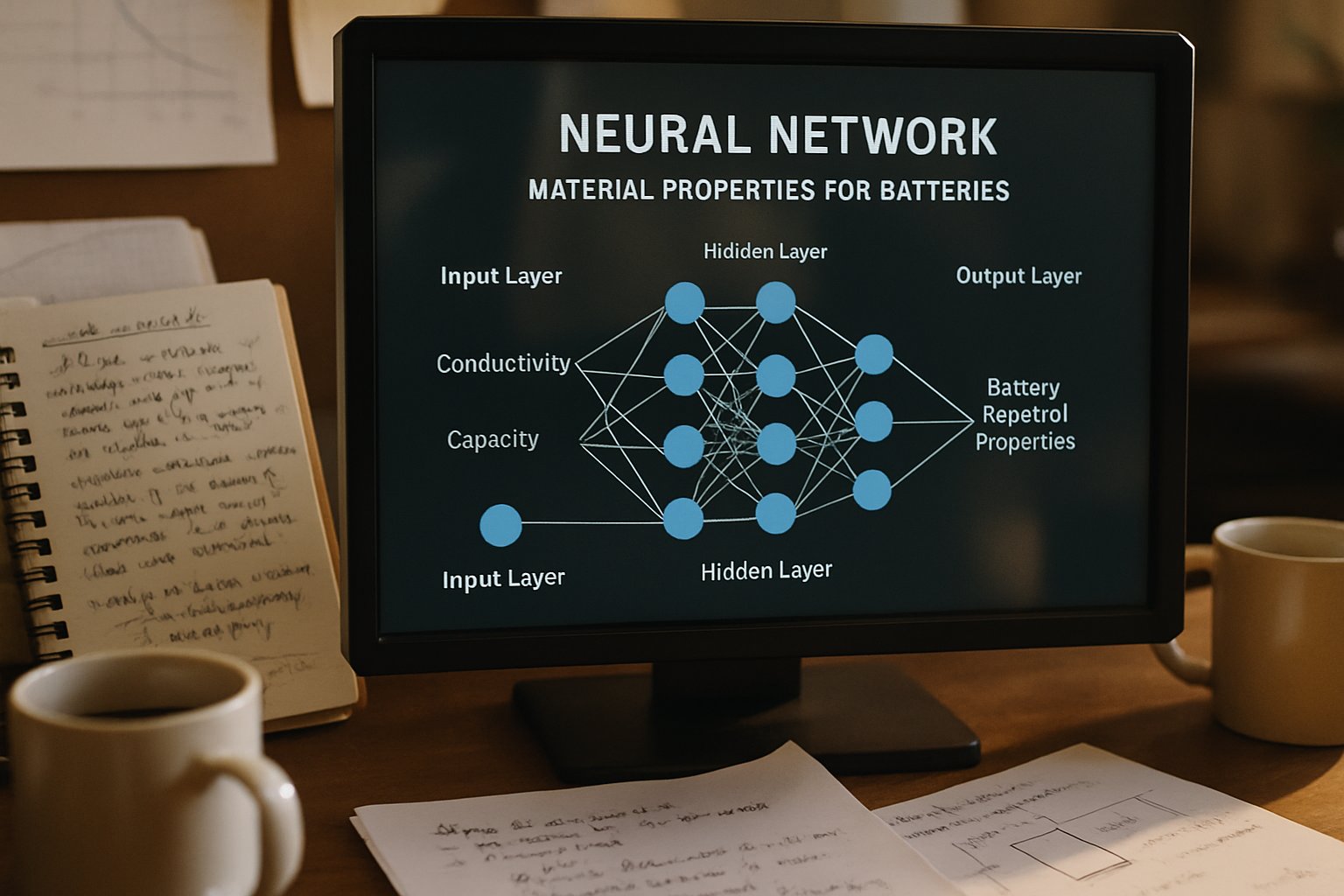
SES AI’s Molecular Universe platform sits at the heart of its strategy. The stack ingests molecular descriptors and electrochemical data. Subsequently, machine-learning models propose stable electrolyte candidates. Company demos claim the first shipped battery using an AI-suggested formulation.
Additionally, the companion Avatar system monitors manufacturing and field safety. Combined, both tools support AI-driven Material Sourcing by closing the loop from discovery to deployment.
Independent labs have not yet published peer-reviewed validation. Nevertheless, early prototypes reached B-sample status under joint development agreements with major automotive OEMs. Such progress shows tangible, though unverified, traction.
This platform centricity underscores software leverage. However, credibility will depend on forthcoming third-party results.
Platform capabilities can shorten R&D cycles. Moreover, verified accuracy would cement long-term adoption.
Commercial Moves Since 2024
Beyond laboratories, SES AI executed several transactions to monetize discoveries. The September 2025 acquisition of UZ Energy added >500 MWh of deployed systems and immediate service revenue. Consequently, nine-month 2025 revenue reached USD 16.4 million.
Moreover, a planned joint venture with Hisun New Materials targets commercial electrolyte production. This structure limits capex while scaling supply for AI-driven Material Sourcing outputs. A separate Top Material agreement aims to expand Korean cell capacity for drones and urban air mobility.
Financially, SES AI guided USD 20-25 million full-year revenue with strong gross margins on services. Nevertheless, the firm posted a USD 56 million nine-month net loss, reflecting ongoing investment.
Commercial milestones illustrate momentum. However, integration risks remain, especially across multiple geographies.
These moves translate software insights into sales channels. Subsequently, execution discipline will determine margin realization.
Balancing Hype And Risk
Li-metal batteries promise higher energy density yet face dendrite-driven safety risks. Academic studies therefore urge extensive cycle testing. Furthermore, shipping regulations treat unproven chemistries cautiously.
SES AI positions its “superintelligent” platform as a mitigation path. By iterating electrolytes digitally, the company hopes to identify formulations that suppress dendrites. Still, limited independent data exist today.
Investors also scrutinize liquidity. Cash and marketable securities totaled about USD 196.7 million last September. Consequently, runway appears sufficient for near-term scaling. Nevertheless, capital intensity could spike if manufacturing ramps faster than software revenue.
Risks remind stakeholders to demand evidence. Moreover, transparent reporting will influence future funding costs.
Risk awareness tempers optimism. Yet, disciplined verification could convert skepticism into adoption.
Implications For Battery Sector
Pervasive AI-driven Material Sourcing could shift competitive dynamics. Established cell makers might license software rather than invest heavily in wet labs. Meanwhile, startups could emerge around specialized datasets or niche chemistries.
For engineers, required skill sets will broaden. Data wrangling and model interpretation join electrochemistry and process control. Professionals can enhance their expertise with the AI Researcher™ certification.
Additionally, supply chains could fragment. Digital recipes may enable micro-factories serving local markets. However, regulatory frameworks must evolve to certify AI-designed materials.
Sector-wide transformation appears plausible. Consequently, collaboration between software and hardware experts will decide winners.
These implications signal coming disruption. Therefore, timely upskilling becomes essential for industry practitioners.
Strategic Guidance For Professionals
Decision-makers evaluating SES AI should follow three checkpoints:
- Request third-party test reports covering safety and cycle life.
- Model cash burn versus ramp timelines under conservative scenarios.
- Benchmark platform accuracy against internal lab results.
Furthermore, track how often SES AI repeats the term “AI-driven Material Sourcing” in filings. Frequent usage can indicate marketing over substance.
Nevertheless, dismissing the technology outright may forfeit competitive edge. Balanced diligence remains prudent.
Practical checkpoints support informed choices. Subsequently, continuous monitoring will refine investment theses.
Conclusion
SES AI blends software, joint ventures, and acquisitions to commercialize lithium-metal innovation. Moreover, AI-driven Material Sourcing underpins its differentiation narrative. Financial indicators show early revenue yet sustained losses. Independent validation and disciplined execution will define ultimate success. Nevertheless, the platform points toward a data-centric future for electrochemistry.
Industry leaders should monitor results, pursue external testing, and invest in relevant skills. Therefore, explore advanced learning paths and consider the linked certification to stay ahead.


