

AI CERTS
3 months ago
Industrial Vision: Inside HCLTech’s VisionX 2.0 Launch
Unlike cloud-first tools, the upgrade executes inference on site, minimizing bandwidth costs and privacy exposure. Moreover, tight integration with Nvidia accelerators promises millisecond-level responses for mission-critical events. Edge AI momentum is undeniable; Grand View Research sizes the 2025 market near USD 25 billion. Analysts foresee compound annual growth above 20 percent through 2033, underscoring strategic relevance. This article dissects technology, partnerships, benefits, and caveats behind the new industrial release. Readers will also learn actionable steps and certifications to exploit the unfolding Industrial Vision opportunity.
Industrial Vision Market Forces
Demand for resilient supply chains intensified after recent geopolitical shocks. Consequently, enterprises prioritize real-time plant visibility and adaptive control. Industrial Vision platforms answer this requirement by converting sensor feeds into actionable analytics at the edge.
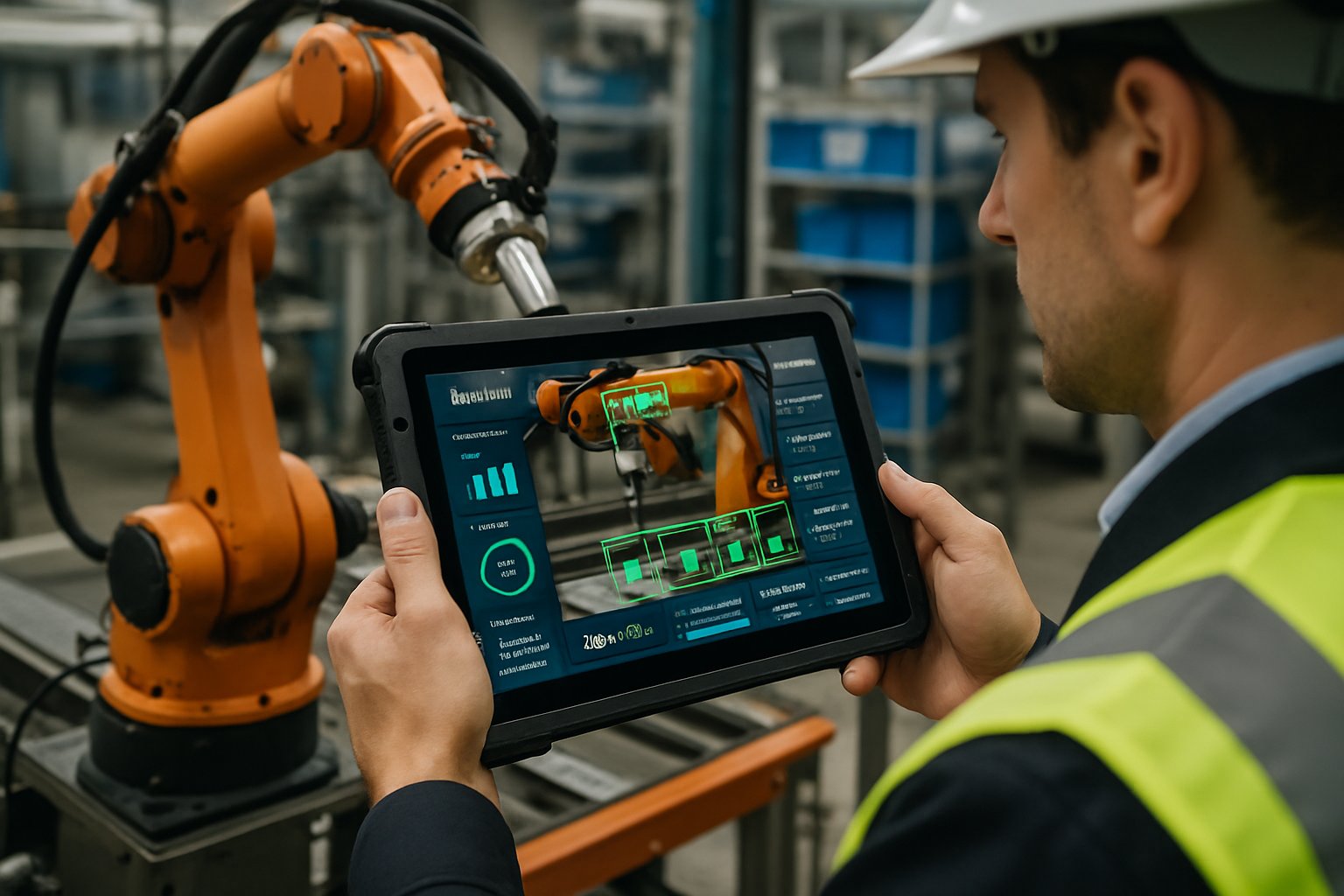
Grand View Research pegs edge AI revenue at USD 24.91 billion for 2025. Fortune Business Insights offers a higher 2025 estimate, USD 35.8 billion, highlighting forecast variance. Nevertheless, both studies expect spending to quintuple by 2033 as factories digitize legacy equipment.
IDC echoes the trajectory, projecting USD 261 billion in broader enterprise edge investments next year. Therefore, capital is already earmarked for equipment, networks, and Industrial Vision software. These numbers contextualize the upgrade’s Launch timing within a spending super-cycle. Market growth signals opportunity, yet competition and buyer skepticism remain strong.
Edge budgets are rising sharply across industries. However, technology differentiation decides which vendors capture value, leading us to the platform architecture.
Inside VisionX 2.0 Stack
VisionX 2.0 combines video, images, LiDAR, audio, and telemetry inside one orchestrated pipeline. Moreover, the pipeline builds on DeepStream for efficient decoding and preprocessing. Subsequently, inference models crafted with Nvidia TAO classify anomalies on Jetson or RTX PRO GPUs. Cosmos Reason, a vision-language model, then verifies critical clips, reducing false alarms before operator escalation.
HCLTech wraps these components with a zero-trust framework and zero-touch provisioning module. Dell NativeEdge deploys the stack consistently across thousands of remote gateways. Consequently, administrators can push updates without dispatching site engineers. The platform currently ships with more than 25 pretrained models targeting safety, quality, and logistics scenarios.
Vendor marketing claims up to 60 percent productivity gains and 40 percent safety improvements. Independent validation remains pending, yet architecture choices align with best-in-class edge designs.
Multi-modal fusion and local inference distinguish the upgrade from cloud-centric rivals. Next, strategic partnerships reveal how HCLTech amplifies those technical choices.
Partnerships Power Edge Performance
HCLTech secured co-development support from Nvidia through the Santa Clara Physical AI Innovation Lab. Additionally, Dell contributed hardware blueprints and remote management tooling. The tripartite arrangement accelerates roadmap execution while derisking procurement for cautious manufacturers. Deepu Talla, Nvidia vice president, affirmed that VisionX 2.0 forms a scalable foundation for physical AI. Customer validation matters, so Carrix adopted the stack for global port modernization. Ports present harsh lighting, weather, and latency constraints, offering a credible stress test. Early feedback notes faster container inspections and fewer unplanned crane stoppages, although metrics remain unpublished.
Competitive Landscape Snapshot View
Siemens, ABB, and AWS Greengrass also court the same buyers with visual analytics portfolios. In contrast, many competitors lack integrated vision-language reasoning or zero-trust automation. Therefore, the platform differentiates through tight vertical integration, albeit with Nvidia hardware dependence. Buyers must weigh openness against performance when evaluating Industrial Vision alternatives.
Strategic partners extend scale, credibility, and specialized silicon. However, measurable outcomes warrant closer examination, explored in the next section.
Use Cases And Metrics
The platform targets several high-value scenarios across manufacturing, utilities, logistics, and ports. For safety, it detects workers entering exclusion zones and can trigger equipment shutdown within milliseconds. Quality inspectors leverage surface-defect models to identify micro-scratches invisible to human eyes. Logistics teams employ automated pallet counting and vehicle tracking to accelerate yard throughput.
- Up to 40% reduction in safety incidents, per vendor estimates.
- As much as 60% productivity lift through automated visual inspections.
- 90% cut in issue resolution time for common equipment alarms.
Carrix reports preliminary crane downtime reductions, although full audit results await third-party review. Meanwhile, the vendor cites proof-of-concepts where discrete factories shaved cycle times by double digits. Nevertheless, prospective buyers should request raw before-and-after KPIs during pilot Industrial Vision programs.
Current anecdotes indicate promising operational gains. Consequently, stakeholders must examine potential downsides before signing multiyear contracts.
Risks Buyers Must Weigh
Edge AI adoption often stalls due to integration complexity and unclear total cost of ownership. The platform mitigates some friction through zero-touch deployment, yet heterogenous brownfield equipment complicates rollouts. Vendor lock-in presents another concern because Nvidia hardware anchors the performance profile. In contrast, some firms favor open-source toolchains and FPGA accelerators.
Security remains paramount; distributed cameras widen attack surfaces despite zero-trust claims. Therefore, buyers should demand evidence of penetration tests, patch cadences, and audit logging practices. False positives also risk operator fatigue; Cosmos Reason helps, yet field accuracy data is sparse. Moreover, data-sovereignty policies may limit video retention, affecting model retraining efficacy.
Technical, financial, and governance risks require thorough Industrial Vision diligence. Subsequently, enterprises should structure phased adoption plans, outlined in the following section.
Strategic Steps For Adoption
Begin with a one-site pilot focusing on a single, high-impact use case such as safety monitoring. Define baseline metrics, expected improvements, and success thresholds before hardware installation. Next, collaborate with vendor engineers to map camera angles, network constraints, and storage requirements. Consequently, deployment surprises decrease and ROI transparency increases.
Second, establish a cross-functional governance team covering IT, OT, security, and compliance. This body reviews model drift, patch cycles, and escalation protocols monthly. Third, negotiate flexible licensing that aligns fees with verified performance milestones. Finally, upskill staff through targeted learning pathways.
Professionals can enhance capabilities with the AI Marketing Strategist™ certification, gaining deployment governance insights. These practices create a repeatable template for scaling Industrial Vision projects across global sites.
Clear milestones, strong governance, and ongoing education sustain technology momentum. Therefore, organizations progress from pilots to enterprise rollouts with reduced risk.
The Industrial Vision landscape is maturing quickly, and VisionX 2.0 exemplifies that acceleration. The recent Launch showcased joint engineering across Nvidia, Dell, and HCLTech. Tight integration with Nvidia silicon and Dell orchestration delivers notable latency advantages. However, hardware dependence, security, and proof-point scarcity demand disciplined evaluation.
Prospects should benchmark false-alarm rates, total costs, and governance safeguards during limited pilots. Consequently, value can be measured before budget commitments escalate. Industry spending forecasts suggest winners will move swiftly yet cautiously. Leaders who pair robust pilots with continuous learning, including certifications, will convert Industrial Vision potential into profit. Start exploring pilot sites today and empower teams with fresh skills to stay ahead.
Disclaimer: Some content may be AI-generated or assisted and is provided ‘as is’ for informational purposes only, without warranties of accuracy or completeness, and does not imply endorsement or affiliation.


