

AI CERTs
4 months ago
South Korea’s Nuclear Energy Expansion Advances With Saeul-3
Unexpected regulatory momentum closed 2025 with a decisive vote in Seoul. On 30 December the Nuclear Safety and Security Commission approved Saeul-3, a 1.4-gigawatt APR1400 unit. Consequently, the move marks the first new reactor licence in two years and signals sustained Nuclear Energy Expansion. Investors, policymakers, and engineers now watch closely as fuel loading prepares the unit for an August 2026 start. Moreover, South Korea seeks greater Energy Independence while meeting surging data-centre demand and climate targets. The Saeul-3 approval therefore intertwines technology, policy, and geopolitics in Asia’s advanced Power Grid. Accordingly, this article unpacks the licence, design advances, policy context, benefits, and challenges for industry readers. Each section delivers concise analysis supported by primary Korean and international sources. Ultimately, understanding this milestone illuminates broader Nuclear Energy Expansion trends across global markets. Let us begin with the decisive regulatory vote.
Licensing Decision Details Today
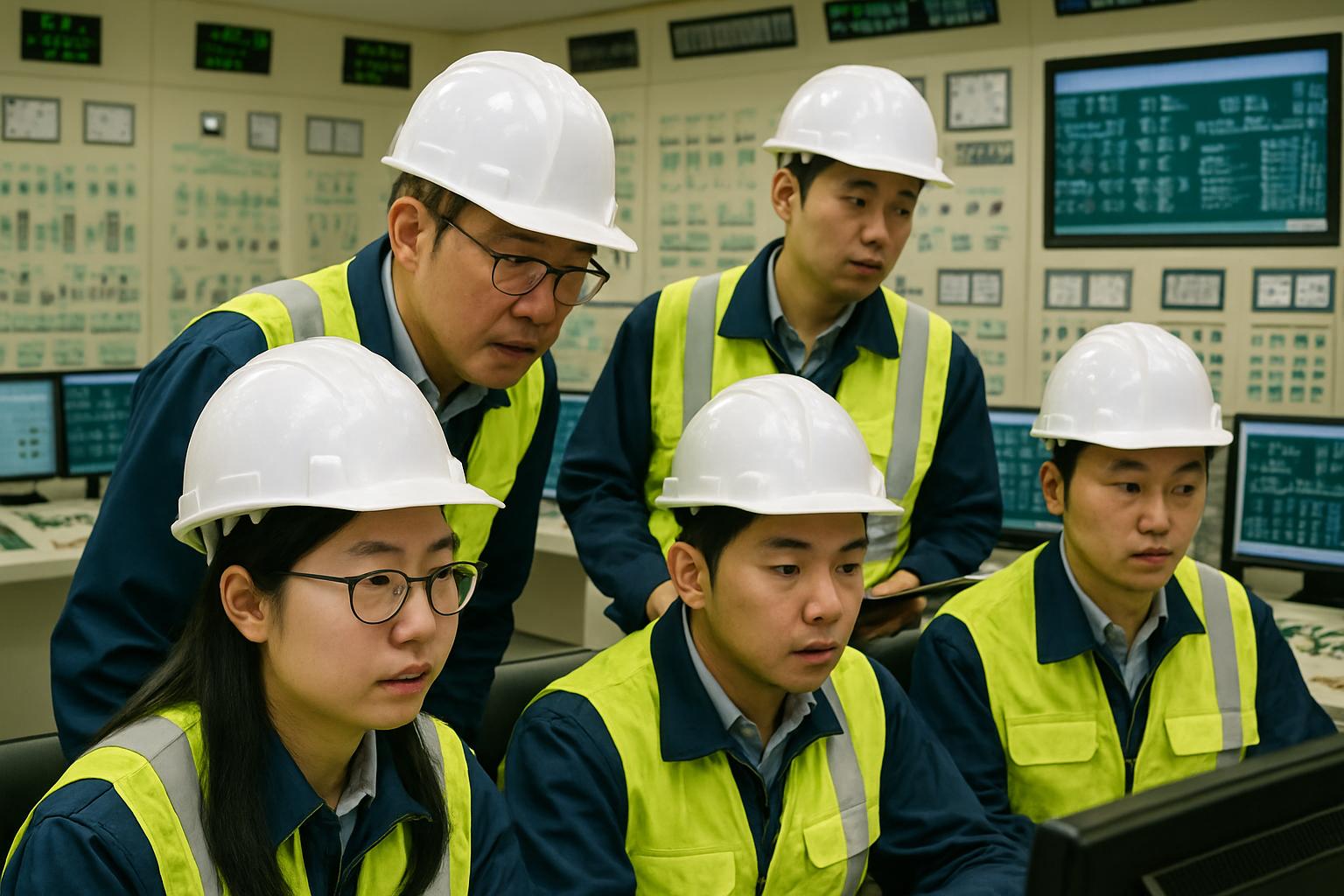
Saeul-3’s licence was granted after the NSSC’s 228th meeting concluded with a 5-to-1 vote. Previously, the commission conducted multi-year safety reviews and on-site inspections with Korea Institute of Nuclear Safety experts. However, Chair Choi Won-ho emphasized ongoing pre-use inspections during fuel loading and test operations. Following the vote, Korea Hydro & Nuclear Power outlined a six-to-eight-month commissioning schedule. Subsequently, commercial operation is targeted for August 2026, aligning with updated grid forecasts. The APR1400 unit will inject about 1.4 GW of dispatchable capacity into the national Power Grid. Moreover, this capacity roughly equals the annual consumption of a mid-sized metropolitan area. Regulators approved the licence nine years after construction began, slightly ahead of earlier projections. Consequently, analysts view the timetable as a constructive signal for wider Nuclear Energy Expansion projects. International observers praised the transparent webcast of the licensing session.
These approval dynamics demonstrate diligent oversight. However, technical details reveal the deeper story.
Advanced APR1400 Design
The APR1400 is South Korea’s flagship Generation-III pressurised water Reactor. Moreover, international regulators, including the US NRC, have certified the design’s robust safety case. Saeul-3 incorporates thicker containment walls, measuring 137 centimetres, which exceed earlier domestic iterations by 15 centimetres. Additionally, auxiliary buildings received reinforced structures to withstand severe external hazards. Redundant alternative AC diesel generators enhance defence-in-depth during station blackout scenarios. The design also provides onsite spent-fuel storage sufficient for the unit’s 60-year lifespan. Consequently, KHNP argues that lifecycle management costs decline through reduced offsite transfers. In contrast, critics note that expanded storage delays, rather than resolves, national waste-disposal challenges. Nevertheless, many engineers view Saeul-3 as the benchmark for future Nuclear Energy Expansion initiatives. Engineers performed probabilistic risk assessments covering extreme external events.
These engineering upgrades enhance resilience and efficiency. Therefore, policy conditions frame their relevance.
Policy Grid Context Analysis
South Korea’s 11th Basic Plan re-elevates nuclear within a diversified generation portfolio. Furthermore, the blueprint schedules two additional large units and one SMR before 2038. Government analysts forecast electricity demand rising six percent annually, driven by AI and semiconductor fabs. Consequently, stable baseload remains essential for the growing Power Grid. Renewable build-out continues aggressively; however, output variability complicates peak management. Policymakers therefore champion Nuclear Energy Expansion to balance intermittent sources while slashing emissions. Energy Independence also motivates the strategy as liquefied natural gas import bills remain volatile. Moreover, exportable APR1400 skills support domestic suppliers and future overseas orders. In contrast, opposition lawmakers warn that pending waste-storage milestones threaten project legitimacy. Nevertheless, the Saeul-3 licence indicates regulatory resolve amid political debate. Domestic think tanks modelled high electrification scenarios using updated population distributions.
These policy dynamics clarify supply priorities. Subsequently, system benefits appear significant.
Benefits For Power Grid
Adding 1.4 GW of zero-carbon capacity strengthens regional voltage stability and frequency control. Furthermore, Saeul-3 will supply about three percent of yearly national demand once fully loaded. KHNP estimates 60 years of operation will displace 340 million tonnes of CO₂ compared with coal. Moreover, local economies gain tax revenue and long-term skilled employment. The following list summarizes quantitative advantages:
- 1.4 GW dispatchable output stabilizes the Power Grid during peak seasons.
- Projected 90% capacity factor enhances Energy Independence by reducing LNG imports.
- Exportable APR1400 expertise supports South Korea’s industrial competitiveness.
Peak-season reserve margins could rise by two percentage points, according to grid planners. Consequently, the project aligns with carbon-neutral goals and industrial policy. Such gains exemplify tangible outcomes of Nuclear Energy Expansion. Nevertheless, benefits exist alongside unresolved waste issues discussed next.
These grid gains illustrate immediate value. Therefore, examining risks ensures balanced assessment.
Waste And Safety Concerns
Radioactive waste management remains the most persistent challenge facing Nuclear Energy Expansion. In 2025, parliament passed the High-Level Radioactive Waste Special Act to formalize disposal timelines. However, interim storage sites must be selected by 2050, and permanent disposal by 2060, both politically sensitive milestones. Local communities demand compensation packages and environmental guarantees before accepting facilities. Additionally, anti-nuclear groups question emergency preparedness near the Saeul complex. Regulators contend that upgraded containment, redundancy, and seismic margins meet global best practice. In contrast, some analysts warn cost overruns could arise if waste infrastructure lags reactor operations. Nevertheless, KHNP argues onsite storage can bridge the timeline effectively. Spent-fuel pools at Saeul-3 hold sixty years of assemblies, offering valuable flexibility. Civil society workshops will convene in early 2026 to refine siting criteria.
These unresolved issues underscore strategic risk. Subsequently, attention shifts to forthcoming milestones.
Timeline And Next Steps
Fuel loading is expected early 2026, pending NSSC pre-use inspections. Furthermore, KHNP will publish detailed commissioning results, including low-power physics tests and turbine synchronisation. The operator anticipates grid connection by late spring, subject to regulatory sign-off. Consequently, commercial operation in August will extend the national Power Grid capacity before peak autumn demand. Meanwhile, policymakers will decide on the next large Reactor projects outlined in the Basic Plan. Moreover, the Ministry will launch consultations for interim waste storage site selection. Independent observers suggest that transparent community engagement can safeguard future Nuclear Energy Expansion schedules. Sustained milestones will bolster international confidence in Korea's Nuclear Energy Expansion portfolio. Professionals can enhance their expertise with the AI Marketing Strategist™ certification. IAEA peer reviews are scheduled to accompany hot functional tests, providing additional assurance.
These forthcoming actions will determine long-term success. Therefore, strategic vigilance remains essential.
Saeul-3’s licence evidences rigorous oversight and agile project management. Consequently, 1.4 GW of clean power edges South Korea toward greater Energy Independence. The APR1400’s reinforced design strengthens public confidence while expanding industrial exports. However, waste-storage milestones remain the critical path for enduring Nuclear Energy Expansion ambition. Policymakers must therefore sustain transparent engagement and timely infrastructure delivery. Industry professionals should monitor commissioning updates, regulatory bulletins, and Basic Plan revisions. Moreover, upskilling through recognised programs, such as the previously linked certification, sharpens competitive advantage. Act now, follow developments, and position your organisation for the next wave of resilient power projects.
Disclaimer: Some content may be AI-generated or assisted and is provided ‘as is’ for informational purposes only, without warranties of accuracy or completeness, and does not imply endorsement or affiliation.


