

AI CERTs
5 months ago
How content moderation transformers cut platform liability
Regulators now demand faster removals and clearer audit trails. Consequently, platforms are turning to content moderation transformers for near-instant decisions. These multimodal AI systems scan text, images, audio, and video in seconds. Moreover, major vendors promise proactive detection that shields companies from heavy fines. However, speed alone is not enough. Evidence must show systematic, transparent action. This article unpacks recent advances, market forces, and practical steps that reduce legal exposure.
Liability Pressures Intensify
The EU Digital Services Act sets strict timelines for illegal content removal. Meanwhile, US lawmakers debate algorithmic duty-of-care rules. In contrast, Asia-Pacific regulators adopt age-appropriate design codes. Fines can reach six percent of global revenue under the DSA. Consequently, general counsel teams push for measurable risk mitigation. Transparency reports show the strategy. TikTok’s Q2 2025 report claimed 99.1% proactive removals and 163.9 million AI-driven takedowns.
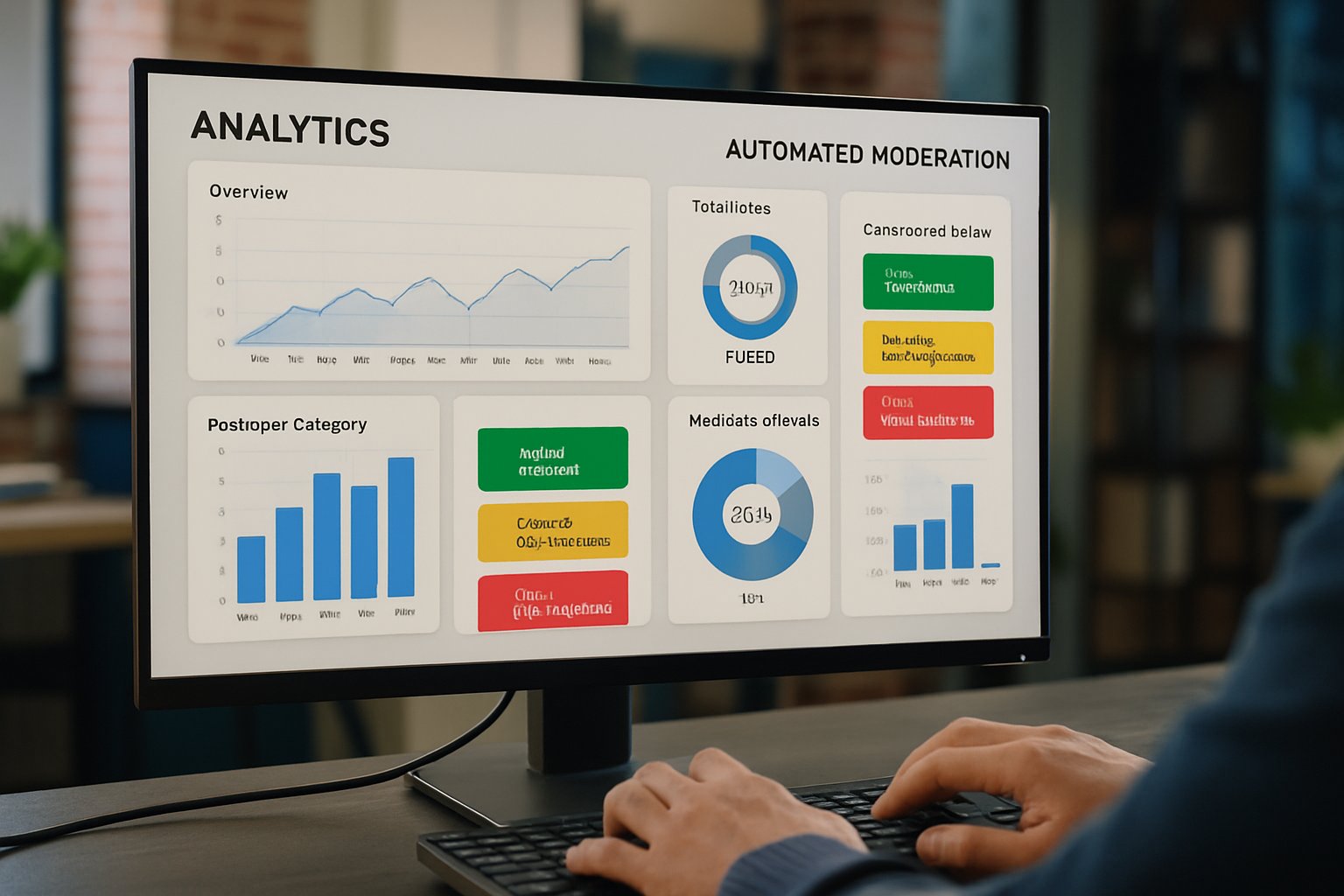
Furthermore, OpenAI markets its multimodal API as free for customers, underscoring defensive value. Legal analysts note that logged model scores demonstrate due diligence. Therefore, automation has become an unofficial compliance standard.
These forces converge on one point: rapid, documented action matters. Consequently, technical leaders must align AI roadmaps with evolving statutes.
Section takeaway: Regulations punish delay. Yet data proves automation meets mandated speed. Next, we explore technical progress enabling that pace.
Real-Time Transformer Advances
Transformer encoders excel at contextual pattern recognition. Moreover, vision transformers split frames into patches for parallel processing. OpenAI’s omni-moderation-latest model fuses multilingual text and images. Google follows with similar content safety offerings. Start-ups such as Hive and Spectrum Labs optimize distilled models for edge GPUs. Consequently, livestreams now receive sub-second screening.
Academic workshops, including CVPR’s MMCM, showcase state-of-the-art recall on violent extremism benchmarks. Additionally, ensembles combine audio embeddings and optical character recognition. Therefore, content moderation transformers detect harmful memes that evade single-modality classifiers.
Implementation pipelines also evolved. Lightweight sampling selects key video frames, while heuristic gates escalate borderline scores to humans. Subsequently, dashboards store timestamps, model outputs, and reviewer notes. Those logs feed DSA transparency reports automatically.
Section takeaway: Technical innovation delivers low-latency detection and auditable logs. However, market viability depends on financial trends, covered next.
Market Growth Indicators
Grand View Research valued social-media moderation at USD 8.34 billion for 2024. Moreover, analysts project a low-teens CAGR through 2028. Vendors attribute expansion to streaming video, ecommerce marketplaces, and creator monetization. Consequently, procurement teams prioritize scalable SaaS APIs over in-house tooling.
Platforms now advertise proactive removal rates in earnings calls. Investors reward reduced regulatory uncertainty. In contrast, litigation expenses depress valuations when breaches occur. Therefore, boards approve larger trust & safety budgets.
The following numbers clarify momentum:
- 189 million TikTok videos removed in Q2 2025
- 99% of policy violations detected before user reports on major platforms
- Projected USD 9.11 billion moderation spend in 2025
Section takeaway: Spending rises because investors seek liability buffers. Next, we examine operational best practices that convert budgets into protection.
Implementation Best Practices
Operational Checklist Essentials
First, deploy content moderation transformers as multimodal ensembles. Secondly, distill large models for sub-second inference. Additionally, integrate edge hardware for live video. Thirdly, store calibrated probabilities with UTC timestamps. Moreover, maintain short clip snapshots for appeals.
Platforms should blend automation with expert reviewers. Consequently, human judgment resolves satire, context, or regional slang. Trusted-flagger pipelines accelerate law-enforcement escalation. Meanwhile, scheduled red-team tests uncover blind spots.
Professionals can enhance their expertise with the AI Developer™ certification. The program covers transformer fine-tuning, multilingual evaluation, and compliance automation reporting.
Section takeaway: Structured processes turn AI results into defensible evidence. However, every system carries risk, discussed next.
Risks And Limitations
Balancing Speed Accuracy
False positives create “collateral censorship.” Moreover, over-broad filters chill lawful speech. Civil society groups demand transparent appeals and timely reinstatement. Conversely, missed detections expose minors to harm. Therefore, precision-recall balance remains a leadership concern.
Latency poses another hurdle. Edge inference hardware increases capital cost. Alternatively, lower frame rates miss quick flashes of illegal imagery. Additionally, conflicting national orders complicate global policies. Nevertheless, clear governance frameworks reduce inconsistencies.
Section takeaway: Trade-offs persist between speed, cost, and fairness. Yet strategic alignment can mitigate those downsides. The next section outlines strategic planning steps.
Strategic Roadmap Forward
Future Policy Outlook
Regulators will likely demand richer explanations for automated decisions. Consequently, roadmap planning should include explainable attention heatmaps and linguistic rationales. Moreover, upcoming EU delegated acts may standardize transparency metrics. Platforms should prepare versioned APIs that export machine-readable statements-of-reason.
Compliance automation dashboards must support audit queries within days, not weeks. Therefore, engineering teams need tight data retention and legal holds. Meanwhile, research groups explore reinforcement-learning feedback loops that lower false positives while preserving coverage.
Section takeaway: Continuous iteration and policy awareness future-proof moderation stacks. A concise summary follows.
Comprehensive adoption of content moderation transformers now defines industry best practice. Proactive detection boosts trust & safety, satisfies compliance automation demands, and limits financial penalties. Hesitation exposes platforms to escalating liability.
Conclusion And CTA
Real-time, multimodal transformers fundamentally shift liability calculus. Moreover, logged probabilities and audit trails demonstrate due diligence to regulators. Nevertheless, balanced governance ensures free expression and accurate enforcement. Consequently, leaders should evaluate transformer pipelines, refine review workflows, and monitor legal trends continuously.
Advance your technical skills and strengthen organizational defenses. Explore the linked AI Developer™ certification to master cutting-edge moderation engineering today.
Disclaimer: Some content may be AI-generated or assisted and is provided ‘as is’ for informational purposes only, without warranties of accuracy or completeness, and does not imply endorsement or affiliation.


