

AI CERTS
5 months ago
Oracle-OpenAI $300B Cloud Deal Explained
This article unpacks the Cloud Deal, assesses its benefits and risks, and highlights skill paths for professionals eyeing the next growth wave.
Mega Cloud Deal Context
OpenAI’s appetite for compute exploded after successive model launches. Meanwhile, Oracle sought fresh momentum for Oracle Cloud Infrastructure. Therefore, the two firms aligned around a multiyear Cloud Deal covering roughly 4.5 gigawatts of data-center power. In September 2025, the Wall Street Journal reported the $300 billion headline. Subsequently, Reuters, Bloomberg, and TechCrunch echoed the number. Each outlet linked the agreement to Project Stargate, a United States construction program partly financed by SoftBank and hardware partners.
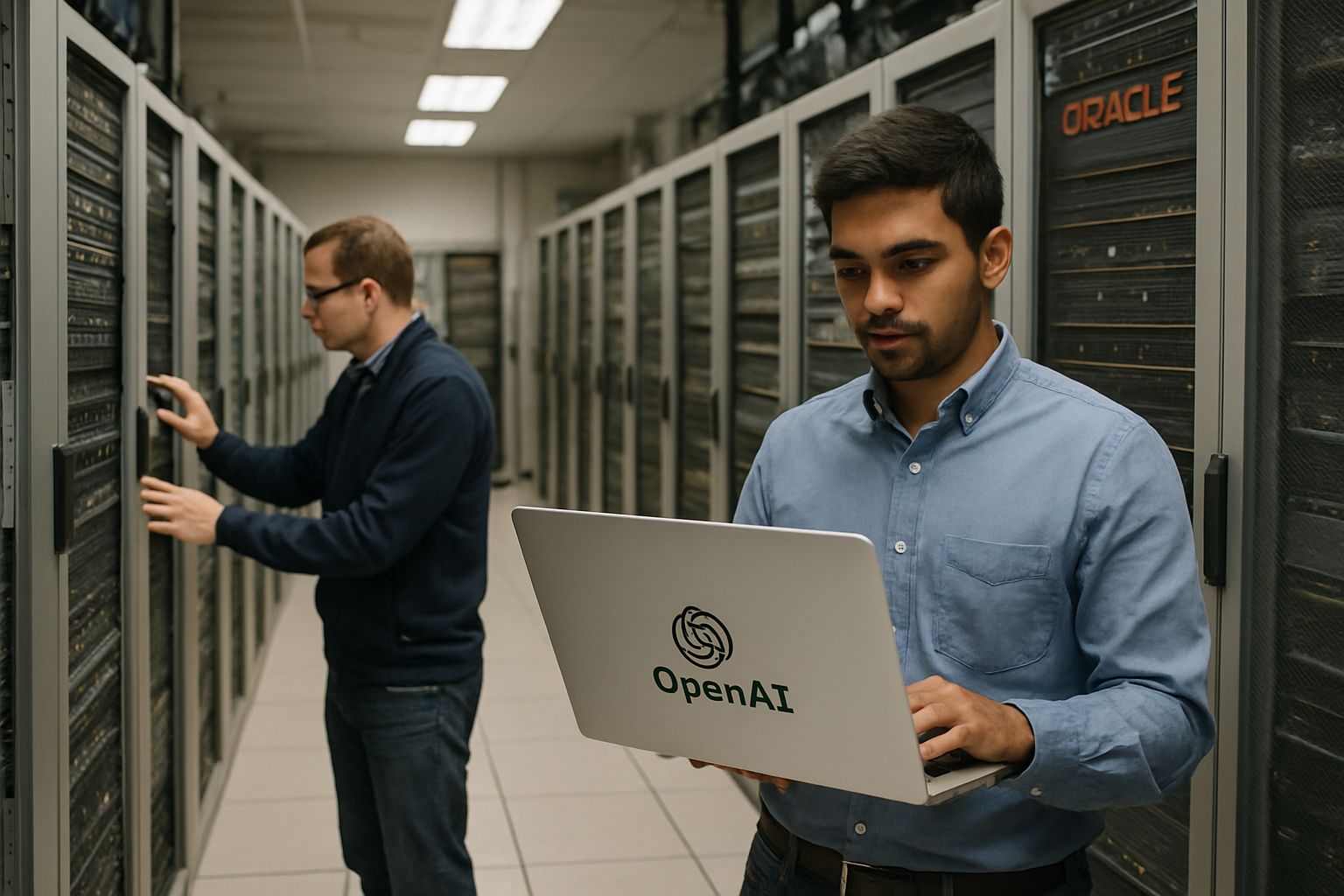
In practical terms, the Cloud Deal resembles a large power purchase agreement. However, instead of megawatt-hours, OpenAI secures guaranteed GPU hours. Oracle locks in demand, while OpenAI locks in capacity. These dynamics created immediate buzz among investors tracking hyperscale growth.
The context sets expectations for unprecedented scale. However, understanding the raw numbers clarifies why observers call it historic.
These background details establish the environment. Subsequently, the article turns to the contract’s numerical magnitude.
Staggering Contract Scale Details
Media outlets framed the size using vivid comparisons. For example, 4.5 gigawatts equals more than two Hoover Dams of continuous power draw. Additionally, investing.com noted the energy could serve four million U.S. homes. Bloomberg calculated an approximate $60 billion annual run rate if revenue recognition spreads evenly across five years. In contrast, Oracle filings hinted at $30 billion increments, underscoring reporting gaps.
- Headline commitment: $300 billion over five years
- Power footprint: 4.5 GW across multiple U.S. sites
- GPU count: about 450,000 Nvidia GB200 units at Abilene alone
- Oracle backlog jump: hundreds of billions added to RPO
Furthermore, rating agencies flagged the contract as one of history’s largest single technology obligations. Moody’s called Stargate “effectively one of the world’s largest project financings.”
These metrics highlight the agreement’s enormity. Nevertheless, benefits matter as much as scale, so the narrative now shifts to strategic upside.
Strategic Benefits For Stakeholders
The Cloud Deal offers clear advantages to several parties. Firstly, OpenAI secures compute in a market facing severe GPU shortages. Consequently, product teams can accelerate model training without queuing for capacity. Secondly, Oracle transforms its cloud perception. Moreover, the contract feeds years of predictable revenue, strengthening Oracle’s enterprise pitch.
Nvidia also benefits. Therefore, guaranteed demand for its latest accelerators underpins manufacturing expansion. Meanwhile, SoftBank gains exposure to high-growth infrastructure while deploying renewable energy through SB Energy affiliates. Local communities hosting Stargate facilities expect construction jobs and long-term tax receipts.
Professionals hoping to ride this wave need advanced skills. Accordingly, professionals can enhance their expertise with the AI+ UX Designer™ certification. The credential signals readiness to design user experiences atop powerful AI backends like those enabled by the Cloud Deal.
Strategic gains appear compelling. However, every jumbo contract carries financial shadows, which we examine next.
These benefits paint an optimistic picture. Nevertheless, financial risk factors demand equal attention.
Highlighted Financial Risk Factors
Analysts quickly noted concentration risk. OpenAI represents a single counterparty for an outsized revenue slice. Consequently, Oracle faces exposure if the buyer delays payments or scales back plans. Moody’s highlighted this in a September note, warning of possible credit pressure.
Additionally, funding the obligation challenges OpenAI. The company remains private despite secondary share sales. Therefore, commentators question how it covers multibillion-dollar annual invoices. Reports suggest staged vendor financing, GPU maker investment, and potential equity rounds.
Market volatility mirrored these concerns. For example, Oracle shares rallied on backlog growth yet dipped when rating agencies issued caution. Nevertheless, many investors still view the Cloud Deal as a transformative catalyst.
Financial caveats underscore execution complexity. However, operational hurdles can be just as daunting, as the next section explains.
These fiscal issues reveal balance-sheet sensitivities. Subsequently, operational challenges enter the spotlight.
Operational Execution Challenges Ahead
Building gigawatt-scale campuses is not trivial. Permitting, grid interconnects, and substation buildouts must align. Moreover, construction supply chains remain strained post-pandemic. Delays could postpone revenue recognition, stressing cash flows.
Nvidia must also deliver hundreds of thousands of GPUs on schedule. Meanwhile, power procurement requires renewable sourcing to satisfy stakeholder sustainability commitments. Consequently, any slip amplifies risks highlighted earlier.
Oracle addressed concerns by announcing additional U.S. sites to distribute workloads. Furthermore, executives disclosed phased build plans to stagger capex. In contrast, skeptics argue timelines already stretch into 2028, citing regional reports of permitting backlogs.
Operational obstacles could erode projected gains. However, market sentiment provides a real-time gauge, explored next.
These challenges highlight execution pressure. Nevertheless, market reaction offers another lens.
Market Reaction And Outlook
The announcement initially propelled Oracle toward a $1 trillion valuation. Subsequently, volatility set in as analysts recalibrated models. Reuters tracked large intraday swings tied to every new Stargate headline.
Meanwhile, OpenAI’s valuation expectations surged in private secondary markets. Investors framed the Cloud Deal as evidence of durable demand for frontier AI models. Additionally, suppliers such as Nvidia and construction contractors enjoyed order book lifts.
Looking ahead, many observers expect more multiyear capacity agreements across the sector. Consequently, smaller AI labs may need creative finance strategies or consortium partnerships to compete.
Market signals suggest appetite for hyperscale compute persists. However, individual professionals still need personal strategies, discussed next.
These outlooks indicate ongoing momentum. Therefore, talent development becomes crucial.
Career Upskilling Opportunities Now
The Cloud Deal heralds sustained demand for architects, project managers, and UX professionals who can translate vast compute into user value. Moreover, organizations will seek designers who understand AI model behavior and interface best practices.
Consequently, certifications play a pivotal role in career differentiation. Professionals can enhance their expertise with the AI+ UX Designer™ certification. The program blends human-centered design with machine-learning fundamentals, bridging gaps between engineers and end users.
Additional courses in data-center energy management and GPU orchestration will also rise in relevance. Furthermore, cross-disciplinary skills spanning finance, sustainability, and regulatory compliance will command premiums.
Upskilling pathways empower individuals to capture value from megatrends. Consequently, strategic learning decisions today define tomorrow’s leadership opportunities.
These development options conclude our analysis. Finally, the article summarizes key insights and next steps.
Conclusion And Next Steps
The $300 billion Cloud Deal between OpenAI and Oracle reshapes expectations for AI infrastructure. Furthermore, the agreement illustrates how compute scarcity pushes organizations toward unprecedented commitments. Benefits include guaranteed capacity, revenue visibility, and regional economic growth. Nevertheless, financial concentration, execution timelines, and funding structures introduce material risk. Operational success will depend on synchronized construction, hardware supply, and power procurement.
Professionals should track project milestones, monitor Oracle filings, and sharpen skills through targeted certifications. Therefore, seize this moment to align your expertise with the evolving AI landscape. Explore the AI+ UX Designer™ program today and position yourself at the forefront of transformative innovation.
Disclaimer: Some content may be AI-generated or assisted and is provided ‘as is’ for informational purposes only, without warranties of accuracy or completeness, and does not imply endorsement or affiliation.


