

AI CERTS
5 months ago
Gemini multitasking update reshapes Android enterprise workflows
Prepared for technical leaders, this analysis unpacks timelines, features, risks, and commercial impacts. In contrast, consumer-focused rundowns often skip architectural drivers that matter to IT governance. Here, each change gets mapped to security, UX, and monetization considerations. Additionally, we reference verified sources through December 2025 for accuracy. Read on for a structured dive built around concise sections and actionable takeaways. Therefore, strategy teams can align product launches with Google's evolving assistant roadmap. Meanwhile, privacy officers gain a snapshot of emerging compliance flags. Subsequently, we close with certification resources for securing AI operations.
Migration Timeline And Delays
Google first signaled an Assistant replacement at January 2025’s Galaxy Unpacked showcase. However, TechRadar reported in December 2025 that the Gemini multitasking update completion slipped “into 2026” for stabilization. Consequently, enterprises now have an extra year to audit dependencies before mandated migration. Sissie Hsiao emphasized “seamless transition,” acknowledging enterprise workload risk. Additionally, Josh Woodward noted Pro query caps doubling to 100 daily, easing heavy testing. In contrast, legacy voice actions tied to smart home accessories remain under Google Assistant today. Therefore, dual assistants coexist on many devices, complicating endpoint management and user education. Organizations should document this dual-stack background to justify phased rollout budgets. Moreover, update cadence differs by OEM, so mobile fleet managers must track vendor advisories. These timeline signals highlight planning urgency; however, extended deadlines reduce immediate disruption.
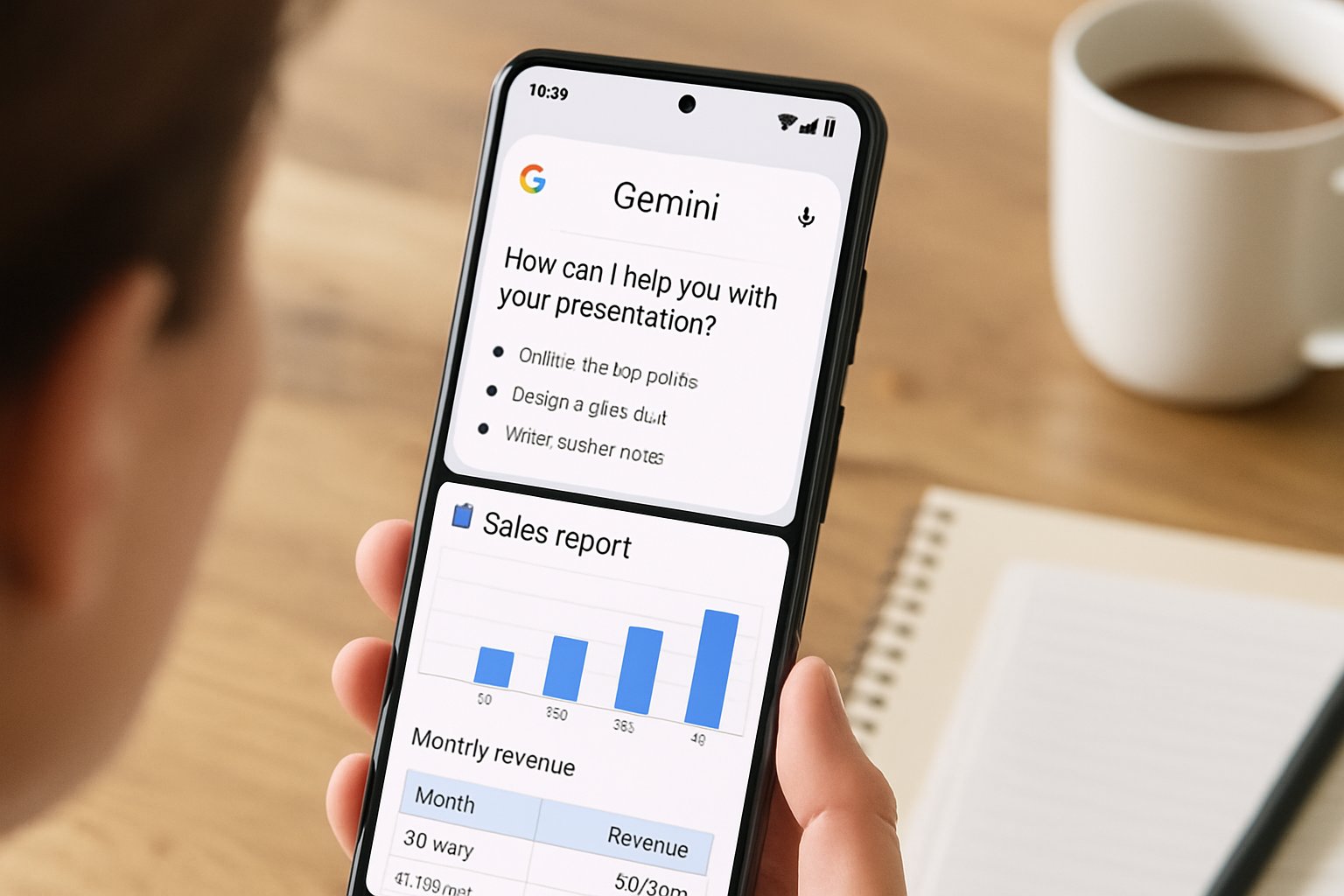
Key takeaway: Google postponed full cutover, offering administrators breathing space. Stakeholders should map dependencies during this window. Next, we examine how the Utilities extension deepens device control.
Utilities Extension Powers Devices
Utilities landed on Android in December 2024, delivering direct OS toggles through Gemini. Moreover, users can silence alarms, toggle Bluetooth, or capture screenshots without leaving the overlay. The feature also supports multi-action prompts, a central pillar of the Gemini multitasking update. Consequently, tasks that once required Assistant fallback now execute locally, reducing latency. Additionally, 9to5Google lists fifteen operations, spanning flashlight control to device restart. Security teams should note confirmation dialogs that prevent accidental shutdowns. In contrast, advanced automation still relies on third-party software like Tasker. Nevertheless, Utilities narrows functional gaps and makes everyday command sequences more convenient. These improvements help frontline employees perform routine tasks even while gloved or mobile.
Key takeaway: Utilities merges core device operations into Gemini, streamlining routine control. Teams now shift focus from basic scripting toward higher-level orchestration. Our next section explores that orchestration across multiple apps.
Cross-App Orchestration Gains Momentum
Google enabled multi-extension prompts in January 2025, debuting the capability at Galaxy Unpacked. Consequently, a single query can launch YouTube, open Gmail, and draft a Maps route in the Gemini multitasking update. The Verge states Gemini now executes tasks across multiple apps. Furthermore, Gemini confirms sensitive steps before action, reducing risk from hallucinations. Below are emerging enterprise scenarios:
- Marketing creates cross-channel campaigns by attaching product images and scheduling social posts.
- Field engineers request directions, send ETA via Messages, and log time in Salesforce automatically.
- Customer support agents escalate chats, generate refund emails, and update CRM tickets in seconds.
These scenarios show clear productivity spikes. However, partners must integrate via extensions, which still remain invite-only for many developers. Therefore, independent software vendors should monitor API announcements closely. Key takeaway: cross-app orchestration in the Gemini multitasking update shortens workflows and demands strategic extension partnerships. Next, we assess how Gemini Live adds richer context through voice and visuals.
Gemini Live Goes Multimodal
Gemini Live received a major boost in January 2025, accepting images, files, and YouTube clips. Furthermore, Google promised Project Astra features like screen sharing and live video streaming. Such capabilities transform remote support, design reviews, and interactive training sessions. For example, a technician can show equipment damage and receive real-time help immediately. Additionally, conversational latency remains low because processing happens on Google’s optimised back-end stack. This improvement links tightly to the broader Gemini multitasking update vision. Nevertheless, Astra features will debut first on Pixel 9 and Samsung Galaxy S25 devices. Organizations should validate camera and microphone policies before rolling out these multimodal workflows.
Key takeaway: Gemini Live expands situational awareness through rich media. Our next section turns to interface changes that influence daily discoverability.
Redesigned Overlay Alters Multitasking
Google streamlined the Gemini overlay in January 2025 with Google app v16.2.40. However, the familiar split-screen handle disappeared, sparking confusion among tablet and foldable owners. Meanwhile, multi-window support persists on large screens, but entry paths vary by OEM skin. Consequently, training materials require updates to reflect new gestures and icons. Business Standard noted a new swipe-left gesture that opens Gemini Live directly. Moreover, Google raised Pro plan query caps during the same release cycle, signaling commercial fine-tuning. UX analysts warn that interface inconsistency may push users back to traditional software shortcuts. Nevertheless, reduced overlay height frees precious vertical space when multitasking on small screens.
Key takeaway: the Gemini multitasking update redesign trades discoverability for cleaner layout. Next, we tackle privacy debates ignited by deeper app access.
Privacy Concerns And Controls
Mid-2025 saw heightened scrutiny when Gemini gained access to Phone, Messages, and WhatsApp. Android Authority reported user emails questioning data retention policies. However, Google clarified that chats are excluded from model training when Apps Activity is disabled. Nevertheless, OS-level hooks still capture some telemetry for debugging, raising governance alarms. Therefore, compliance teams must audit default settings during device enrolment to help minimize surprises. Moreover, enterprises deploying the Gemini multitasking update should document consent flows in security runbooks. Experts recommend periodic background checks on permission drift, especially after quarterly firmware pushes. Professionals can enhance their expertise with the AI Security Level 2™ certification. It covers threat modeling for conversational assistants.
Key takeaway: policy clarity mitigates risk, yet diligent monitoring remains essential. Finally, we evaluate strategic implications for enterprise roadmaps.
Strategic Implications For Businesses
Gemini’s growing capabilities push organizations to rethink mobile workforce architecture. Consequently, CIOs weigh productivity gains against privacy spend. Moreover, richer multitasking reduces reliance on bespoke field service software. In contrast, some industries require air-gapped deployments, limiting assistant usefulness. Adoption should follow a phased model:
- Pilot Utilities on ten devices and gather user feedback.
- Enable cross-app extensions for critical workflows only after policy reviews.
- Scale Gemini Live once network bandwidth and camera policies are hardened.
Additionally, training resources must explain new gestures in convenient micro-learning clips. Background documentation should help capture decision rationale for auditors. Therefore, technology leaders should track query cap economics when forecasting cloud spend.
Key takeaway: structured pilots align innovation with governance requirements. Now, let’s summarize the major insights.
Google’s rapid cadence signals that Gemini will anchor Android productivity for years. Moreover, the Gemini multitasking update consolidates device control, cross-app orchestration, and multimodal voice into one layer. Consequently, businesses that prepare early gain a convenient competitive edge and smoother migration. However, privacy, UX, and licensing variables still demand rigorous governance. Therefore, leaders should pilot features, monitor extensions, and negotiate Pro plan economics. Professionals seeking deeper security grounding around conversational AI may pursue the AI Security Level 2™ program. Subsequently, applying its knowledge will help teams harden deployments before the broader Gemini multitasking update completes. Act now, and your organization can shape, rather than chase, the next mobile productivity wave.
Disclaimer: Some content may be AI-generated or assisted and is provided ‘as is’ for informational purposes only, without warranties of accuracy or completeness, and does not imply endorsement or affiliation.


