What Are The Best AI Testing Courses Available Online?


This comprehensive guide identifies the premier online training courses for artificial intelligence software testing and quality engineering. As autonomous software scripts and machine learning models replace traditional static code, companies face severe testing bottlenecks. This creates a massive, high-margin opportunity for commercial academies to deliver certified testing and quality assurance training programs.
Table of Contents
- Why Traditional Software Testing Breaks Down in the Age of Artificial Intelligence
- The Hidden Testing Gap: What Standard Online Reviews Never Tell You
- Case Study: Hard Lessons from Real-World Autonomous System Failures
- Top 5 AI Testing Courses Available Online
- The Commercial Gold Rush: Why Enterprises Need Local AI Training Programs
- Expand Globally with the AI CERTs Authorized Training Partner (ATP) Program
- Frequently Asked Questions (FAQs)
Why Traditional Software Testing Breaks Down in the Age of Artificial Intelligence
For decades, software quality assurance followed a simple rule: if you put the exact same input into a computer program, you will always get the exact same output. Traditional software testers wrote rigid automated scripts that checked whether a button turned green or a database saved a customer address correctly. However, modern software powered by machine learning algorithms does not follow rigid rules. These non-deterministic systems adapt, generate fresh text on the fly, and change their outputs based on complex data patterns.
This deep technical shift has created a massive bottleneck across the technology industry. According to an industry study on mid-market manufacturing systems published by MarketScale, seventy-three percent of mid-market firms remain completely stuck in the testing phase, with zero companies reaching full enterprise deployment. Business leaders report that their software teams cannot move past initial pilot projects because legacy data software and traditional quality assurance methods cannot verify whether autonomous tools will operate safely in live corporate environments.
This means the technology industry urgently needs a new breed of quality assurance engineers. A modern tester cannot simply look for broken code links or basic layout bugs. They must know how to test for model drift, prompt injection security vulnerabilities, algorithmic bias, and unexpected system hallucinations. To prepare workers for this complex shift, technology academies are rushing to launch specialized AI training programs that teach practical model validation and automated testing routines.
The Hidden Testing Gap: What Standard Online Reviews Never Tell You
When you read standard internet reviews about software testing classes, most articles give you basic, outdated advice. They tell you to learn standard coding languages like Python or study basic automated testing frameworks. While those fundamental coding skills are helpful, standard guides completely miss the core reason why modern software releases fail in the real world. Modern releases fail because developers are shipping code faster than quality assurance teams can verify it.
The dangerous disconnect between rapid code generation and quality validation was highlighted in a landmark developer survey released by EIN Presswire. The research revealed that while developers use automated coding assistants to churn out massive amounts of raw code, quality assurance engineers are left dealing with severe code quality gaps. Standard developer surveys only ask software creators if they write code faster, completely ignoring whether that code actually works safely in live production.
At the exact same time, major technology partnerships are making software systems far more complex. As announced by Microsoft Source, a major strategic expansion between Microsoft and Mistral is deploying open-weight frontier models directly into managed cloud infrastructure and Copilot systems for highly regulated industries. When autonomous models are embedded deep inside regulated banking, healthcare, and government workflows, quality assurance teams must know how to run continuous security audits, verify data privacy guardrails, and test sovereign cloud deployments across disconnected network environments.
Case Study: Hard Lessons from Real-World Autonomous System Failures
To understand why automated software testing requires a complete makeover, we can examine a major technical breakthrough in robotic manipulation developed by researchers at the USC Viterbi School of Engineering. Standard autonomous robots are programmed to treat every single physical object as a dangerous obstacle.
If a robot dog or arm encounters a tiny piece of plastic debris, it freezes completely because legacy testing frameworks assume all physical contact is an absolute system failure.
To fix this rigid limitation, researchers created a reasoning system called IMPACT that teaches autonomous machines to make smart judgment calls. Examining this real-world autonomous systems study reveals three vital lessons for modern quality testing:
- Contextual Chain-Reaction Testing: A robot touching a harmless plastic bottle seems fine on its own. However, if that plastic bottle sits right next to a fragile glass bottle, touching the plastic bottle will knock over the glass bottle. Testers must evaluate multi-step chain reactions rather than checking isolated software inputs.
- Moving Beyond Binary Pass or Fail: Traditional software testing uses rigid pass or fail rules. Modern quality assurance must test whether an autonomous system can evaluate context and decide which minor risks are safe to take in order to complete a larger goal.
- Fully Traceable Decision Logging: When an autonomous system makes a mistake, engineers must be able to audit the exact reasoning path the model used. Transparent decision logs are mandatory for fixing software flaws and proving safety to government regulators.
These takeaways show why testing cannot be treated as a simple rubber stamp. Modern software testing requires deep reasoning, scenario planning, and continuous real-world validation.
Top 5 AI Testing Courses Available Online
If you want to master modern software validation or offer elite training at your education center, choosing the right curriculum is essential. Here are the five best online courses available today:
1. AI CERTs® Certified AI+ Quality Assurance / Testing Professional
This flagship certification track leads the industry by combining rigorous quality engineering principles with practical model validation. Offered through the global network of AI CERTs, the program covers model drift monitoring, automated test generation, ethical bias testing, and security auditing for complex software systems. It is specifically built for quality assurance engineers, software testers, and technology managers who need a globally recognized credential that proves they can manage live enterprise software audits.
2. ISTQB® Certified Tester AI Testing (CT-AI) Training
Delivered by accredited training providers such as igmGuru, this standardized course prepares software testers for the international ISTQB CT-AI examination. The comprehensive curriculum covers quality characteristics of non-deterministic systems, metamorphic testing, back-to-back testing, and data quality validation for machine learning models. It is an ideal baseline track for traditional software testers transitioning into data-driven quality roles.
3. Testlio Certified Generative AI Quality Specialist
As detailed in a software quality analysis published on TechDay, Testlio’s platform research found that seventy-seven percent of failures involving automated assistants destroyed user trust and product integrity. Their specialized online course focuses on combining rapid automated test scripts with human-in-the-loop validation. Students learn how to catch usability flaws, tone issues, edge cases, and local payment glitches across hundreds of thousands of real mobile devices.
4. QA Ltd Certified AI Security & Testing Engineer
Offered by leading UK education provider QA Ltd, this hands-on certification uses over thirty practical laboratory exercises to train technology professionals. The course focuses on securing digital architecture, testing large language model integrations, preventing prompt injection attacks, and auditing automated workflow pipelines to ensure complete operational resilience.
5. DeepLearning.AI Quality Assurance & Machine Learning Systems Specialization
Hosted on Coursera, this technical course series is tailored for software developers and data engineers. The curriculum dives deep into continuous integration pipelines for software models, automated data validation, baseline performance benchmarking, and real-time production monitoring to catch performance decay before it impacts consumers.
The Commercial Gold Rush: Why Enterprises Need Local AI Training Programs
The sudden explosion of complex software tools has created a massive commercial boom for corporate training centers and technology academies. Companies across every industry are spending millions of dollars on new digital software, but their internal engineering teams do not know how to test these complex tools properly. As a result, software releases are getting delayed, security risks are mounting, and corporate leaders are growing anxious.
Enterprises are actively searching for trusted educational partners who can upskill their technical staff quickly. Businesses want hands-on training that shows their quality assurance engineers how to automate test cases, run security checks, and ensure complete regulatory compliance. By launching local AI training programs, training academy owners can secure long-term corporate contracts and tap into a rapidly expanding market.
Commercial training providers who offer certified, vendor-neutral quality assurance courses can help local businesses bridge the software testing gap. Providing verified credentials allows your academy to become an essential business partner for regional employers who need competent, job-ready technology professionals.
Expand Globally with the AI CERTs Authorized Training Partner (ATP) Program
Designing an advanced, up-to-date software testing curriculum completely from scratch requires huge investments of time and money. Because software tools and security frameworks update constantly, independent training centers often struggle to keep their textbooks and laboratory exercises aligned with current industry standards. To launch a successful training business quickly without burning through capital, the smartest choice is to align with an established global certification leader.
This is where the AI CERTs Authorized Training Partner (ATP) Program provides an unparalleled competitive edge. When you decide to become a partner, you bypass the expensive curriculum development phase entirely. You gain immediate license to deliver a comprehensive suite of turn-key, vendor-neutral credentials that enterprise clients actively demand.
The global market authority of AI CERTs is demonstrated by its massive international ecosystem, which includes over 115,000 certified learners, 200 expert mentors, 72 specialized role-based certifications, and more than 300 active training partners operating across 90 countries.
Partnering with this recognized international network gives your education facility instant market trust. Instead of issuing basic participation badges, your business can award globally recognized credentials that corporate legal, security, and engineering teams respect. If you are ready to capture the enterprise training market in your region and build a thriving B2B academy, visit the official AI CERTs Authorized Training Partner (ATP) Program portal to apply as an authorized training partner today.
Frequently Asked Questions (FAQs)
1. Why are traditional software testing methods insufficient for AI applications?
Traditional software testing relies on rigid, predictable rules where the same input always produces the exact same output. Modern machine learning applications generate dynamic, non-deterministic outputs, requiring advanced testing techniques like model drift analysis, metamorphic testing, and prompt security auditing.
2. How does the AI CERTs Authorized Training Partner (ATP) Program help education entrepreneurs?
The program provides a complete, turn-key commercial model for technology schools. When you decide to become a partner, you receive licensed course materials, practical lab scenarios, and the official authority to grant 72 globally recognized certifications to corporate clients.
3. What key skills should a certified AI quality engineer possess?
A certified quality engineer must know how to audit raw training data, test for algorithmic bias, prevent security vulnerabilities like prompt injection, build automated test generation pipelines, and ensure continuous system monitoring in live production environments.
4. Why are human-in-the-loop testing networks essential alongside automated scripts?
As highlighted in recent quality studies, automated test scripts can easily miss subtle real-world flaws such as cultural tone errors, localized payment glitches, and usability edge cases on unique hardware devices. Human validation ensures complete product integrity.
5. How can a training school enroll in the authorized training partner network?
Business owners can easily submit an application through the official AI CERTs ATP Program portal. Once approved as an authorized training partner, you gain instant access to globally accredited courseware and join an international network serving over 115,000 learners.
Recent Blogs

FEATURED
What Are The Best Courses Available Online To Learn About Responsible AI?
July 22, 2026
FEATURED
Are There Any Online Courses To Prepare For Careers In AI Education?
July 22, 2026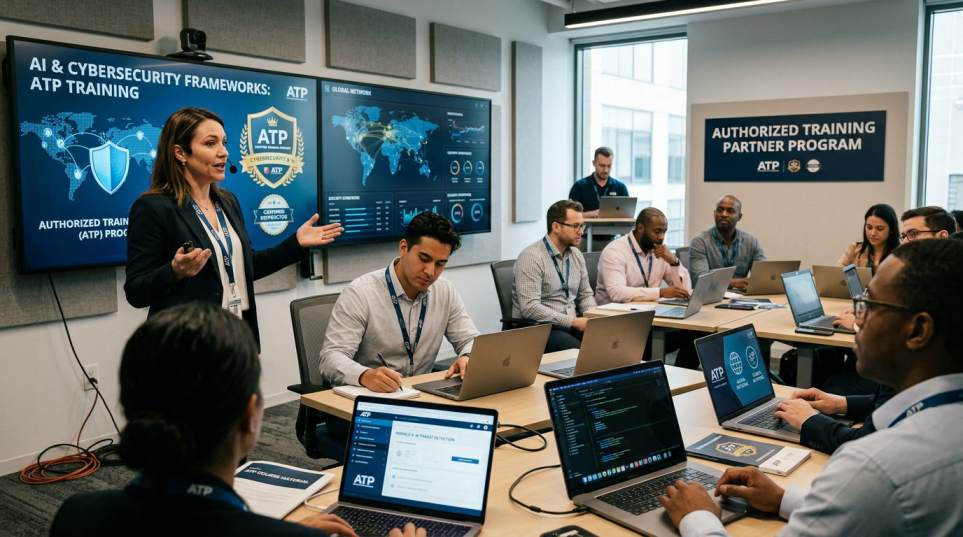
FEATURED
What Are The Top 3 Skills For Cyber Security Experts?
July 22, 2026
FEATURED
How Can I Start A Career In AI Security With Proper Training?
July 17, 2026
FEATURED
What Are The Best Platforms To Obtain Or Verify Certificates Online?
July 17, 2026