Deals are falling apart faster than listings are going live. Buyers want clarity. Sellers want speed. Brokers want fewer surprises. Real estate in 2026 sits at a breaking point, and traditional methods are starting to feel slow and guess-based.
Data-heavy AI systems are stepping in with sharper decisions, cleaner processes, and fewer human blind spots. Global real estate reports already hint at this shift, and the gap between AI-driven firms and old-school practices is widening fast.
Pricing a property has long depended on past sales, agent instinct, and limited local data. Predictive property valuation changes that formula. AI models scan millions of data points, recent sales, rental demand, zoning updates, infrastructure plans, and buyer behavior patterns.
In cities like Dubai and Singapore, AI-based pricing engines already help developers adjust prices weekly based on demand signals. Traditional pricing updates often take months. In 2026, speed and accuracy decide who closes first.
City-level trends no longer tell the full story. One street can outperform another just two blocks away. Hyper-Local Market Forensics tracks micro-signals such as foot traffic, school ratings, crime shifts, social sentiment, and permit filings.
Traditional agents rely on area averages. AI tracks block-by-block movement. In 2026, clients expect this depth. Firms that lack it risk losing trust and listings.
Automated Lead Orchestration Changes Buyer Engagement
Manual follow-ups miss timing. Automated lead orchestration systems track buyer intent in real time, website visits, search behavior, email clicks, and inquiry patterns. AI ranks leads and triggers outreach when interest peaks.
Large brokerages in the US and Europe already report fewer cold calls and more qualified conversations. By 2026, chasing leads manually may feel outdated.
Closings fail due to paperwork gaps, missed deadlines, and poor coordination. Agentic transaction management systems act as digital coordinators. They track every task, document, and approval step across buyers, sellers, banks, and legal teams.
In high-volume markets, this means fewer stalled deals and less stress. Traditional spreadsheets and email chains cannot keep up with this pace in 2026.
Algorithmic Appraisal Integrity Builds Trust With Lenders
Appraisal disputes slow financing and raise risk flags. Algorithmic Appraisal Integrity uses transparent models trained on verified data sources. These systems log every input, assumption, and output.
Banks and regulators favor traceable logic over subjective judgment. By 2026, lenders may prefer AI-verified appraisals over manual reports.
AI Real Estate Certification Program Shapes Future-Ready Professionals
Technology alone does not change industries. Skilled professionals do. The AI Real Estate certification program focuses on applied skills across predictive property valuation, hyper-local market forensics, automated lead orchestration, agentic transaction management, and algorithmic appraisal integrity.
Professionals who understand both property markets and AI systems stand ahead as 2026 approaches.
Why Traditional Practices Struggle to Keep Pace
Traditional real estate relies on delayed reports, personal memory, and manual coordination. These methods struggle under rising deal volumes, tighter margins, and data-heavy buyers. AI systems process faster, adjust quicker, and reduce error rates.
By 2026, the gap may feel too wide to bridge without structured upskilling.
Final Thoughts
2026 may not mark the end of traditional real estate, but it clearly signals a shift in who leads. AI-backed pricing, micro-market tracking, smart lead systems, transaction automation, and audit-ready appraisals are already setting new standards.
For professionals who want to stay relevant, the AI Real Estate certification from AI CERTs offers structured learning built around real market use cases. It prepares agents, developers, analysts, and consultants for how real estate truly works now, not how it worked a decade ago.
This year’s exponential 20-fold rise in demand for generative AI skills signals a pressing need for AI upskilling to address the stark talent shortages in data and analytics initiatives. As the popularity of artificial intelligence surges, so does the imperative for a future-proof workforce proficient in AI certification and capable of embracing transformative technologies.
In this article, we will learn about purposeful upskilling programs and certifications that would help businesses close the skills gap in AI.
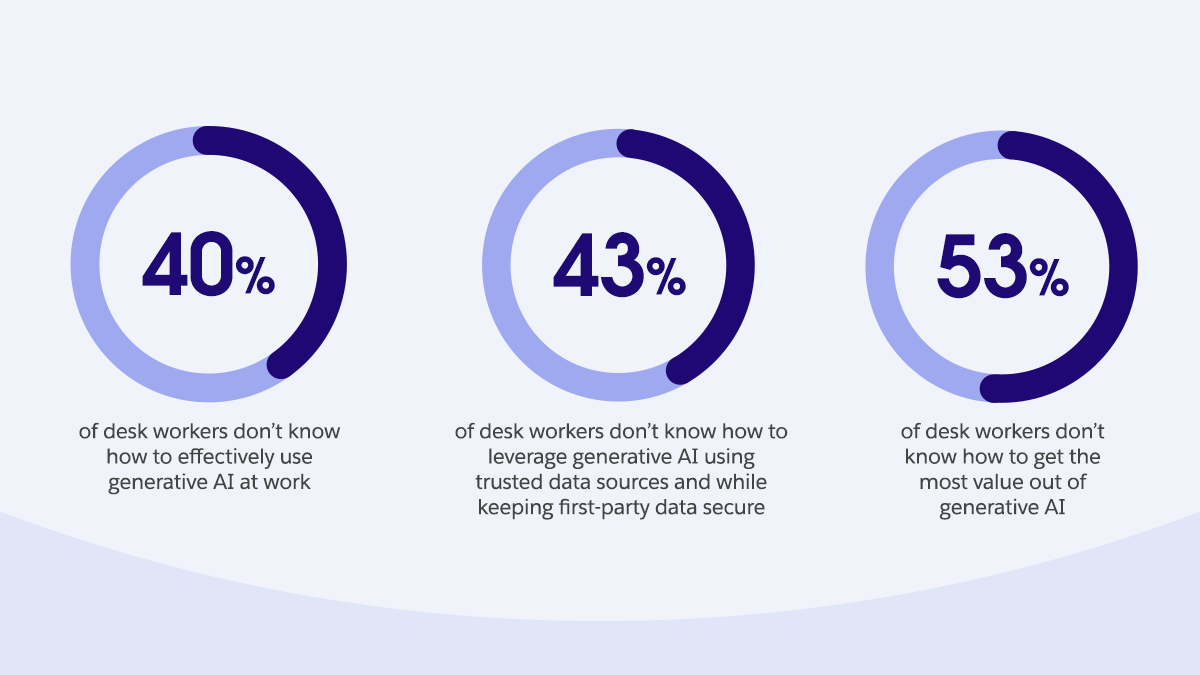
AI SKILL GAP
Source : salesforce – generative ai skills research
The widespread adoption of AI will require significant reskilling of the workforce. Up to 40% of employees may need to learn new skills in the next three years to work effectively alongside AI, as per the World Economic Forum. This becomes an opportunity for businesses to create a more skilled workforce and close the AI skills gap.
Companies should view reskilling as a strategic initiative and leverage online learning platforms and partnerships to empower their employees and prepare them for the future of work.
Identifying Core Skills for the AI Age
In the swiftly evolving AI landscape, a strategic approach to identifying and nurturing core skills is essential. Here’s a breakdown:
1. Technical Proficiencies
AI Engineers must master programming languages like Python, Java, R, C++, and JavaScript. Key areas include Data Modeling & Engineering, Big Data Analysis, Machine Learning Models, AI and ML services, AI Deployment & DevOps, and AI Security. Industry leaders also emphasize the importance of Python, C++, JavaScript, Java, C#, and other languages for AI Developers, alongside skills in data pre-processing, exploratory data analysis, and machine learning model deployment.
2. Non-Technical Abilities
Soft skills such as creativity, collaboration, adaptability, and continuous learning are becoming increasingly vital. Critical thinking and problem-solving, along with domain knowledge, ensure AI professionals can apply technical skills effectively.
3. Advanced Knowledge
A deep understanding of advanced mathematics, algorithms, and neural network architectures sets apart proficient AI Engineers. Familiarity with services like S3 for object storage and Redshift for data warehousing, as well as IAM for access management, are also recommended by industry leaders.
For AI upskilling, professionals can engage in hands-on projects, online courses, workshops, and industry publications.
To stay ahead, AI certification can serve as a testament to one’s expertise and commitment to continual learning. For those seeking to enhance their credentials, exploring accredited programs can be a valuable step toward becoming a thought leader in this dynamic field.
Gartner Suggests a Systematic Approach to Reskilling
Identifying and categorizing desired skills, conducting a talent inventory to pinpoint gaps, mapping skills to specific roles, drafting job descriptions, evaluating current teams, creating a skills development portfolio, and implementing and monitoring the programs.
Collaboration with industry partners, nonprofits, and educational institutions can extend training efforts and widen talent access. AI-powered tools such as Numly can enhance the reskilling experience by providing personalized learning paths, skill recognition, mentorship, continuous feedback, and community building.
The strategic integration of accredited certifications within reskilling programs can serve as a beacon for professional development, signaling a commitment to continuous learning and adaptability.
Strategies for Effective Reskilling
To implement effective reskilling strategies, organizations must simultaneously focus on several tasks:
1. Identify your Talent Gap:
Finding skill shortages is the first step towards future-proofing your talent stream. To evaluate present and future needs, make use of techniques like market research, workforce planning, skills audits, and talent analytics. Consider outside variables like consumer expectations and technology. For instance, to future-proof your workforce and meet the increasing need for AI-related skills, ensure you have AI engineers on staff. You can effectively address talent demands and maintain your competitiveness in changing marketplaces by knowing the roles and talents that are essential to your business plan.
2. Align Leadership:
Change middle managers’ perspectives to support reskilling programs. Encouraging leadership buy-in guarantees a more seamless transition for retrained workers into new positions. Modify middle managers’ perspectives to back programs for AI upskilling. Obtain their backing to ensure the smooth integration of retrained staff members. Put the financial benefits of having an AI-savvy staff first, easing fears of disruption by presenting reskilling as a means of empowering the team. Tell successful stories that are relevant. Give management resources for coaching retrained employees. Acknowledge advocates and promote collaboration with cross-functional teams and open communication. Make managers advocate for AI upskilling to ensure a workforce ready for the future and a smooth transition.
3. Workflow-Integrated learning:
Incorporate skill development right into the process. Upskilling is made easier with this microlearning approach, which also reinforces new abilities through real-world application. This approach is more effective than conventional training approaches because workers might not have the time to participate, and they might not use their newly acquired abilities at work. The suggested remedy is to use learning meetings or contextualized training programs to integrate learning into the regular workflow—short prompts on content that has been taught help in retention. The application of knowledge is strengthened through reflection on it. Breaking down microlearning experiences into smaller pieces is beneficial. Finally, there is a focus on tracking the advancement of these learning initiatives.
4. Personalized Learning
Artificial intelligence (AI) improves individualized learning by delivering adaptable learning systems that modify content in real-time based on student’s performance and offer more exercises or resources as needed. Educators can take preemptive measures by using predictive analysis to foresee potential issues based on historical performance data. Moreover, AI makes it possible to create information that is specific to each learner’s learning style and proficiency level. HR can use AI to tailor learning paths for staff members, considering their goals and needs, to design development plans pertinent to them. This ultimately improves workforce skills and productivity by enabling people to adopt AI technology and move into higher-value professions.
It is crucial to align reskilling programs with the company’s strategy, ensure employees understand the benefits, and provide clear career progression paths. By pushing employees beyond their comfort zones and investing in their development, employers can play a significant role in the upskilling and reskilling process.
Case Studies: Success Stories of Reskilled Workforces
1. Infosys
Infosys provides AI upskilling to its employees through internal training programs and Infosys Springboard, a free public portal featuring courses in AI and ML. This emphasis on AI reflects its expanding significance in IT and attempts to improve employee skill sets, their capacity to provide AI solutions, and the company’s culture of ongoing learning. Infosys is creating a workforce that is future-proof and ready for the rapidly changing digital world by educating its employees about AI.
2. Vodafone
Vodafone adopted a cloud-based HR strategy in 2023 to prepare its personnel for the future. A 26% increase in recruits, a 19% increase in hiring diversity, and a 50% decrease in candidate wait times were the results of this tech update. Vodafone is developing an increasingly flexible and competent technical staff by prioritizing internal development.
3. Amazon
Amazonhas taken significant strides in AI education through its Machine Learning University, which has transformed thousands of its employees into machine learning experts.
4. PWC
PwC’ssubstantial $3 billion investment in job training underscores its commitment to employee development. They call on all individuals to “upskill,” which goes beyond simply using new tools. It is about approaching ethical problems in the tech industry, thinking critically, and adjusting to change. To close the “digital divide” and build a future in which everyone prospers in the digital age, they see a need for cooperation between governments, corporations, and educational institutions.
5. Unilever
Unileverautomated recruitment with AI, which reduced hiring time from months to weeks and ensured a more diverse candidate pool.
6. IBM
IBM uses AI to provide individualized learning programs for its employees. AI evaluates a worker’s output to determine their strong and weak points before considering the business’s present and future skill requirements. The AI uses this data to create individualized learning routes that target each employee’s unique gaps and support the objectives of the business. These routes could include online classes, in-house training courses, or mentorship opportunities, guaranteeing that staff members have the specialized knowledge required to stay current and advance their careers at IBM.
7. Accenture
Accenture curated personalized learning paths for employees, boosting engagement and skill development. These case studies illustrate that investing in AI upskilling is not only beneficial for the workforce but also aligns with the strategic business goals of these companies.
Source : World Economic Forum
Takeaways
AI skills are in high demand, and there is a talent shortage in data and analytics.
Developers need to upskill themselves in areas such as programming languages, data modeling, machine learning, and AI security.
Soft skills such as creativity, collaboration, and critical thinking are also important for AI professionals.
Companies can reskill their employees by providing them with training programs, online courses, and hands-on projects.
AI certification can serve as a testament to one’s expertise and commitment to continual learning.
Conclusion
The evolving tech landscape demands a future-proof workforce. Upskilling your team isn’t just about individual development; it’s a strategic investment. By equipping your employees with the latest AI knowledge, AI-certified professionals don’t just adapt to change; they lead it, pioneering new solutions and driving your business forward.
Equip your developers for the AI revolution. The AI+ Developer™Certification by AI CERTs® reskills your workforce to design, deploy, and manage ethical AI solutions. Click here to enroll now or contact us at [email protected] for more information.