New Research on Occupational AI Training Models — Are Companies Training the Wrong AI Roles?


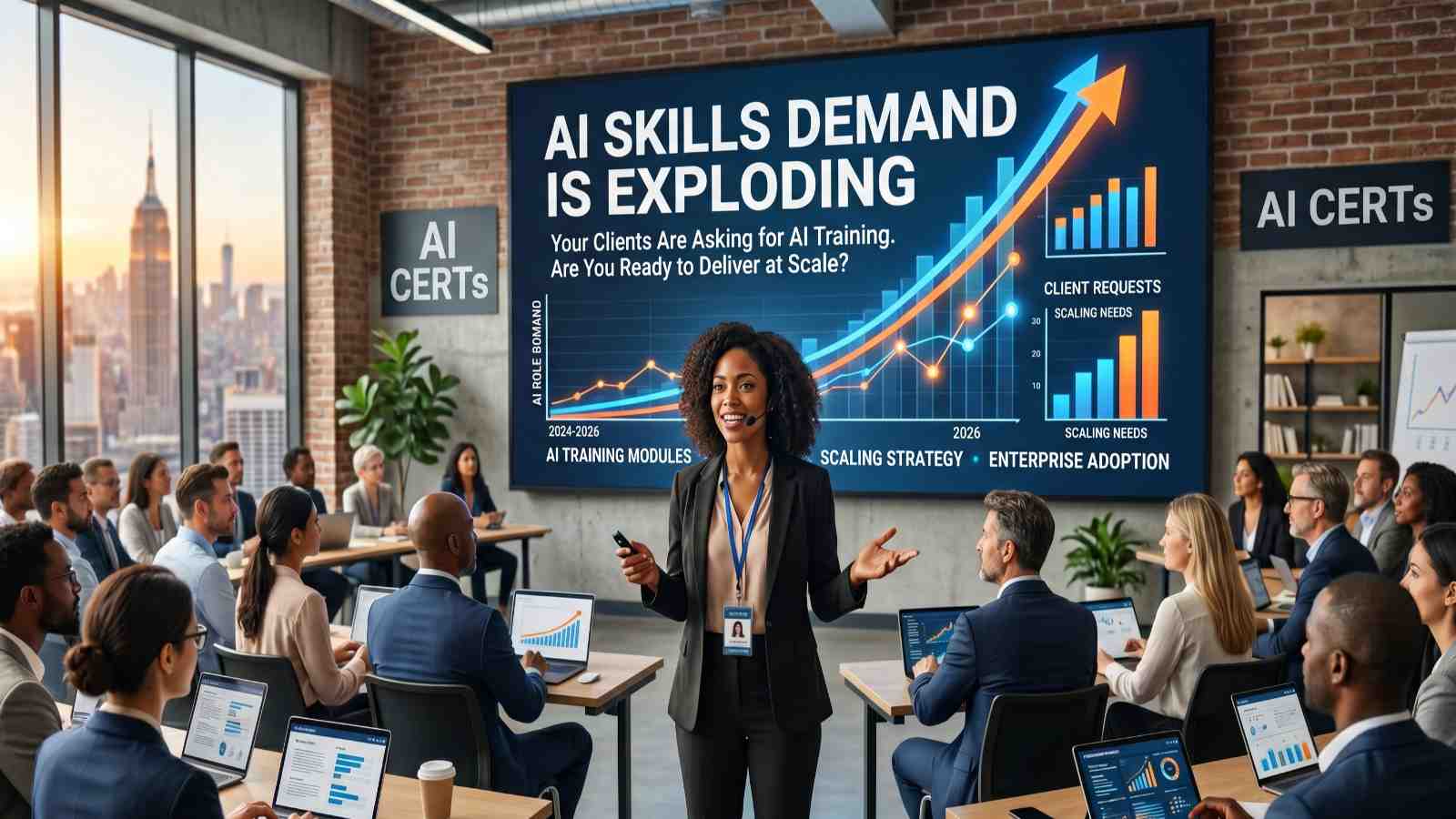
The AI hiring wave has created a strange paradox. Companies say they cannot find talent, yet thousands of learners complete AI courses every month. A new research paper published — “Occupational AI Training Models” — raises a bold question: are organizations focusing on the wrong roles when they build AI training programs?
The paper studies occupational models built around AI Technicians, showing that practical, role-focused training can build a competitive AI workforce faster than traditional degree-heavy pathways. That insight matters for enterprises trying to close skills gaps right now.
This article explores the findings, answers popular questions people ask online, and explains how the AI CERTs Authorized Training Partner (ATP) Program can anchor training in recognized credentials that employers value.
Why Are Companies Struggling With AI Workforce Development?
There are some recurring concerns:
- Why do companies struggle to hire AI talent?
- Are AI engineers the only roles that matter?
- Can non-engineers work in AI?
- How can organizations build AI workforce readiness fast?
The research suggests many organizations focus heavily on high-level AI engineers while overlooking practical roles such as AI operators, integrators, and technicians.
AI projects often fail because deployment, monitoring, and applied integration require skills different from model building. This creates a mismatch between training and workplace reality.
Organizations seeking industry-aligned AI training programs can explore the AI CERTs Authorized Training Partner (ATP) Program to create role-focused certification pathways that map directly to workplace needs.
What Is an AI Technician — And Why Does It Matter?
What Is an AI Technician — And Why Does It Matter?
One of the strongest points in the research is the rise of AI Technician roles. These professionals are trained to:
- Integrate AI tools into existing workflows
- Operate and monitor AI systems
- Support adoption across teams
- Translate technical outputs into operational actions
The study argues that AI workforce development must include practical occupations beyond engineers.
This aligns with what enterprises are seeing today: AI adoption depends on people who can implement systems, not only design algorithms.
AI Technician vs AI Engineer Roles
| Role | Primary Focus | Training Style |
| AI Engineer | Model development, algorithms | Long academic pathway |
| AI Technician | Implementation, operations, integration | Rapid occupational training |
Companies investing only in engineering-heavy programs may miss the roles that drive day-to-day AI adoption.
Training providers and institutions can become a partner through the AI CERTs ATP model to offer structured AI technician training models aligned with industry demand.
What Does the Research Say About Rapid Occupational Training?
The paper highlights rapid occupational training as a practical solution for AI workforce gaps. Instead of multi-year degrees, programs focused on applied AI skills can prepare learners for real roles in a shorter time frame.
Key observations include:
- Occupational AI education increases workforce readiness faster.
- Alternative AI education models support career transitions.
- Industry-driven AI learning improves job alignment.
This mirrors broader industry data showing employers prioritize demonstrated skills and certifications over academic backgrounds in many technical roles.
Questions People Ask
Can AI vocational training replace degrees?
For many applied roles, certifications and technical AI certification pathways are becoming accepted entry routes.
What are scalable AI training programs for enterprises?
Programs that combine role-based learning with recognized credentials and partner-led delivery models.
Enterprise Strategy: Are Companies Training the Wrong AI Roles?
Enterprise AI workforce strategy often starts with executive goals but stalls at execution. Organizations invest in advanced AI courses, yet teams struggle to operationalize tools.
The research points toward a different approach:
- Build AI talent pipeline development around occupational roles.
- Train AI operators and integrators alongside engineers.
- Focus on workforce modernization through AI, not isolated technical training.
Industry analysts increasingly note that AI adoption succeeds when cross-functional teams receive applied AI training, not only technical specialists.
Government and Institutional Collaboration: A Model Worth Watching
The paper references collaboration between institutions such as the U.S. Army and academia to develop institutional AI training frameworks.
This model shows how government AI workforce initiatives are shaping new pathways:
- Public-private AI partnerships
- Defense AI workforce development programs
- Structured occupational AI education
These initiatives indicate a shift away from traditional education pipelines and toward practical training aligned with workforce demand.
CTA — Expand Through Partnership Models
Academic institutions and associations can join the AI CERTs ecosystem through:
These models help build scalable AI workforce development strategies.
Future of AI Jobs: Practical Roles Beyond Engineers
Search interest around “AI technician roles” and “future of AI jobs” continues to rise. Organizations are asking:
- What are emerging AI career pathways?
- How do we prepare teams for human-AI workforce integration?
- Which roles matter most for AI adoption?
The answer lies in practical AI roles beyond engineers. AI operators, workflow integrators, and applied AI specialists bridge the gap between technology and business outcomes.
This shift supports:
- AI-driven organizational transformation
- AI workforce gap solutions
- Strategic AI talent development
Companies that train for these roles early build stronger internal adoption and faster deployment cycles.
How AI CERTs ATP Aligns with Occupational AI Training Models
The AI CERTs Authorized Training Partner (ATP) Program fits closely with the research direction:
- Industry-aligned AI certification programs
- Partner-led AI workforce training
- Enterprise AI certification pathways
- Scalable AI training programs for organizations
Instead of generic courses, the ATP model supports training anchored in real credentials that matter to employers. That creates measurable outcomes for both learners and enterprises.
Training organizations looking to build AI workforce training at scale can become a partner with AI CERTs and offer recognized certification pathways that match current industry needs.
Industry Insight: Why This Shift Is Happening Now
AI adoption is moving from experimentation to operational deployment. Enterprises need teams that can run AI systems daily, troubleshoot issues, and integrate tools into workflows.
The research reinforces a growing idea: AI workforce transformation depends on occupational training models, not only advanced research skills.
This trend aligns with rising demand for:
- AI reskilling programs
- AI upskilling initiatives
- Applied AI training
- Technical AI certification pathways
Organizations that act early can build a competitive AI workforce before the talent gap widens further.
Final Thought
The research points to a clear shift. AI workforce development is moving from elite engineering tracks to practical, occupation-focused education. Companies that continue training only high-level technical roles may struggle with adoption gaps.
The future belongs to organizations that invest in:
- AI technician training models
- Occupational AI education
- Industry-driven AI learning
- Partner-led training ecosystems
The AI CERTs Authorized Training Partner Program gives enterprises, institutions, and training providers a structured path to build those capabilities.
If your organization is planning AI workforce readiness, this is the moment to rethink who gets trained and why.
Recent Blogs

FEATURED
Why AI Certifications Are Becoming the Most Profitable Addition to Training Portfolios
April 16, 2026
FEATURED
AI Skills Demand Is Exploding—Here’s How Training Providers Are Capitalizing on It
April 16, 2026
FEATURED
From Courses to Certifications: The Shift That’s Increasing Training Margins
April 16, 2026
FEATURED
What 2,886 Auditors Revealed About AI Adoption in Internal Audit
April 15, 2026