

AI CERTs
2 hours ago
UK Deepfake Detection Framework: Microsoft and Government Unite
Synthetic video scandals now reach British smartphones daily. Consequently, Parliament fears a wave of disinformation before the next general election. On 5 February 2026, ministers announced an ambitious response called the UK Deepfake Detection initiative. Moreover, the plan partners Microsoft, researchers, and regulators to benchmark tools that spot AI generated lies. The framework promises standard tests, shared datasets, and transparent scoring for any vendor. Meanwhile, Reuters cites estimates of eight million deepfakes shared during 2025 alone. Officials warn that sexual exploitation, fraud, and political manipulation already strain existing security mechanisms. Therefore, enterprises across finance, media, and law enforcement watch the new programme closely. This article unpacks the project’s context, technical hurdles, and commercial stakes. It also outlines how professionals can prepare for the next phase of digital trust.
Deepfake Surge In Numbers
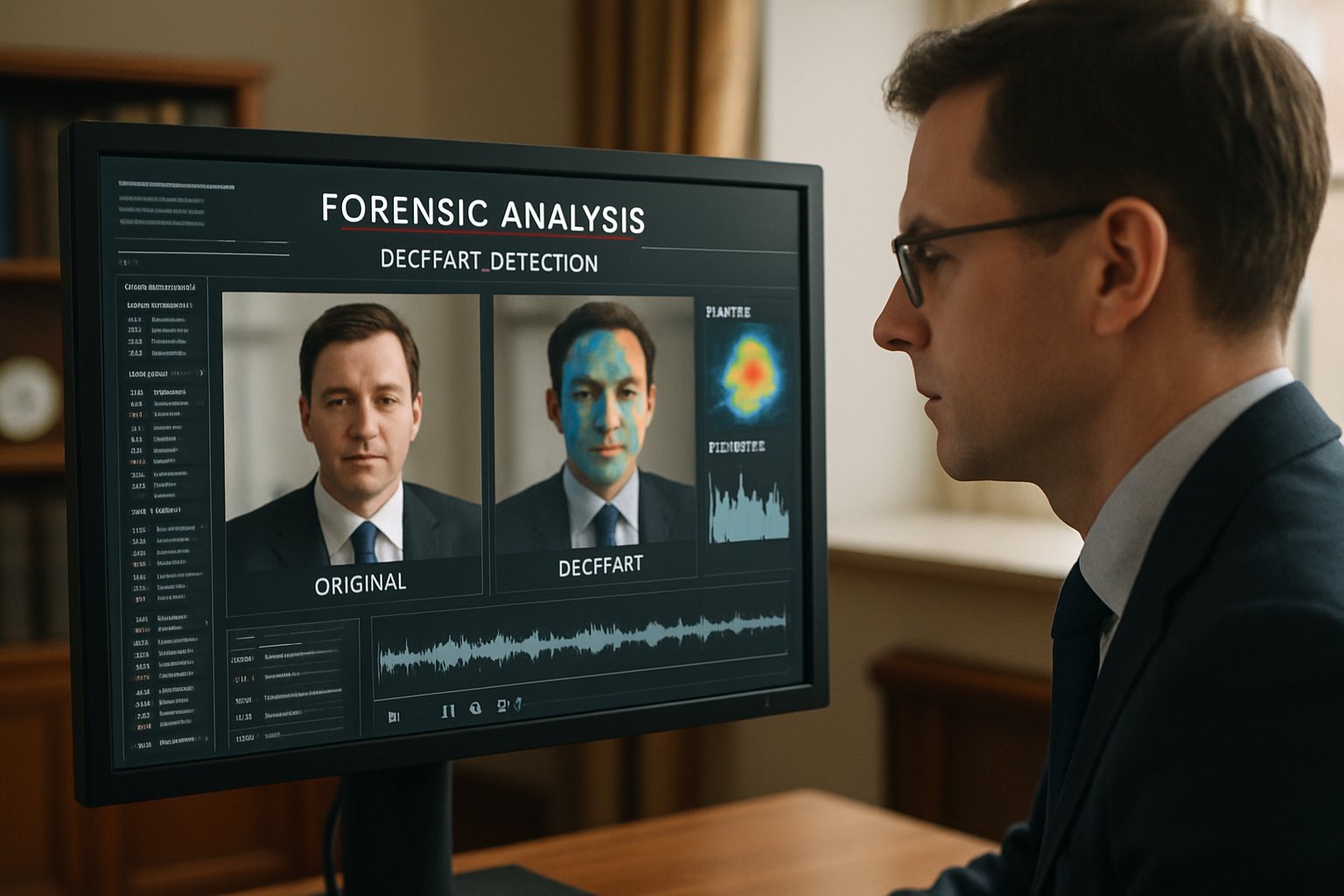
Firstly, statistics show exponential growth. Reuters quotes government data indicating eight million manipulated clips circulated online last year. That figure is sixteen times larger than 2023’s estimate. Furthermore, ACE trials now feed UK Deepfake Detection with two million mixed assets for benchmarking. Such scale underscores why UK Deepfake Detection must adopt industrial testing pipelines. Additionally, Microsoft hosted a four-day LIVE ’26 event, letting researchers attack real detectors with fresh synthetic files. These empirical exercises create baseline evidence for policy debates.
In summary, incident numbers now justify action at national scale. Consequently, the next section reviews how the framework will operate.
Framework Goals Fully Explained
At its core, the framework sets shared performance metrics. Moreover, UK Deepfake Detection demands reproducible tests covering image, audio, and video deepfakes. Vendors will submit detectors; independent judges will score precision, recall, and forensic robustness. UK Deepfake Detection will publish leaderboards, encouraging healthy competition. Additionally, the evaluation team will define risk tiers aligned with national security classifications. Microsoft supplies cloud resources while ACE curates ‘gold-standard’ datasets under strict government oversight. Consequently, procurement officers can reference transparent grades when selecting defence, media, or election protection solutions. Professionals can sharpen skills through the AI Security Level 1 certification.
In short, the framework blends open competition with rigorous oversight. Nevertheless, technical obstacles still threaten reliable detection.
Significant Technical Challenges Persist
Detection remains an arms race. In contrast, generators evolve weekly, reducing pixel artefacts that classical forensic models exploit.
Key Detection Approaches Today
- Pixel-level forensic classifiers spotting camera-inconsistent textures.
- Watermark or provenance signals embedded at generation time.
- Contextual analysis combining metadata, speech, and open-source intelligence.
However, each approach suffers generalisation gaps when novel architectures appear. Therefore, UK Deepfake Detection incorporates adversarial challenge rounds mirroring hostile environments. Furthermore, false positives can damage legitimate journalism and election coverage, risking legal backlash. Subsequently, framework designers add human review layers for high-risk takedown decisions. These unresolved issues mandate continuous research and policy updates. Next, we examine the commercial opportunities emerging alongside these hurdles.
Growing Market And Partnerships
Commercial interest in detection tools surges with the threat. Navistrata Analytics values the global market at six point three billion dollars in 2024. Moreover, analysts forecast double-digit CAGR through 2030, driven by banking, media, and defence buyers.
- Reality Defender offering enterprise forensic APIs.
- Sensity AI focusing on real-time moderation.
- Hive AI providing scalable security screening.
- Socure integrating biometric verification for election integrity.
Meanwhile, Microsoft’s London campus now hosts hackathons that feed data back into UK Deepfake Detection benchmarks. Consequently, partnerships blend corporate scale with academic depth, accelerating innovation.
In essence, money and expertise converge around standardised testing. However, policy debates still shape adoption curves.
Policy, Ethics, Civil Liberties
Legislators must balance innovation with rights. Furthermore, government agencies plan data protection impact assessments before nationwide rollout. Privacy advocates fear constant scanning could chill free media expression. Nevertheless, security leaders argue that unchecked deepfakes threaten critical infrastructure and election legitimacy. UK Deepfake Detection addresses oversight through transparent metrics and independent audits. Additionally, the framework requires audit logs stored within domestic clouds to satisfy stringent government regulations. In contrast, civil society groups demand stronger redress mechanisms for wrongful takedowns. Subsequently, policymakers will consult the Biometrics and Forensics Ethics Group for guidance.
To conclude, robust governance remains central to public trust. The following section outlines future milestones for UK Deepfake Detection.
Future Outlook And Conclusion
Looking ahead, the framework will release draft metrics by summer 2026. Subsequently, Microsoft will open a public sandbox where vendors can test detectors against live attacks. Moreover, ACE plans annual challenges to keep pace with generative advances. UK Deepfake Detection thus represents a dynamic frontline for national resilience and commercial trust. Nevertheless, practical impact hinges on transparent audits, vendor cooperation, and sustained research funding. Professionals should monitor results and pursue specialised training to stay ahead of threat actors. Consequently, enrolling in the linked certification can deepen operational insight and career prospects.


