

AI CERTS
2 hours ago
Tech Talent Migration: Workday CTO Moves to Anthropic
Reports from The Information cite company spokespeople and Bailis’s updated LinkedIn profile. Meanwhile, the HR vendor moved quickly, elevating Gabe Monroy to the vacant CTO post. These intertwined moves illustrate converging customer relationships and competitive tensions between enterprise SaaS vendors and frontier AI labs. Therefore, leaders across HR software and advanced model research are reassessing retention strategies and partnership dynamics. Nevertheless, investors expect further executive shuffles as generative AI budgets expand across every enterprise vertical.
AI Labs Lure Talent
Big language model developers now chase senior operators from established SaaS firms. However, salary alone does not explain the migration. Anthropic raised billions in 2025, giving it room to offer deep equity packages. Furthermore, experienced engineers crave direct influence on research roadmaps rather than budgeting cycles. Bailis embodies that desire. The Stanford-trained data systems expert built Sisu, led Google Cloud teams, and accepted the much bigger HR platform challenge. Nevertheless, he pivoted again within one year.
He will now ship reinforcement learning optimizations that shorten inference times and improve reliability for Claude deployments. Consequently, the lab gains field-tested architecture skills without expanding its management layer. Analysts say this strategy accelerates shipping velocity while sidestepping hierarchy drag. Tech Talent sees the appeal and watches compensation tables presented by rising labs.
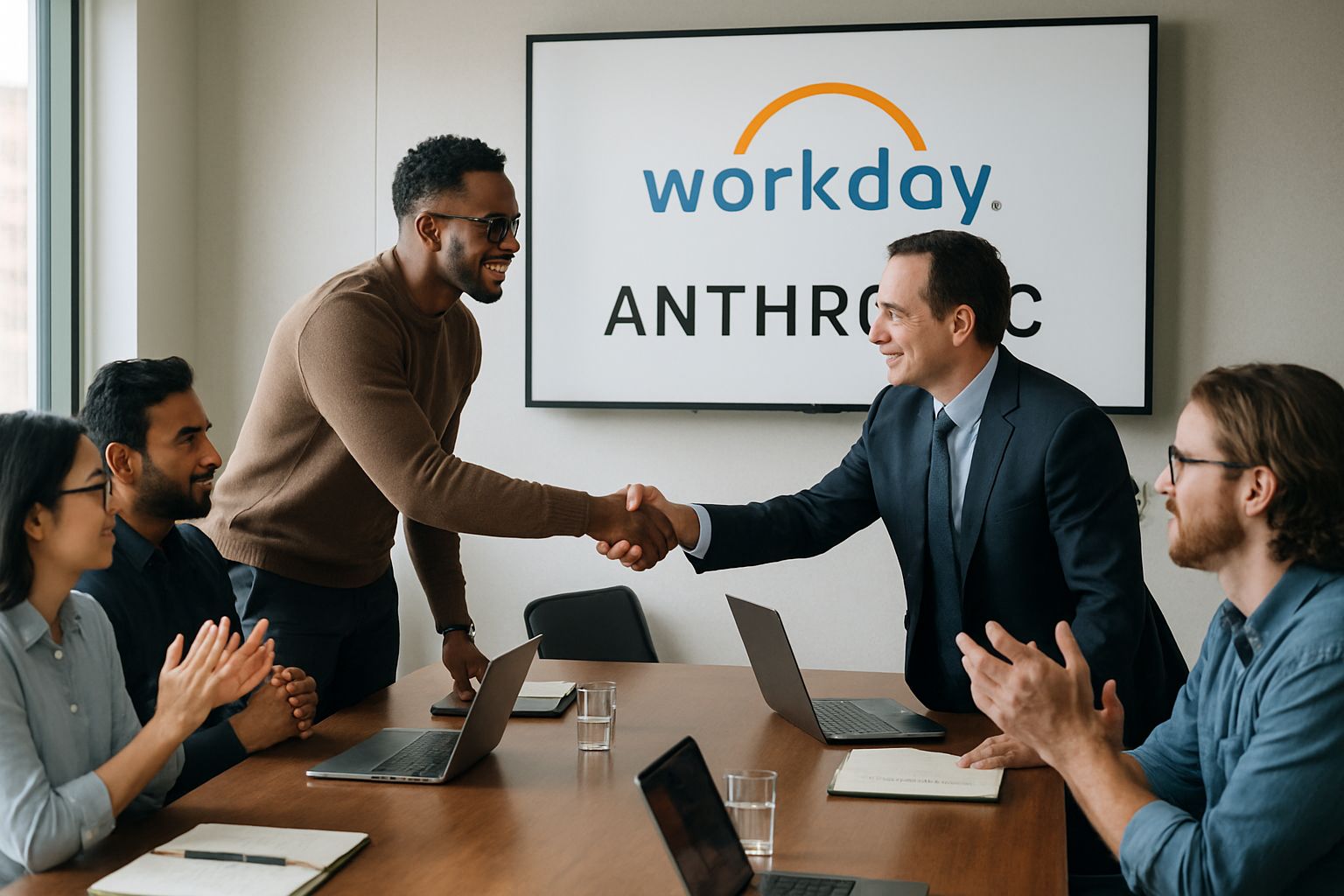
These motivations illuminate why senior builders leave comfortable posts. Meanwhile, further case studies underline the pattern.
Inside Bailis Career Move
Reports from The Information revealed the shift before either company issued formal statements. Furthermore, Bailis’s LinkedIn profile listed “Member of Technical Staff” at the AI lab after March 2026. That update matched academic papers submitted to ICLR 2026, showing his new affiliation. Therefore, verification came quickly from multiple angles. Workday spokespersons confirmed his departure, and lab sources outlined his reinforcement learning scope. Nevertheless, there is still no dedicated press release.
Observers note that many AI labs avoid splashy onboarding news to minimize hiring poaching wars. Bailis’s acceptance of an individual contributor badge surprised some peers. However, the MTS title at research labs often denotes partner-level influence over code and publications. Consequently, industry insiders downplay any suggestion of demotion. Tech Talent counts impact, not title, when evaluating a role.
The evidence confirms Bailis is building, not managing. Consequently, attention shifts to Workday’s leadership response.
Impacts On Workday Leadership
Leadership turnover often rattles enterprise buyers. However, CEO Aneel Bhusri tried to reassure investors during recent interviews. He emphasized that leading AI pioneers continue running its core HR software. Furthermore, the company announced Gabe Monroy’s promotion to CTO within weeks. That rapid response signalled continuity. Nevertheless, analysts still flagged rising retention risk for senior architects. They cited aggressive packages from well-funded labs.
- May 2025: Bailis appointed at Workday CTO after Sisu acquisition experience.
- March 2026: Departure surfaced in The Information, lacking formal press confirmation.
- April 2026: Monroy publicly named CTO, per Fortune coverage.
- $3.5 billion: The AI startup's reported Series E, financing fresh hiring waves.
Consequently, procurement chiefs wonder whether Workday can innovate as fast as its disruptors. Tech Talent inside the company now expects broader ownership opportunities to match external offers.
Workday’s quick succession plan narrows immediate gaps. However, the broader Tech Talent drain conversation now centers on the AI lab side.
Anthropic RL Engineering Push
Reinforcement learning from human feedback underpins today’s leading language models. Consequently, even minor throughput improvements translate into large cost savings during production inference. The lab’s RL team therefore prioritises latency, reward tuning, and stability. Bailis now owns acceleration experiments that test scheduler tweaks, hardware mapping, and novel reward shapes. Furthermore, his past work on data pipelines gives him credibility with both researchers and infra engineers. Tech Talent watching the move sees a pathway into impactful, hands-on research without supervisory overhead.
Nevertheless, heavy expectations accompany the role. The Claude roadmap demands faster iteration cycles plus robust safety guarantees. Therefore, each RL commit ships only after tight evaluation harness reviews.
Performance wins could reach paying customers quickly. In contrast, failures would surface immediately across public chat interfaces.
This pressure leads many SaaS firms to study the broader market environment.
Enterprise SaaS Market Shifts
Legacy SaaS vendors face twin forces. Firstly, AI labs that remain paying customers now compete for the same technical enterprise budgets. Secondly, these labs siphon high-value engineers. Moreover, venture funding has slowed for classic subscription software, intensifying competition for differentiation. Fortune labelled the downturn the “SaaSpocalypse.” Consequently, procurement leaders demand clearer ROI and accelerated release cadences.
Meanwhile, investors compare engineering efficiency metrics across vendors and model labs. They observe that a single reinforcement learning improvement can unlock multi-million-dollar cloud savings. Therefore, pressure mounts on public SaaS giants to mimic lightweight technical experimentation loops. Tech Talent inside those firms leverages external offers to secure internal skunk-works budgets.
The talent tug-of-war carries risk. Nevertheless, customers still require secure payroll and finance backbones. Thus, established vendors cannot simply chase flashy prototypes.
Market turbulence exposes cultural contrasts between hierarchical SaaS shops and agile research collectives. Subsequently, professionals consider upskilling to stay relevant.
Upskilling For Future Roles
Career resilience now depends on continuous learning. Moreover, HR and AI intersect more every quarter. Professionals can enhance their expertise with the AI+ Human Resources™ certification. That program covers prompt design, policy alignment, and systems integration for people platforms. Consequently, graduates speak both compliance and model fine-tuning languages.
Additionally, recruiters report that candidates holding modern credentials negotiate 15% higher base packages. Tech Talent looking to pivot from management to maker roles can use certifications to validate recent hands-on practice. Furthermore, the coursework’s capstone requires building a small reinforcement learning pipeline, reinforcing crucial concepts.
Nevertheless, credentials alone will not guarantee migration into research labs. Experience shipping production code under tight latency budgets still matters. Therefore, professionals should pair coursework with open-source contributions or internal prototype demos.
Tailored learning paths sharpen bargaining power during offer cycles. Consequently, the tech labor ecosystem remains dynamic and merit-driven.
Final Insights And Outlook
Peter Bailis’s leap underscores a deeper skills realignment sweeping enterprise software. Consequently, Tech Talent now measures opportunity by proximity to groundbreaking research. Workday’s orderly succession shows incumbents still hold operational strength. Nevertheless, the lure of shipping critical technical improvements for frontier models remains potent. Moreover, investors will judge vendors on their ability to both retain builders and integrate external breakthroughs.
Tech Talent watching these chess moves should inventory personal gaps and pursue structured learning. Therefore, consider registering for advanced certifications and contributing to open repositories. Such steps convert curiosity into demonstrable edge. Additionally, successful transitions demand clear narratives about impact rather than title prestige. Consequently, Tech Talent poised for the next career crossing should start crafting that story today.


