

AI CERTS
2 days ago
Samsara Bets Big on Physical AI Orchestration
Therefore, investors suddenly discuss crash reductions, dispatch automation, and usage-based licensing. Meanwhile, regulators and unions ask difficult questions about privacy and certification. This article examines Samsara’s positioning, the underlying orchestration stack, and the hurdles that still loom. Furthermore, readers will gain context on market momentum, data scale economics, and competitive dynamics. Practical takeaways appear throughout, including links to relevant professional certification paths.
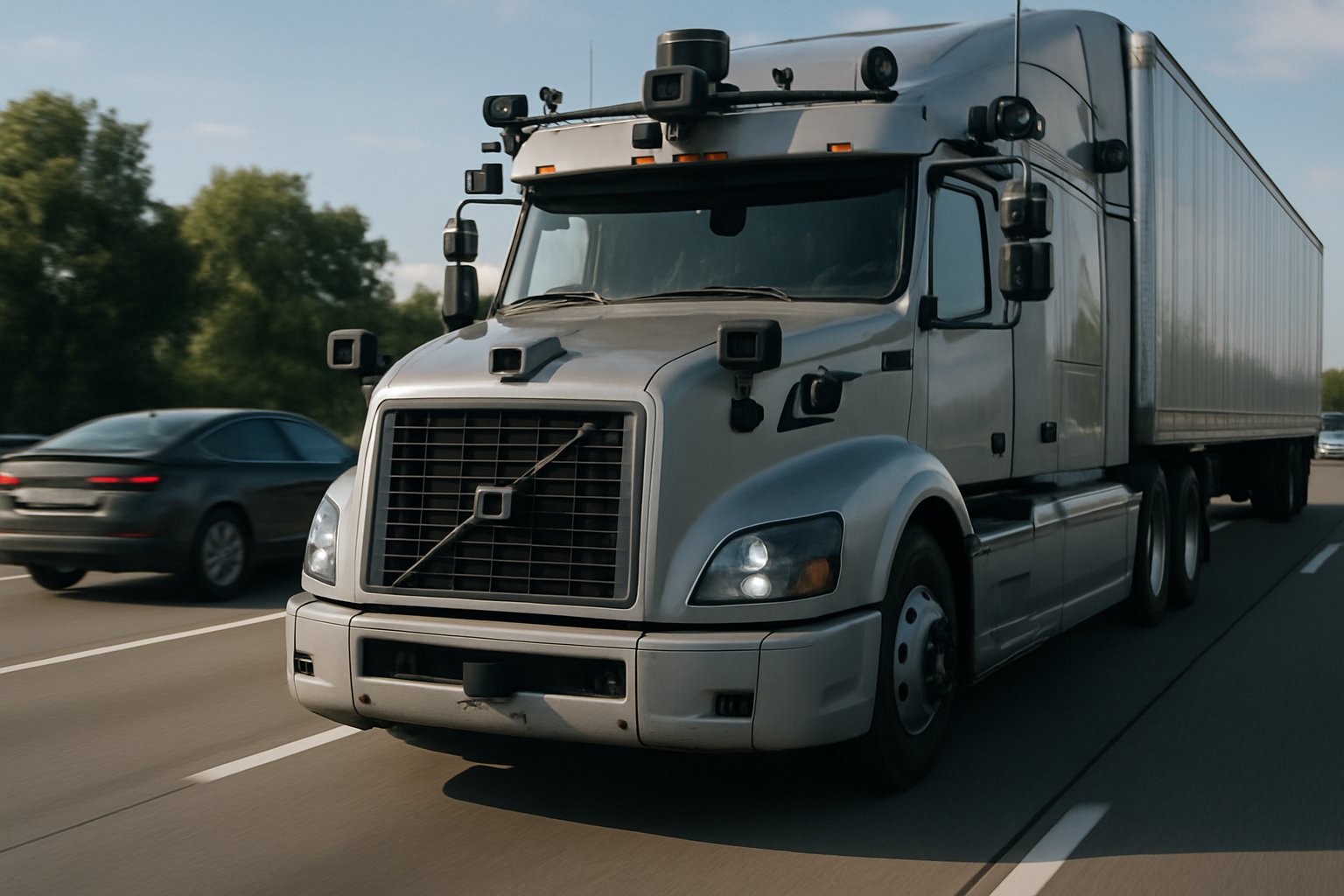
Global Market Momentum Builds
Global fleets now pilot Physical AI proofs of concept across logistics, aviation, and utilities. Moreover, analyst notes from Goldman and Deloitte cite Samsara’s revenue climb toward $1.6 billion as evidence. In contrast, many smaller vendors still sell siloed dashcams without agentic links.
The FY26 report showed 28% year-over-year growth and 3,194 customers above $100K ARR. Additionally, guidance projects almost $2 billion next year, signaling investor belief in mixed-autonomy futures. Consequently, Physical AI has become an emerging stock category tracked by thematic funds.
These numbers highlight accelerating demand. However, momentum also raises expectations for proven safety outcomes and repeatable deployment playbooks. In summary, market traction appears strong yet still fragile. Accordingly, the next section explores agentic safety advances driving adoption.
Agentic Safety Advances Quickly
Samsara’s flagship AI Safety Coach launched in Q4 FY26 as the first closed-loop agent. It delivers two-way in-cab voice guidance, automated event triage, and real-time scorecards. Moreover, company benchmarking claims fleets saw a 73% crash reduction over 30 months.
Physical AI models, trained on more than 25 trillion sensor datapoints, underpin these interventions. Nevertheless, independent validation remains scarce, and insurers still request third-party audits. In contrast, early adopters like Swissport cite faster training cycles for new drivers.
- 73% crash rate drop over 30 months, according to Samsara Safety Report.
- 48% harsh event decrease within six months for early cohorts.
- 20T datapoints used to train Samsara Coach models, company blog claims.
- 3,194 customers exceed $100K ARR as of Q4 FY26.
Consequently, the safety narrative fuels sales conversations with risk-averse fleet operators. These advances establish baseline trust. However, deeper orchestration capabilities must still emerge. The agentic safety stack demonstrates tangible value today. Subsequently, attention turns to the wider orchestration architecture powering those agents.
Orchestration Stack Explained Simply
At its core, the stack ingests video, telemetry, and environmental data through gateways and dashcams. Digital twin models maintain semantic context for every vehicle, asset, and facility. Furthermore, agentic planners reason on that state to schedule maintenance or override risky maneuvers.
The company positions its cloud platform as the orchestration layer that connects sensing to action. Meanwhile, edge controllers execute latency-critical policies locally to satisfy safety requirements. Therefore, humans, robots, and autonomous trucks receive coordinated commands in near real time.
Competing frameworks from NVIDIA Omniverse and Accenture follow similar blueprints. Nevertheless, few rivals bundle hardware, data fabric, and application agents under one subscription. In essence, the orchestration layer operationalizes trillions of events into measurable interventions. The following economic analysis reveals why data scale matters.
Data Scale Economics Matter
Bigger datasets enable more accurate detections and lower false positives. Moreover, the company reports 25 trillion annualized datapoints flowing through its services. Consequently, each new sensor magnifies model performance and defensibility.
Independent analysts argue that data scale erects durable moats in Physical AI markets. However, they also caution that poor metadata lineage can negate advantages. Therefore, enterprises must invest in governance, labeling, and continuous validation loops.
Large datasets drive accuracy but demand careful curation. Next, we examine changing competitive landscapes shaping platform choices.
Competitive Landscape Shifts Ongoing
Competitors include Mobileye, Aurora, and several robotics start-ups targeting autonomous haulage. In contrast, consultancies offer integration services around digital twin tooling from NVIDIA. Furthermore, investors now categorize coordination vendors as a standalone index segment.
HumanX 2026 highlighted collaboration rather than zero-sum rivalry, hosting mixed-autonomy demonstrations on stage. Nevertheless, intellectual property disputes, like Motive v. the company, reveal underlying friction. Consequently, legal costs and patent barriers may influence platform selection.
Competitive dynamics remain fluid amid rapid momentum. The upcoming section addresses regulatory and ethical risks.
Risks And Regulation Ahead
Physical AI intervenes in the real world, so failures carry tangible harm. Moreover, privacy concerns surface around inward-facing cameras and biometric analytics. The Karling settlement over dashcam recordings underscores that point.
HumanX panelists warned certification practices trail technical progress. Additionally, regulators still draft guidelines for autonomous agents that issue physical commands. Consequently, fleets demand auditable safety cases and fallback strategies before granting broad autonomy.
- Safety certification standards remain fragmented across jurisdictions.
- Worker privacy laws vary and evolve quickly.
- Economic models for agent licensing lack benchmarks.
Nevertheless, platform vendors propose transparent logging, usage-based pricing, and third-party audits as mitigations. These challenges highlight critical gaps. However, strategic planning can reduce exposure. Therefore, the final section outlines unanswered roadmap questions for decision makers.
Future Roadmap Questions Remain
Enterprises ask when Physical AI agents will expand beyond safety into compliance, maintenance, and dispatch. Furthermore, they wonder how usage metering will impact total cost of ownership. In contrast, investors focus on gross margin expansion through software-heavy revenue.
Leadership also evaluates workforce readiness and change management requirements. Professionals may upskill through the AI Project Manager™ certification. Consequently, early education helps organizations govern emerging agent ecosystems responsibly.
Key roadmap unknowns involve timing, economics, and workforce readiness. Ultimately, informed planning anchors long-term value creation.
Physical AI now moves from concept to contract across high-value, safety-critical industries. Moreover, early outcomes suggest lower incident rates and higher asset utilization. Nevertheless, certification, privacy, and economic frameworks lag technical ambition.
Decision makers should map risk, invest in data governance, and pilot autonomous features under controlled conditions. Meanwhile, industry forums such as HumanX will continue refining shared standards and best practices. Consequently, executives who engage early, build talent, and adopt structured learning will lead the Physical AI era.
Future competitiveness hinges on aligning strategy, culture, and architecture with Physical AI capabilities. Act now to explore pilots, certify staff, and secure first-mover advantage. Begin by evaluating the aforementioned certification to accelerate practical execution.


