

AI CERTS
4 weeks ago
Reliable Robotics Propels Autonomous Flight Funding
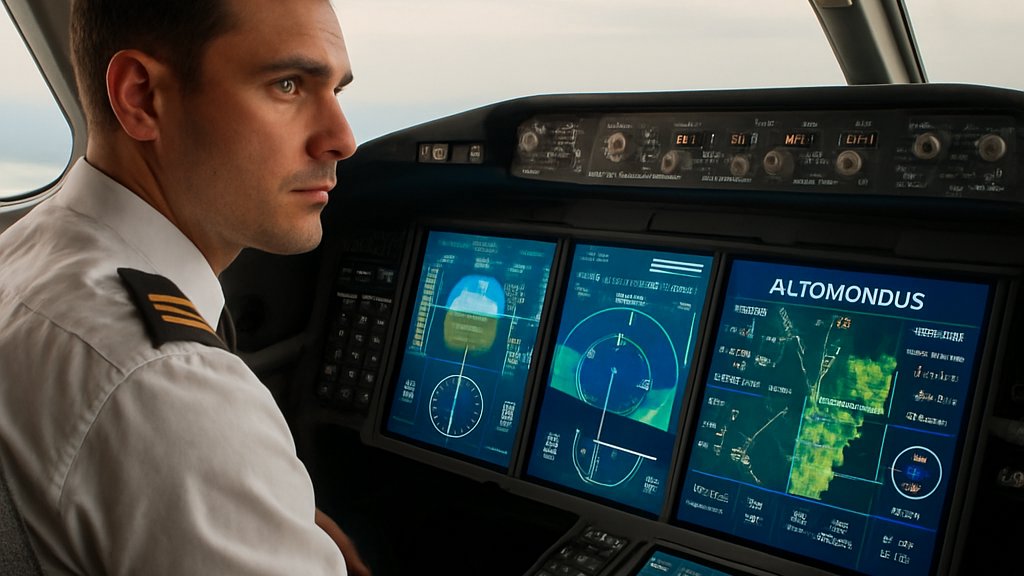
Funding Boost Accelerates Rollout
Nimble Partners led the Series D, while Eclipse, Lightspeed, Coatue, and others followed. Additionally, John Burbank from Nimble will join the board. The company stated that more than 200 systems are already under commitment from commercial and military customers.
Capital will scale production of the Reliable Autonomy System, or RAS. Furthermore, funds cover radar manufacturing, engineering hires, and compliance documentation. Consequently, Reliable Robotics expects faster test cycles and earlier commercial launches.
Key takeaways: the cash injection shortens development timelines and strengthens investor oversight. Therefore, the next section explores the autonomy stack itself.
System Design And Benefits
RAS retrofits existing aircraft such as the Cessna 208B Caravan. Precision navigation, full-authority flight control, secure datalinks, and detect-and-avoid sensors form the core. Moreover, an AESA phased-array radar improves target tracking.
The company argues that continuous automation prevents common human-factor mishaps. In contrast, conventional autopilots disengage during critical phases. Autonomous Flight therefore promises fewer runway incursions and controlled-flight-into-terrain accidents.
Professionals can deepen technical knowledge through the AI + Robotics™ certification. That credential covers perception, control, and system assurance fundamentals.
These advantages highlight why customers placed early orders. However, regulatory approval remains essential, as the next section details.
Certification Pathway Advances Forward
The Federal Aviation Administration has accepted Reliable’s certification plans and means of compliance. Subsequently, issue papers closed, clearing initial procedural gates. The firm targets full approval around 2028.
Meanwhile, FAA-supervised test flights collected detect-and-avoid data. Additionally, the DOT’s eIPP pilot program selected the company for regional cargo demonstrations. Nevertheless, evidence generation continues, involving software assurance audits and thousands of simulation hours.
- FAA accepted plans: February 2026
- DAA data flights: March 2026
- Projected approval: 2028
Certification milestones show steady progress. Consequently, market analysts now model sizable revenue potential, explored next.
Market Demand Forecasts Rise
ResearchAndMarkets projects autonomous cargo aviation revenues reaching $4.15 billion by 2030. Moreover, the 24.6% CAGR reflects e-commerce growth and regional logistics gaps. Retrofit providers enjoy faster entry because existing aircraft fleets need only avionics upgrades.
Reliable Robotics therefore competes for a sizeable share. Furthermore, defense contracts offer parallel revenue streams, supporting dual-use deployment. Autonomous Flight could unlock higher aircraft utilization by removing crew duty-time limits.
These forecasts validate investor enthusiasm. However, rivals also chase the opportunity, as outlined below.
Competitive Landscape Overview Brief
Xwing, Merlin Labs, and other startups pursue similar retrofit autonomy. In contrast, Elroy Air and Natilus design new airframes. Traditional avionics giants also study incremental automation rather than full removal of pilots.
Reliable Robotics differentiates through early FAA engagement and full-authority design. Additionally, board influence from defense leaders such as General Richard Clarke strengthens military credibility.
The crowded field pressures time-to-market. Consequently, understanding key risks becomes critical, addressed next.
Key Risks And Challenges
Regulatory timelines may slip because safety cases demand exhaustive evidence. Moreover, detect-and-avoid reliability in dense terminal space remains unproven. Public perception adds another unknown; labor groups may resist uncrewed cargo flight.
Manufacturing also brings hurdles. Scaling certified avionics supply chains requires strict quality control and capital discipline. Nevertheless, the recent $160 million reduces immediate funding risk.
These challenges underscore why disciplined execution matters. Therefore, the final section assesses the strategic outlook.
Autonomous Flight appears tenaciously within the commercial spotlight today. Reliable Robotics wields fresh capital, a maturing certification plan, and clear market pull. Furthermore, strategic investors add governance that can steady turbulent development phases.
Consequently, the coming two years will prove pivotal. Success could validate gate-to-gate autonomy for legacy cargo aircraft. Failure would gift competitors valuable runway. Industry observers should track FAA docket updates and customer reveal announcements closely.
These strategic factors conclude our deep dive. However, further learning opportunities remain.
Conclusion
Reliable Robotics has tightened its grip on the Autonomous Flight opportunity. The $160 million round accelerates productization, certification, and market expansion. Moreover, strong demand forecasts and dual-use applications strengthen the business case.
Nevertheless, certification scrutiny, sensor reliability, and supply-chain scaling still threaten timelines. Consequently, disciplined engineering and transparent stakeholder engagement will decide the outcome.
Readers seeking career relevance should explore the linked AI + Robotics™ certification. Advancing expertise now positions professionals for leadership roles when fully autonomous cargo Aviation takes off.
Disclaimer: Some content may be AI-generated or assisted and is provided ‘as is’ for informational purposes only, without warranties of accuracy or completeness, and does not imply endorsement or affiliation.


