Amazon, the American Astronomical Society, and several operators filed petitions questioning feasibility and safety. Meanwhile, Blue Origin hurried Project Sunrise, proposing 51,600 comparable platforms. The resulting debate extends beyond launch cadence. It touches global energy demand, AI growth, and orbital sustainability. Consequently, professionals must grasp the core technical and economic arguments. This article unpacks them for a technical audience. It traces the regulatory timeline, engineering hurdles, market economics, and competitive stakes. Readers gain clear guidance on what Orbital Computing could mean for future workloads.
Low Orbit Vision Unveiled
SpaceX describes the constellation as an integrated solar generator and data center. Each satellite would host compute modules cooled by direct radiation to space. Moreover, optical inter-satellite links would move data without spectrum bottlenecks. Proponents argue this architecture unlocks constant energy exposure and minimal cooling overhead. Therefore, they claim Orbital Computing could beat terrestrial power prices within a decade. The company adds that Starship mass production will lower delivery costs significantly.
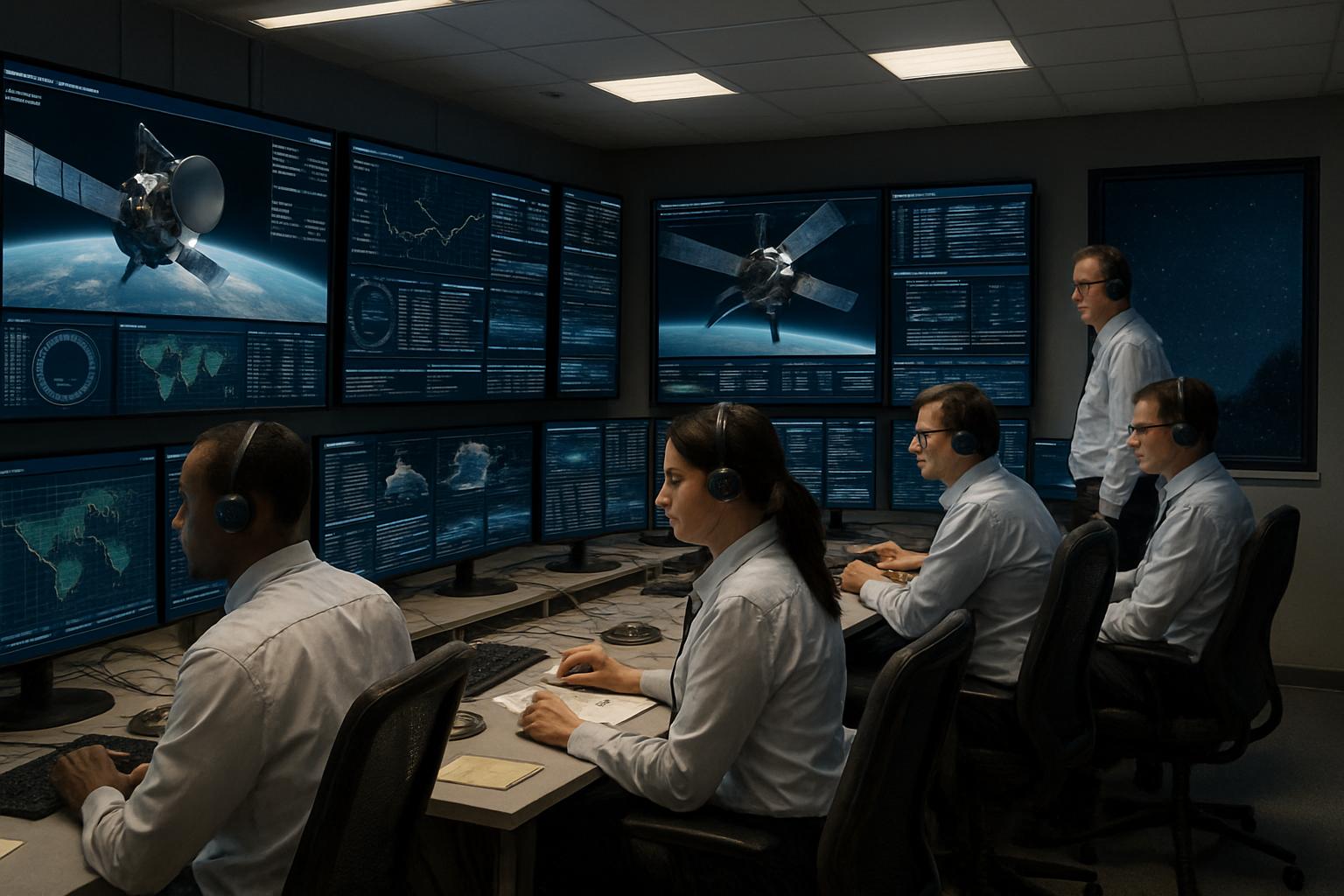
Engineers in a SpaceX control room manage the complex Orbital Computing ecosystem.
SpaceX’s vision combines established launch economics with emerging laser networking. The concept is bold, yet it sets the technical stage for further scrutiny. Consequently, regulators and rivals have intensified their responses.
Regulatory Battle Intensifies Now
The FCC accepted the application on 4 February 2026 and opened a public docket. Additionally, comment deadlines fell on 6 March, triggering 100-plus filings. Amazon’s Kuiper division petitioned to deny, citing interference and unfair advantage. In contrast, the FCC chair criticized Amazon for procedural gamesmanship. Astronomers through the AAS warned that one million satellites would brighten the night sky. Many briefs questioned whether Orbital Computing at such scale is physically credible. Blue Origin, Viasat, and WISPA raised orbital congestion and debris risk arguments. SpaceX filed a consolidated opposition stressing launch heritage and autonomous collision avoidance. Nevertheless, the Commission must now balance innovation with environmental stewardship.
The docket will likely shape global norms for mega constellations. These escalating filings direct attention to unresolved engineering questions, discussed next.
Engineering Hurdles And Risks
Radiative cooling sounds simple yet requires vast radiator surfaces per satellite. Furthermore, deep space radiation threatens chip reliability, demanding hardened GPUs and redundancy. Analysts estimate each node must dissipate 5-10 kilowatts without water. The company has not revealed mass budgets, making debris lifetime modeling difficult. Consequently, skeptics argue that current launch cadence cannot replace failed units fast enough.
Radiator surface area per kilowatt remains unspecified.
Servicing also remains unresolved because capture and repair increase collision probability. Sam Altman labelled large scale Orbital Computing “ridiculous” during India’s AI summit. Nevertheless, smaller demonstrations suggest limited workloads are already feasible. Starcloud trained a Gemma model on an H100 in orbit during 2025. That flight produced valuable telemetry on temperature stability and power draw.
Engineering gaps concern cooling, radiation tolerance, and maintenance strategy. However, demonstration progress keeps the concept alive and propels competitive interest. Competition itself is accelerating, as the next section explains.
Competitive Space Race Escalates
Blue Origin’s Project Sunrise proposes 51,600 compute satellites across sun-synchronous shells. Meanwhile, startups such as Starcloud pitch lean platforms targeting edge AI workloads. Consequently, investors now treat orbital data centers as a prospective multi-billion market. The company retains a manufacturing lead through Starlink production lines and Starship reuse. In contrast, Blue Origin highlights precision deployment and autonomous deorbit guarantees.
Governments are also watching because sovereignty concerns extend to cloud governance. Europe has hinted at funding “green space compute” feasibility studies. Orbital Computing thus becomes a geopolitical lever alongside launch capacity. Market momentum raises urgency for clear standards on debris mitigation.
Competitive dynamics underscore both financial opportunity and responsibility. Therefore, the economic discussion now turns to cost and demand signals.
Market Demand And Economics
Global data centers consumed about 415 TWh in 2024, according to the IEA. Demand for AI workloads could triple consumption by 2030. Therefore, cloud providers seek new energy sources and cooling strategies. Proponents say Orbital Computing offers near constant solar energy and free radiative cooling. Critics counter that launch costs still dominate, despite Starship’s downward trend.
A simple model places total cost near $500 per delivered kilogram by 2028. At that price, analysts expect niche high value workloads, like classified training, to migrate first. Consequently, terrestrial facilities will remain cheaper for bulk inference. Nevertheless, Orbital Computing could relieve grid stress during peak demand windows. Enterprises planning hybrid strategies should assess latency tolerance, data gravity, and regulatory exposure.
Economics hinge on launch price, panel efficiency, and chip watt density. These variables evolve quickly, shaping the timeline outlined in the final section.
Future Outlook And Actions
The FCC may rule on SpaceX’s application by early 2027, after extended environmental review. Meanwhile, Project Sunrise and smaller filings ensure policy precedence for mega compute constellations. Industry stakeholders should monitor launch cadence, FCC bond waivers, and debris mitigation rulemaking. Organizations exploring Orbital Computing pilots must engage regulators early and publish transparency reports. Professionals can deepen expertise via the AI for Everyone™ certification. Consequently, early adopters may capture high value defense or scientific workloads.
Timelines remain uncertain, yet technology momentum is undeniable. Therefore, Orbital Computing deserves continual assessment as launch economics evolve.
In summary, regulatory hurdles, engineering unknowns, and market forces will decide the fate of this emerging sector. Nevertheless, informed leaders can position their organizations to benefit if low-Earth infrastructure matures. Interested readers should follow FCC dockets, review technical appendices, and pursue relevant training. Act now to stay ahead as orbital infrastructure transforms the computing landscape.