

AI CERTS
6 hours ago
NVIDIA’s Nemotron 3: Foundational Models Enter Agentic MoE Era
However, the news cycle moved quickly. Many teams still seek a concise technical and business briefing. This article delivers the essential context, numbers, and implications while meeting strict readability guidelines.
NVIDIA Strategy Pivot Explained
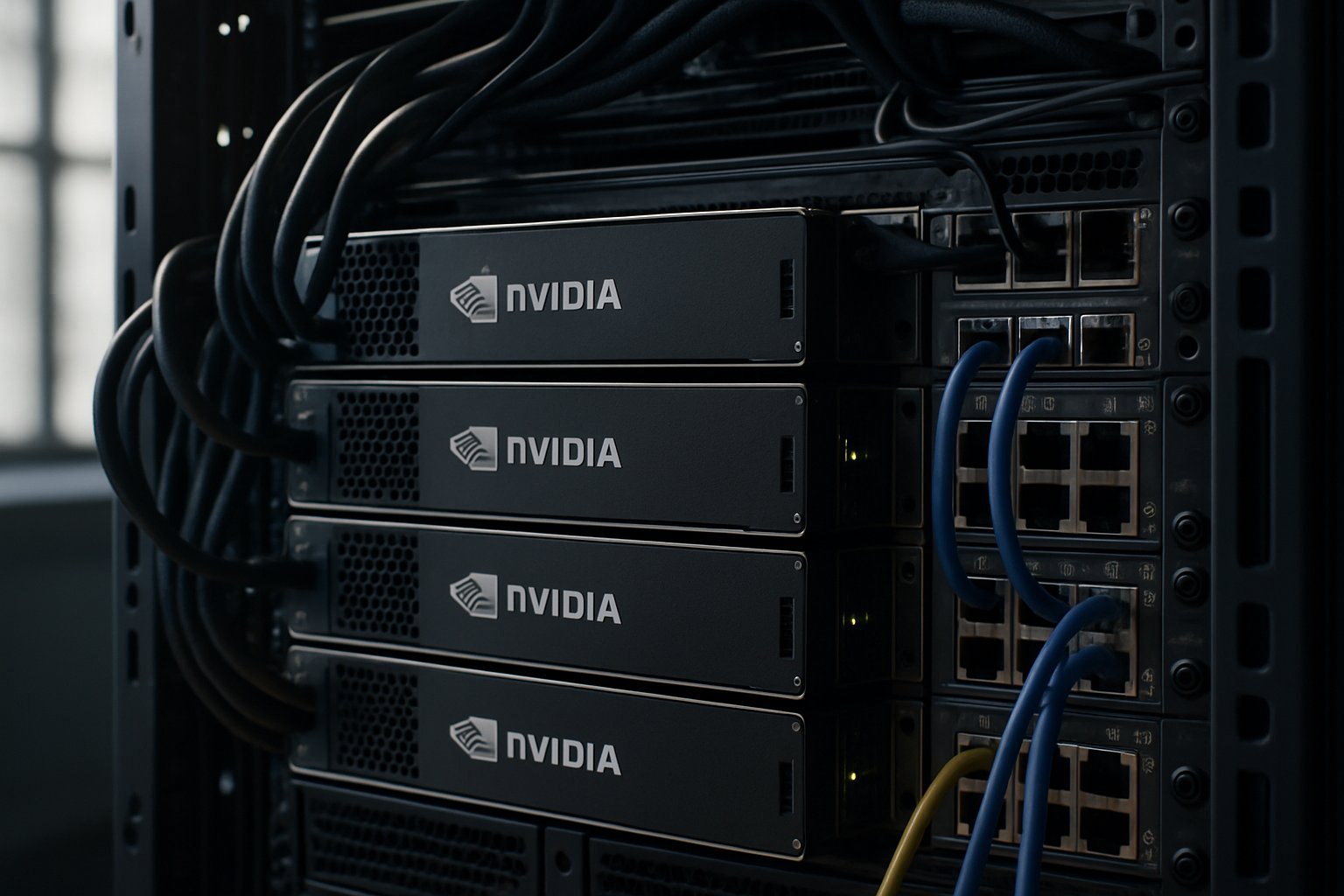
NVIDIA’s leadership framed Nemotron 3 as a strategic pivot toward platform economics. Jensen Huang noted that open innovation remains the engine of progress. Furthermore, Reuters highlighted how the company now competes directly with cloud labs that once merely purchased its chips.
Unlike previous releases, Nemotron 3 ships under a permissive license alongside data and tooling. Consequently, enterprises gain transparency, customization rights, and sovereign control. Those features align with growing public-sector procurement rules.
Overall, the pivot positions NVIDIA to monetize training runtimes, cloud services, and consulting built atop its own Foundational Models. These moves also hedge against a future where margins on hardware alone compress. Nevertheless, execution risks remain. However, early adopter enthusiasm appears strong.
These strategic signals reshape partner expectations. Meanwhile, they set competitive stakes for 2026 releases.
Architecture Behind Nemotron 3
Nemotron 3 employs a hybrid Transformer-Mamba MoE design. Each token activates only a sparse subset of expert pathways. Moreover, NVIDIA pioneered NVFP4 4-bit precision across Blackwell GPUs, trimming memory footprints without sacrificing accuracy.
The family spans three tiers: Nano at 31.6 billion parameters, Super at 100 billion, and Ultra at 500 billion. However, active parameters per token remain modest—3.2 billion for Nano and 50 billion for Ultra. Consequently, compute requirements match earlier dense models one-tenth their size.
Support for one-million-token context windows further distinguishes Nemotron 3. Developers can chain extensive documents and maintain persistent state across complex, multi-step tasks. Therefore, new workflow patterns emerge that conventional chatbots cannot match.
The architecture provides scalable capacity while retaining cost discipline. In contrast, many dense contenders struggle to balance those goals.
Efficiency And Throughput Gains
NVIDIA claims Nemotron 3 Nano delivers four-fold higher Throughput versus its Nemotron 2 predecessor. Additionally, internal testing shows a 60 percent reduction in reasoning-token count. These metrics translate directly to lower cloud bills and faster application response.
Key efficiency drivers include sparse routing, optimized kernel fusion, and NVFP4 quantization. Moreover, the model benefits from pipeline parallelism tailored for Blackwell memory hierarchies. Early adopter ServiceNow reported impressive batch latencies during pilot runs.
- 4× token Throughput over Nemotron 2 Nano
- 60 % fewer reasoning tokens generated
- 1M-token context capacity for long workflows
- NVFP4 training reducing memory 35 %
Independent verification remains pending. Nevertheless, initial Hugging Face benchmarks echo some gains. Consequently, interest among inference providers surged within 24 hours of release.
These performance advantages attract cost-sensitive teams. Furthermore, they enable broader experimentation windows.
Long Context Agentic Workflows
Agentic architectures orchestrate multiple specialized agents rather than a monolithic bot. Nemotron 3’s 1M-token window supports that pattern elegantly. Additionally, its reward-learning datasets target tool calling, planning, and delegation.
Therefore, engineering teams can create research assistants that recall entire literature corpora. In contrast, earlier models required brittle retrieval pipelines. Moreover, cross-agent messaging remains within context rather than external databases.
Agentic design goals influenced every training stage. Furthermore, NVIDIA released an Agentic Safety Dataset to evaluate emergent coordination risks. These safeguards matter as Foundational Models become autonomous actors.
Long context unlocks rich collaboration scenarios. Subsequently, enterprises can prototype multi-agent service desks and autonomous code reviewers.
Open Models And Ecosystem
The “open” label extends beyond source access. NVIDIA published weights, tokenizer files, and 3 trillion-token pretraining corpora on Hugging Face. Additionally, supporting libraries—NeMo Gym, RL, and Evaluator—arrived simultaneously on GitHub.
Consequently, integrators such as Together AI, Baseten, and DeepInfra offered hosted endpoints within hours. Amazon Bedrock listed Nemotron 3 Nano the same week. Meanwhile, enterprise vendors including Palantir and Zoom announced pilot integrations.
Sovereign customers value inspectability and audit trails. Therefore, Open Models adoption accelerates in regulated industries. Kari Briski emphasized that transparency helps security teams validate prompt filtering and data lineage.
These ecosystem moves fortify NVIDIA’s platform play. However, they also raise expectations for ongoing community maintenance and issue tracking.
Risk Landscape And Verification
Despite vendor claims, independent benchmarks remain sparse. Wired cautioned that marketing numbers often hide constraints. Moreover, no public Artificial Analysis report yet validates the touted four-fold Throughput uplift.
Safety researchers note that open release of powerful Foundational Models expands misuse risk. Nevertheless, NVIDIA counters with safety datasets and red-teaming guides. Furthermore, the included license allows revocation for malicious deployment.
Dataset provenance also invites scrutiny. Therefore, auditors must review copyright removal processes and private data filtering. In contrast, closed competitors avoid disclosure but sacrifice trust.
Rigorous third-party testing will decide market confidence. Subsequently, accuracy, latency, and alignment scores will either confirm or challenge marketing narratives.
Enterprise Impact And Next
Early adopter statements illustrate tangible gains. ServiceNow’s Bill McDermott predicted that Nemotron 3 will elevate intelligent workflow standards. Additionally, Accenture and Deloitte plan consulting packages built around the model family.
Because Foundational Models and MoE architectures minimize inference costs, finance teams see shorter ROI horizons. Moreover, the 1M-token window simplifies document pipelines, reducing integration overhead.
Professionals can deepen risk understanding through the AI Security Level 1 certification. Consequently, organizations equip staff to evaluate safety checklists before production launch.
The next milestones arrive in 2026 when Super and Ultra ship. Furthermore, Blackwell-optimized clusters will test NVFP4 limits at unprecedented scale.
These developments promise sustained velocity. However, governance frameworks must evolve concurrently.
That balance between innovation and oversight defines the forthcoming competitive landscape. Meanwhile, decision makers should monitor benchmark disclosures.
Foundational Models will shape procurement, cloud strategy, and hiring over the next decade. Therefore, early literacy delivers outsized advantage.


