

AI CERTS
2 days ago
Nvidia GTC: Building Agentic Ecosystems for Enterprises
The following analysis dissects the release, clarifies architecture choices, reviews partner traction, and highlights governance gaps. Throughout, the term Agentic Ecosystems anchors our discussion, showing how interconnected agents reshape modern workflows.
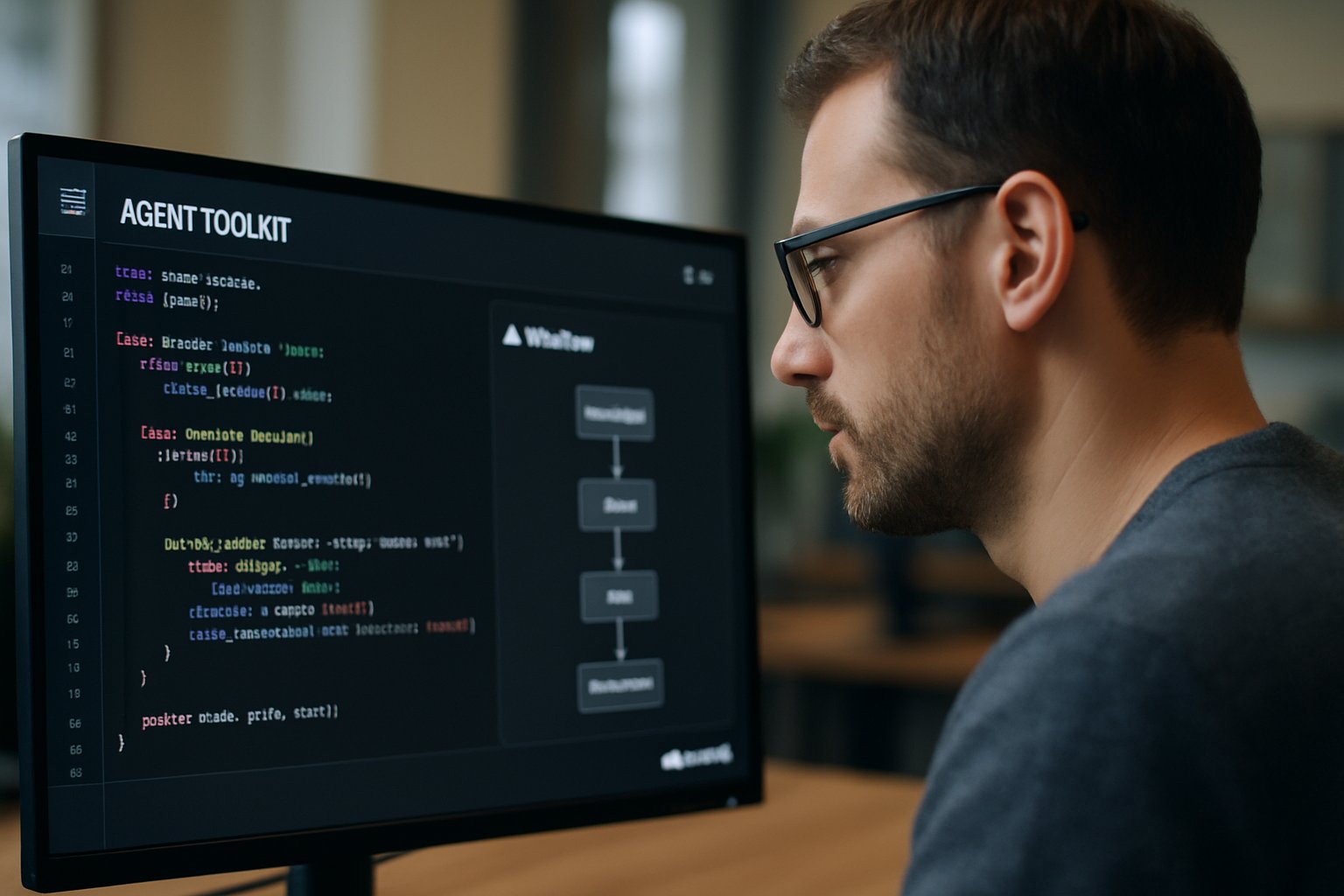
Agent Toolkit Overview Details
Nvidia positions the Agent Toolkit as a complete developer platform. It combines runtime security, open models, evaluation tools, and skill libraries in one distribution. Furthermore, the stack remains framework-agnostic, integrating with LangChain, LlamaIndex, Semantic Kernel, and Google ADK. Therefore, teams avoid replatforming pain while gaining native GPU optimizations.
The package includes OpenShell for sandboxing, Nemotron reasoning models, AI-Q hybrid blueprints, and cuOpt task skills. Meanwhile, NemoClaw hardens deployments for regulated industries. Together, these modules form technical bedrock for robust Agentic Ecosystems.
These design choices shorten development cycles. However, real success depends on adoption rollouts, which we examine next.
Core Components Explained Briefly
OpenShell enforces policy controls. It routes calls, restricts unsafe actions, and logs every agent decision. Consequently, enterprises can audit behaviour and satisfy compliance teams. Nemotron supplies open reasoning models that cut inference spending. Nvidia claims AI-Q plus Nemotron trims query costs by 50 percent, a significant draw for budget-minded leaders.
NeMo Agent Toolkit arrives through pip install nvidia-nat. Additionally, it offers profiling dashboards, observability hooks, and evaluation harnesses. Developers view token usage, latency, and accuracy inside a single UI, accelerating iterative tuning.
The cuOpt library embeds optimisation routines, letting agents plan routes, schedules, or workflows. Collectively, these ingredients enable scalable Agentic Ecosystems that perceive, reason, and act across long horizons.
Component synergy drives differentiation. Nevertheless, users still weigh security and governance, explored below.
Enterprise Use Cases Emerging
Adopters already span creative, security, and life-science domains. Adobe integrates Firefly models to produce personalised design flows. CrowdStrike embeds threat-hunting agents inside its Falcon platform. Meanwhile, IQVIA runs 150 clinical research agents to parse trial data. Each deployment illustrates how enterprise scale intersects with Agentic Ecosystems.
The press release lists additional partners: SAP, Salesforce, ServiceNow, and Synopsys. Furthermore, cloud providers AWS, Azure, Google Cloud, and Oracle announced hosting support. This breadth demonstrates cross-industry appetite.
- LangChain downloads exceeded one billion, reflecting community momentum.
- Analysts project a $1 trillion inference backlog through 2027, driven by agent workloads.
- Nvidia claims hybrid blueprints halve operating costs in benchmark tests.
These metrics confirm rising demand. In contrast, they also heighten scrutiny about lock-in and oversight.
Use case velocity fuels optimism. However, secure operation remains paramount, as the next section shows.
Security Governance Considerations Key
Long-running agents introduce fresh attack surfaces. Nevertheless, OpenShell’s sandbox and NemoClaw’s policy packs mitigate several vectors. Additionally, vendors Cisco, CrowdStrike, and TrendAI announced plug-in scanners that inspect agent calls in real time. Consequently, enterprises gain layered defenses.
Independent researchers still warn about data over-exposure and supply-chain poisoning. Therefore, continuous evaluation, rollback procedures, and third-party audits become non-negotiable. Academic papers published after GTC underline the need for provenance tracking inside Agentic Ecosystems.
Professionals can validate governance skills with the AI Executive™ certification. This credential strengthens leadership credibility during agent rollouts.
Controls reduce risk when enforced. Yet, market forces push relentless scale, analysed below.
Market Impact Forecasts Ahead
Jensen Huang labelled 2026 an inference inflection. Moreover, he predicted soaring demand for DGX servers, BlueField-4 storage, and Rubin memory fabrics. Consequently, hardware and software sales reinforce one another, amplifying Nvidia’s moat.
Analysts at Futurum and Digitimes foresee competing chips from cloud hyperscalers. Nevertheless, the open Agent Toolkit could steer workloads toward CUDA-optimized devices by default. Therefore, debates about concentration risk intensify. Investors, however, focus on the projected trillion-dollar upside enabled by pervasive Agentic Ecosystems.
These forecasts highlight explosive growth. Subsequently, developers need guidance for immediate experimentation.
Developer Getting Started Guide
Engineers can activate the stack in minutes. First, create a GPU-enabled environment on build.nvidia.com or a supported cloud. Next, run:
Furthermore, clone the OpenShell repository to enable policy enforcement locally. Sample notebooks demonstrate task planning, document retrieval, and tool calling. The quick-start flow proves how frictionless Agentic Ecosystems have become.
For production, integrate observability plugins and CI/CD tests. Moreover, schedule periodic cost audits to verify the promised 50 percent savings. Such discipline ensures sustainable enterprise deployments of the Agent Toolkit.
Hands-on success builds confidence. Therefore, strategic reflection now matters.
Strategic Takeaways And Conclusion
Agentic Ecosystems mark a decisive evolution in AI adoption. The open Agent Toolkit aligns models, runtime, security, and skills into one cohesive solution. Consequently, enterprise teams accelerate delivery while trimming costs. However, they must embrace rigorous governance, independent benchmarking, and multi-cloud planning to avoid lock-in.
GTC 2026 proved that Nvidia no longer sells only silicon. Instead, the company orchestrates a platform narrative that blends hardware and software at scale. Meanwhile, partners across sectors race to embed agents within daily operations, magnifying opportunity and risk alike. By adopting structured evaluation practices, leaders can capture benefits while safeguarding data.
Interested professionals should explore documentation, pilot secure agents, and pursue the AI Executive™ certification for strategic grounding. Action today prepares organisations for tomorrow’s autonomous future.


