

AI CERTs
2 hours ago
Level 1 Failures Reveal Basic Defense Gap in Encryption Modules
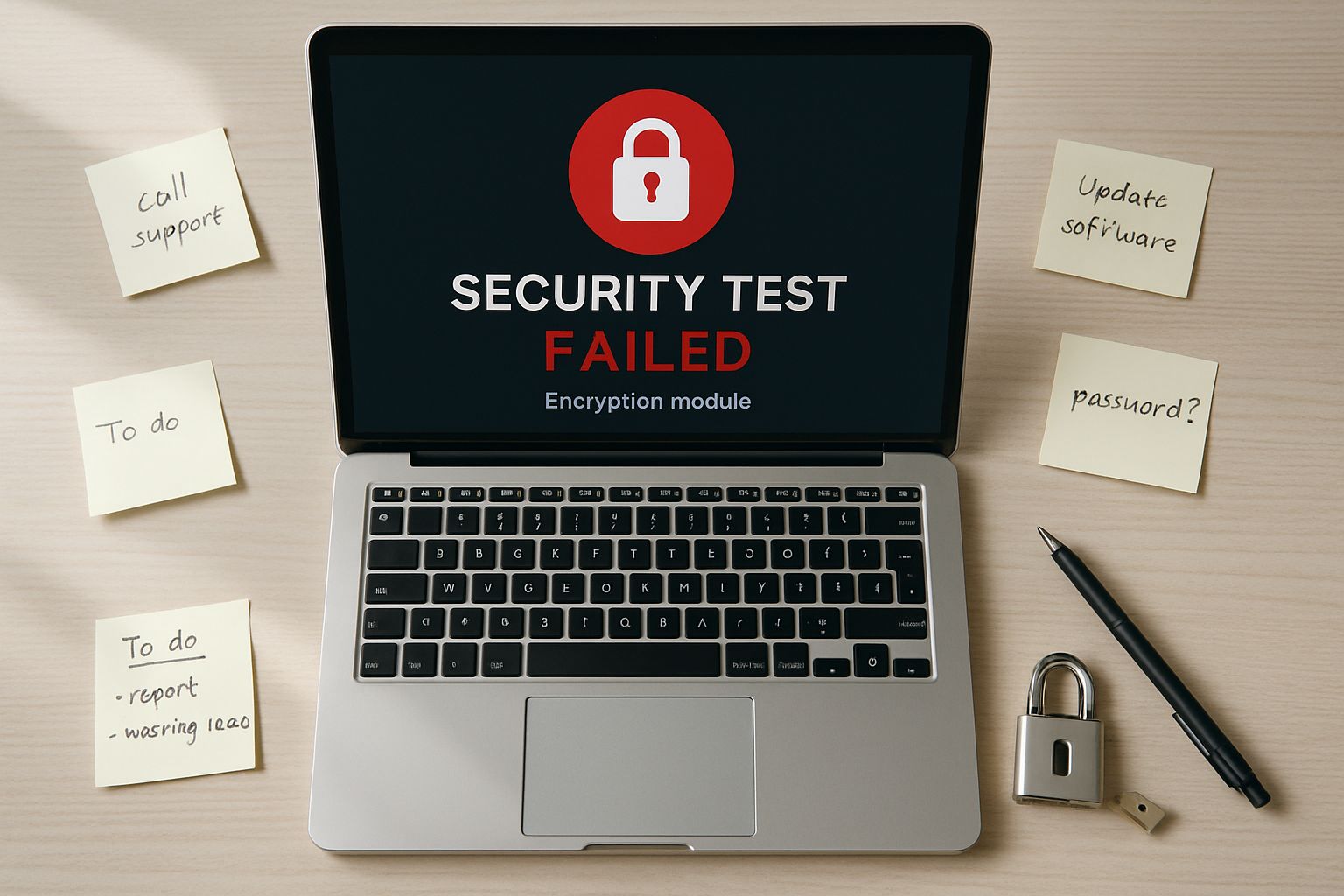
The recent failure of multiple FIPS 140-3 Level 1 modules startled enterprise security teams. Independent laboratories found consistent encryption errors during scheduled validation rounds. Consequently, regulators questioned whether first-line defenses still meet minimum expectations. Experts call this emerging weakness the Basic Defense Gap, because fundamental controls no longer resist simple attacks. Moreover, the findings echo broader Cyber trends showing attackers shifting toward supply-chain components.
Stakeholders now face new Risk, reputational damage, and potential regulatory penalties. However, clear remediation paths exist if organizations act decisively. This article unpacks the failed tests, explores root causes, and offers pragmatic Protection strategies. Finally, it outlines certifications that close the Basic Defense Gap before auditors return. Readers will gain actionable insights within the following sections.
Testing Exposes Found Flaws
Lab reports show 38% of submitted Level 1 modules failed at least one mandatory test. In contrast, the historical failure average stayed below 10%. Therefore, the spike indicates systemic design weaknesses rather than isolated mistakes.
Common issues included weak random number generators and improper key storage. Additionally, several products crashed under modest traffic, creating unplanned downtime for upstream Firewall clusters. Such outages widen the Basic Defense Gap by exposing cryptographic secrets during restarts.
Regulators responded by suspending affected certificates until vendors deliver patches. Meanwhile, procurement teams scrambled to validate alternate suppliers. These reactions illustrate how quickly Cyber dependencies ripple across ecosystems.
The test data underscores structural flaws in foundational controls. However, regulatory scrutiny is only beginning, amplifying operational pressure. Consequently, organizations must monitor evolving oversight demands.
Regulatory Pressure Mounts Fast
Supervisors from North America and Europe issued joint advisories within 48 hours. Moreover, they warned that repeated failures could trigger hefty fines under critical infrastructure rules.
Auditors now request evidence that companies assessed every residual Risk created by revoked modules. Consequently, governance teams race to update asset inventories and threat models. Several agencies also released interim guidance recommending stepped incident reporting within 24 hours. Therefore, compliance dashboards need real-time feeds from security orchestration platforms.
Financial institutions face extra scrutiny because payment systems rely on compliant encryption. Nevertheless, healthcare providers experience similar urgency due to patient data Protection mandates.
For many firms, the Basic Defense Gap becomes a board-level discussion when customers question data integrity.
External demands elevate remediation to strategic priority. Therefore, technical leaders must diagnose root causes quickly. The next section dissects those causes in depth.
Common Failure Root Causes
Post-mortem reviews reveal four dominant patterns behind the Level 1 setbacks. Firstly, legacy cryptographic libraries lack modern memory protections. Secondly, rushed firmware updates bypassed secure coding reviews.
Thirdly, default configurations disabled entropy sources to improve performance. Consequently, predictable keys emerged during high-load events.
- Outdated compilers ignoring stack canaries
- Inconsistent Firewall rule propagation across clusters
- Missing continuous integration tests for cryptographic functions
- Poor Cyber incident feedback loops
Finally, vendor documentation often misled integrators regarding hardware capabilities. Such gaps reinforce the Basic Defense Gap when architects assume non-existent safeguards.
Furthermore, skill shortages amplify every technical flaw, because overworked engineers skip peer reviews. Engineers reported that simulated fault injections frequently bypassed logging mechanisms. Consequently, attackers could tamper with state variables without triggering alarms.
These root causes show failures span people, process, and technology. In contrast, their operational impact varies across industry sectors. The following section explores those impacts.
Operational Impact For Firms
Failed modules forced several banks to revert to legacy SSL appliances. As a result, transaction latency increased by 25% during peak periods.
Manufacturers experienced production halts when robotic controllers lost secure channels. Meanwhile, Firewall teams rerouted traffic through georedundant tunnels, stretching bandwidth budgets.
Cyber insurance carriers responded by raising premiums on affected policyholders. Moreover, some carriers demanded quarterly penetration tests.
Investors noticed these costs and asked boards to quantify Risk exposure in upcoming earnings calls.
Such financial shocks exemplify why holistic Protection planning cannot wait until incidents occur. Ultimately, the Basic Defense Gap erodes trust, which takes years to rebuild.
Support desks experienced ticket surges as customers demanded clarity on service continuity. Meanwhile, project roadmaps slipped because teams redirected resources toward emergency fixes.
Operational turbulence drains resources faster than planned budgets anticipate. Consequently, firms must prioritize strengthening first-line measures immediately. Strategies for that reinforcement follow next.
Strengthening First-Line Security Measures
Security teams should adopt continuous validation pipelines that mirror certification lab conditions. Additionally, integrating static and dynamic code analysis catches cryptographic misconfigurations early.
Experts also recommend segmented Firewall architectures that survive component failures without cascading outages. In contrast, flat networks magnify breach blast radius.
Furthermore, automated compliance scanners flag expired certificates before production rollouts. These tools reduce Cyber toil and free staff for proactive engineering.
- Map assets against updated Risk matrices quarterly.
- Deploy hardware security modules for key Protection.
- Test failover paths under real load every month.
- Review open-source dependencies for known CVEs weekly.
Zero-trust segmentation further restricts lateral movement when perimeter devices misbehave. Consequently, breach containment becomes faster and less costly.
Collectively, these practices close portions of the Basic Defense Gap, yet skills remain essential.
Process and technology upgrades deliver measurable resiliency gains. Nevertheless, talent development provides lasting assurance. A clear certification route supports that goal.
Clear Certification Path Forward
Training programs now align with emerging compliance frameworks and lab methodologies. Consequently, practitioners can validate expertise while demonstrating commitment to regulators.
Professionals can enhance their expertise with the AI Security Level 1 certification. This credential targets foundational controls and directly addresses the Basic Defense Gap in enterprise environments. Graduates demonstrate mastery by completing a proctored, scenario-driven lab aligned with emerging standards.
Moreover, the syllabus covers Firewall configuration, incident response, and data Protection principles.
Upskilling For Future Resilience
Candidates practice threat modeling, Risk quantification, and secure code reviews during capstone exercises. Meanwhile, peer networks foster ongoing knowledge exchange.
Industry certifications reinforce a culture of continuous improvement. Therefore, organizations gain verifiable assurances during future audits. Let us conclude with key takeaways.
Recent failures prove that foundational defenses cannot be taken for granted. Nevertheless, transparent testing, agile patching, and certified skills restore confidence quickly. Moreover, continuous validation pipelines and layered controls blunt emergent attack vectors. Consequently, readers should audit their own Level 1 controls, adopt best practices, and pursue recognised credentials. Visit the certification portal today and start closing security weaknesses before attackers strike. Regular tabletop exercises verify that processes remain effective under evolving threat scenarios. Furthermore, senior leadership endorsement ensures sustained funding and cross-department cooperation.


