

AI CERTs
2 hours ago
Inside Apple’s Private Cloud Plan for Gemini-Powered Siri
Apple just confirmed a pivotal shift for Siri’s next upgrade. During its Q1 FY2026 call, the company revealed a hybrid deployment model. Requests will run either on-device or inside its new Private Cloud Compute architecture. Meanwhile, Google’s Gemini AI underpins the large-language capabilities powering this overhaul. The announcement follows months of Bloomberg reporting and intense industry speculation. Consequently, analysts view the partnership as a pragmatic shortcut toward parity with rival assistants. This article unpacks the technical, business, and regulatory implications for enterprise stakeholders. Furthermore, it explains how Apple claims to preserve privacy while leveraging massive off-device models.
Apple Confirms Hybrid Model
Tim Cook told investors the revamped Siri will choose the most efficient execution path for every request. If an iPhone’s on-device model handles the task, no data leaves the handset. However, complex prompts, like multi-step planning, shift to Apple’s Private Cloud Compute servers on Apple silicon. Cook insisted the approach preserves Apple’s “industry-leading privacy standards” while unlocking larger inference models. Nevertheless, he declined to disclose financial details of the Google deal.
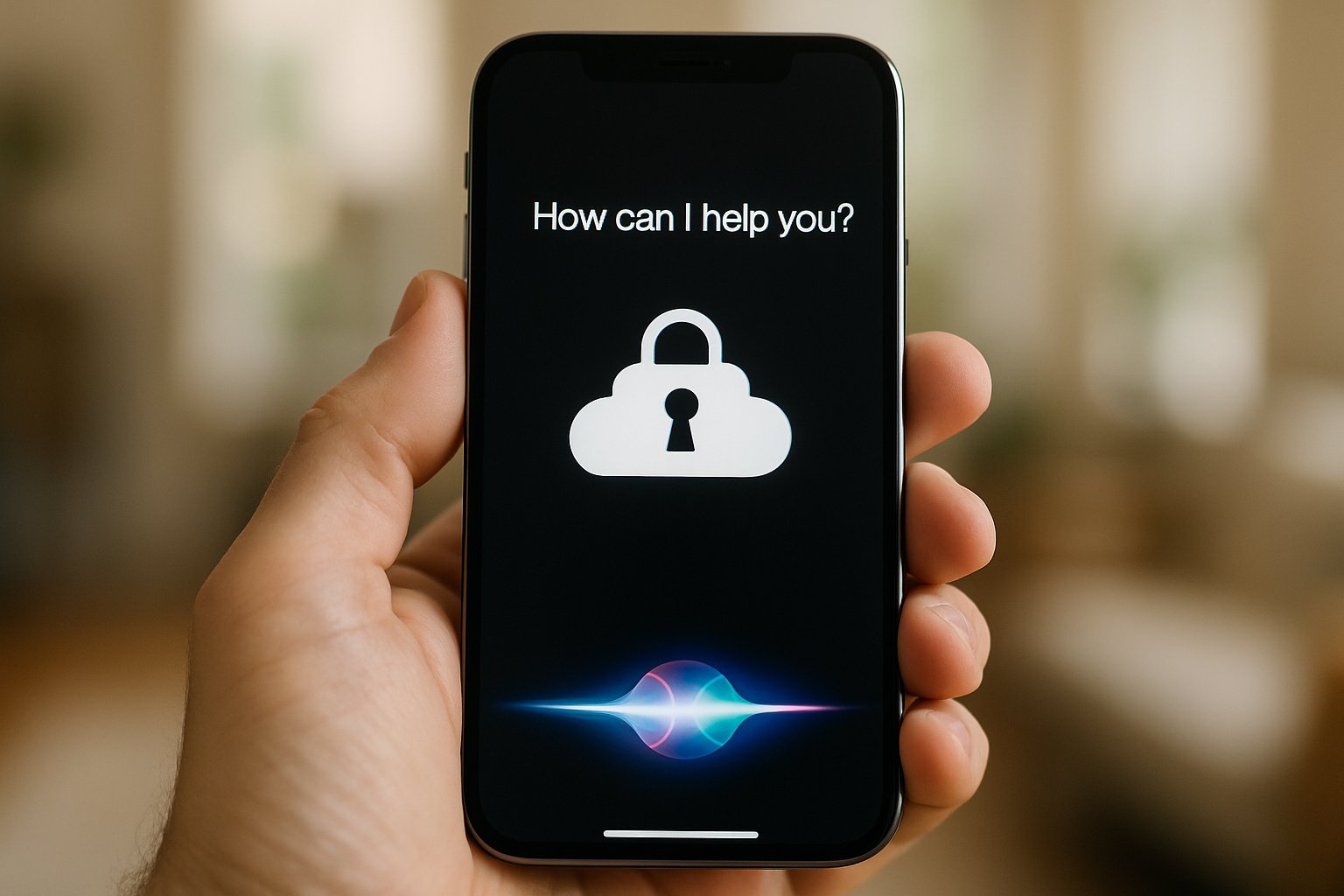
In short, Apple confirmed a split execution strategy. Local models handle simple requests; larger questions escalate to hardened cloud nodes. Now, let’s examine how those nodes actually work.
Understanding Private Cloud Compute
Apple introduced Private Cloud Compute during WWDC 2024 as a privacy-first server architecture. Each rack uses Apple silicon, a hardened OS, and encrypted, ephemeral memory. Additionally, the hardware mirrors the energy efficiency of recent Mac chips. Moreover, nodes expose no remote shell and carry sealed, attested binaries published for researcher inspection. The company asserts that user prompts are processed statelessly and deleted immediately after fulfillment. Consequently, engineers and even Apple staff cannot retrieve personal data post-execution. Apple promises public transparency logs plus reproducible builds enabling independent audits.
These safeguards aim to deliver cloud-scale intelligence without usual surveillance risks. However, technology leaders must still trust the attestation system and verify its claims. Next, we analyze why Apple partnered with Google to populate these servers.
Gemini Partnership Details Explained
Bloomberg reports indicate Apple selected Gemini AI after extensive benchmarking against OpenAI and Anthropic models. According to those reports, Google customized a 1.2-trillion-parameter variant for Apple’s workload. Furthermore, analysts estimate the annual contract approaches one billion dollars, although neither firm confirmed numbers. Apple will host most inference on its Private Cloud Compute nodes, keeping raw prompts away from Google servers. Meanwhile, heavier chatbot experiments may still tap Google TPUs if Apple capacity lags. Nevertheless, Cook stressed that any off-device processing must honor Apple’s privacy commitments.
- Custom model size: ~1.2 trillion parameters
- Reported yearly cost: ~ $1 billion (unconfirmed)
- Initial rollout: iOS 26.4 timeframe
- Possible future migration: Apple Foundation Models
The partnership accelerates Apple’s AI roadmap while shifting some technical risk to Google. However, contractual opacity leaves questions about long-term dependency and cost control. Privacy implications of this architecture appear next.
Privacy Architecture Advantages Analyzed
Many security researchers praise Apple’s choice to interpose Private Cloud Compute between user data and third-party models. Moreover, stateless processing reduces the attack surface inherent in persistent cloud logs. Therefore, Apple claims parity with on-device privacy while still delivering frontier model capability. In contrast, critics argue that hardware-level trust anchors are difficult to audit externally. Consequently, independent verification remains essential for sustaining user confidence. Security professionals can deepen expertise through the AI Security Level 1 certification.
Apple’s sandboxed cloud design offers meaningful safeguards. Nevertheless, theory must meet practice, as the next section’s business stakes reveal.
Business And Regulatory Impacts
Financially, Apple needs rapid assistant improvements to defend its 2.5-billion device ecosystem and drive services revenue. Moreover, Wedbush’s Dan Ives labeled the Google tie a “major validation” of Cupertino’s AI ambitions. Consequently, investors welcomed the Q1 FY2026 revenue jump to $143.8 billion, up 16% year-over-year. Regulators may view the alliance differently. In contrast, the DOJ already probes the firms’ search defaults; an AI partnership intensifies antitrust scrutiny. Meanwhile, the EU’s Digital Markets Act and forthcoming AI Act impose transparency and interoperability obligations.
Apple’s Private Cloud framework could satisfy European data-residency rules, reducing legal exposure.
- Market dominance across mobile OS and cloud AI
- Data protection adequacy under GDPR
- Potential exclusivity clauses violating competition law
- Cross-border model training data transfers
Therefore, Apple must balance innovation speed with compliance diplomacy. Stronger features bolster business goals, yet regulatory headwinds could reshape strategy. Verification challenges highlight why oversight matters.
Verification Challenges Ahead
Auditing Private Cloud Compute demands access to production binaries, transparency logs, and attestation keys. However, Apple has not published a concrete timeline for releasing these artifacts. Security academics urge Apple to allow real-time inspection by independent labs prior to launch. Subsequently, they recommend bug-bounty expansions covering PCC firmware and deployment pipelines. Additionally, observers want clarity on whether ultra-large Gemini AI variants will leave Apple facilities. Cook insisted that privacy remains non-negotiable, yet he offered no roadmap for external audits.
Independent oversight will decide whether Apple’s privacy narrative holds. The closing section summarizes practical lessons for enterprise leaders.
Final Thoughts And Actions
Apple’s Gemini AI partnership showcases the accelerating fusion of hardware, cloud, and foundation models. This PCC approach seeks to reconcile expansive AI with stringent privacy expectations. Consequently, technology leaders should track audit progress, regulatory reviews, and competitive responses. Meanwhile, decision makers can begin evaluating roadmap alignment and certification needs. Consider earning the AI Security Level 1 credential to demonstrate trusted leadership.


