

AI CERTS
2 hours ago
How Logistics AI Supercharges Autonomous project44 Agents
Industry leaders now ask how quickly these agents will scale across the global supply chain. Meanwhile, rivals scramble to answer growing customer appetite for autonomous logistics capabilities. This article examines the new portfolio, the technology foundations, early impact metrics, and lingering questions. Moreover, it positions the news within wider market and governance debates shaping Logistics AI adoption. Prepare for a concise, data-driven tour through autonomy’s next frontier.
Portfolio Overview And Vision
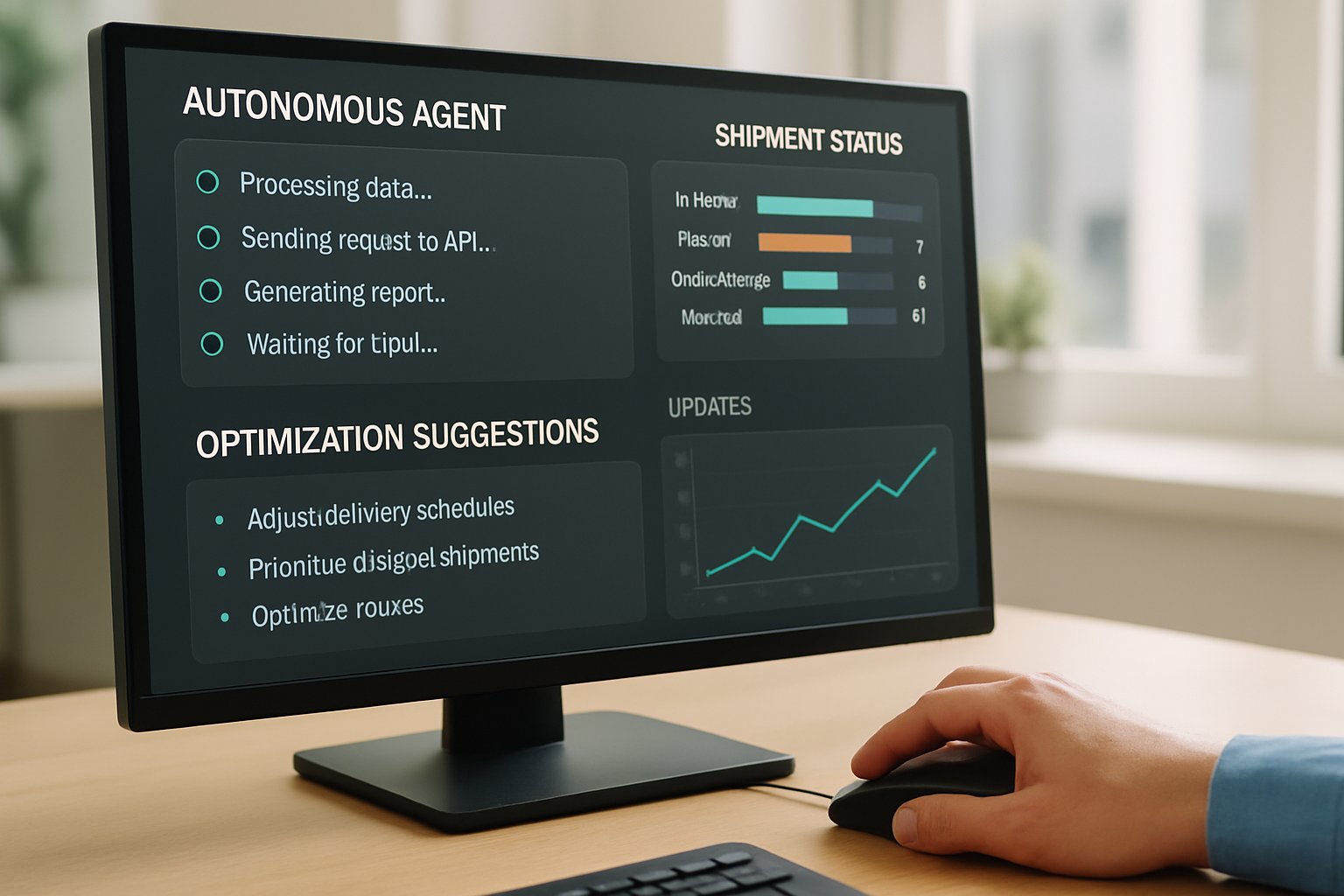
In early April, project44 announced the portfolio at its Decision44 event. The company says 29 specialized agents already execute almost one million automated carrier communications yearly. Logistics AI orchestrates human and machine collaboration across those tasks. Furthermore, the orchestrator coordinates these workers so parallel workflows finish within minutes instead of hours. CEO Jett McCandless framed the approach as context plus skills controlled by orchestration, not generic large models. In contrast, many visibility competitors still focus on alerting rather than outcome execution.
Together, these facts illustrate a shift from dashboards toward delegated decision making in logistics. Consequently, shippers can start with recommendation mode and graduate to full autonomy after confidence builds. The staged path reduces operational risk while preserving audit trails for governance. In summary, the vendor positions its workers as ready for real work at network scale. Next, we evaluate their performance in exception management.
Agents Reshape Exception Handling
Rolled container disruptions cost ocean shippers days and money. Therefore, the Ocean Exceptions Agent detects roll risk up to 35 hours before carrier notifications. Subsequently, it emails and calls carriers autonomously, rebooking space or escalating to humans when thresholds demand. Project44 reports resolution times falling from hours to minutes and panic premium costs dropping materially. Moreover, early customers cite 40 percent lower disruption costs during beta programmes. Nevertheless, the figures remain vendor claims until independent audits validate them.
Key claimed impacts include:
- 35 hours earlier roll risk detection
- 90% faster issue resolution
- Up to 40% disruption cost reduction
Logistics AI shines when repetitive carrier outreach overwhelms human teams. Collectively, these impacts showcase tangible financial upside. However, procurement workers deliver a different savings profile, as the next section shows.
Procurement Automation Cost Wins
Freight sourcing often drags on for weeks and ties up analysts. Consequently, the AI Freight Procurement Agent continuously benchmarks live spot rates against contracted lanes. It scores carriers, proposes mini-bids, and, within guardrails, can execute awards automatically. project44 says early adopters saved roughly four percent on freight spend and cut sourcing cycles seventy-five percent. Additionally, teams reported 70 percent less manual coordination between procurement and operations.
Logistics AI equips procurement managers with near real-time market intelligence. In contrast, legacy TMS systems still depend on spreadsheets and daily calls. Those numbers suggest rapid payback for procurement automation. Next, we turn to network health and data quality.
Network Operations Agent Impact
Poor connectivity and incomplete data erode visibility reliability. Therefore, the Network Operations Agent runs 24-7 checks across 259,000 connected carriers. It fixes mapping errors, pings sensors, and alerts carriers when telemetry drops. Moreover, 29 distinct workflows address common data hygiene issues without human intervention. Logistics AI also safeguards data quality by triggering corrective flows instantly. Customers claim manual ticket volumes fell by two thirds during pilots. Subsequently, data freshness improved, boosting downstream planning accuracy. Cleaner data underpins every other agent capability. The following section explores how the underlying data graph enables those gains.
Data Graph Powers Decisions
Large context banks matter for precise autonomy. project44 assembles a Logistics Data Graph combining shipment history, carrier profiles, sensor feeds, and external signals. Consequently, each worker references domain facts rather than relying on generic language models alone. More than 700 million logistics events stream into the graph daily, refreshing decisions continuously. Additionally, these workers embed semantic rules that constrain actions inside customer-defined guardrails.
These guardrails record every decision for audit and rollback if anomalies surface. Logistics AI depends on rich, well-structured history to avoid hallucinations. Strong context paired with guardrails increases shipper trust. Yet technology alone never guarantees adoption, as competitive dynamics illustrate.
Market Context And Rivals
FourKites, Shippeo, and Blue Yonder all tout upcoming agentic releases. However, analysts place project44 and FourKites ahead due to network breadth and decade-long data curation. Global supply chain volatility intensifies demand for real-time autonomy. S&P Global notes fragmentation persists, and regional specialists may seek partnerships or be acquired. Meanwhile, large ERP suites like SAP integrate visibility endpoints rather than building deep domain agents.
Consequently, buyers face integration trade-offs versus depth of automation. Logistics AI value proves harder to deliver without robust networks. Nevertheless, independent validation of performance claims will influence enterprise choices. Competition accelerates innovation but clouds vendor differentiation. Governance and risk considerations therefore gain prominence next.
Governance And Risk Considerations
Autonomous decisions raise familiar control questions. Therefore, project44 offers recommendation modes, approval gates, and detailed logs to maintain oversight. Moreover, customers define monetary thresholds limiting autonomous awards during procurement. Logistics AI therefore requires transparent control hierarchies. Nevertheless, legal liability for automated commitments remains an evolving conversation among shippers and carriers. Integration complexity also threatens pilot success; analysts warn many supply chain AI tests stall without clean data.
Professionals therefore deepen governance skills through the AI Supply Chain™ certification. Subsequently, structured training can complement internal guardrails and audits. Robust oversight helps enterprises unlock autonomy’s upside. Finally, we distil the strategic takeaways.
Logistics AI is shifting from pilot novelty to measurable operational lever. project44’s ocean, procurement, and network workers present credible early proof points. Furthermore, data richness and orchestration appear to separate leaders from aspirants. However, independent audits, carrier acceptance, and legal frameworks will shape long-term adoption curves. Meanwhile, buyers should demand clear guardrails, audit visibility, and staged authority before granting full autonomy.
Consequently, professionals pairing domain expertise with formal credentials will guide organizations through the transition. Strategic leaders should evaluate supply chain certification pathways and pilot frameworks today. Doing so converts emerging technology into sustained competitive advantage.


