

AI CERTS
2 hours ago
How Cybersecurity AI Transforms Threat Detection at Scale
Meanwhile, CrowdStrike observed an 89% surge in AI-enabled intrusions last year. These parallel trends spotlight how cybersecurity AI fuels a sharpening arms race. Moreover, boardrooms now demand measurable reductions in breakout times and costs. This article examines how teams integrate automated detection and agentic models into modern SOC workflows. Readers will gain data, pitfalls, and certification paths to action quickly.
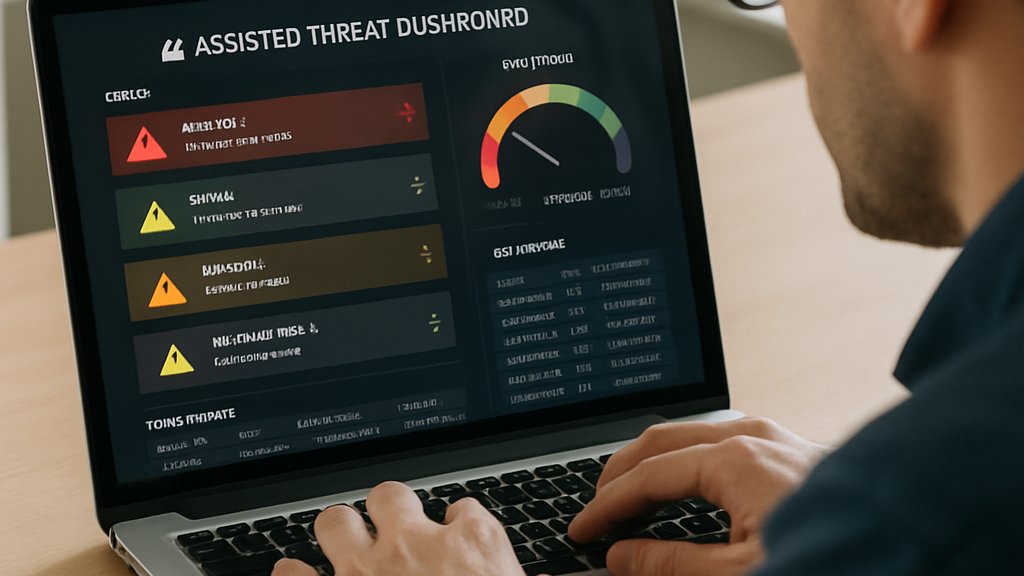
AI Arms Race Escalates
Adversaries now embrace generative models to craft polymorphic malware and phishing at scale. Moreover, CrowdStrike measured average eCrime breakout time at 29 minutes, with a record 27 seconds. In contrast, defenders still rely on human-driven triage that struggles to parse millions of daily signals.
Therefore, many enterprises view cybersecurity AI as the only sustainable response to machine-speed threats. Yet the World Economic Forum warns innovation without governance can widen rather than close vulnerability windows.
These numbers confirm an accelerating conflict. However, adoption patterns reveal deeper operational complexity.
Production Adoption Statistics Surge
WEF and Vectra surveys show pilots are finished; production deployments dominate budgets. Consequently, 76% of defenders report AI agents handling over 10% of SOC workload today. Additionally, 87% plan to expand those agents within twelve months, signalling enduring confidence.
Cybersecurity AI now underpins threat detection, identity monitoring, and compliance drafting for many verticals. Key value drivers include faster mean-time-to-detect and reduced analyst fatigue.
Such metrics impress finance chiefs. Nevertheless, gaps remain between automation volume and breach reduction.
Operational Gains And Gaps
Automated detection trims alert queues by clustering duplicates and adding context. Moreover, cybersecurity AI playbooks enrich incidents with ML-powered similarity scoring across domains.
Consequently, analysts spend fewer night hours classifying low-value events. In contrast, resilience metrics such as successful intrusion counts have not improved proportionally.
Experts blame governance debt, model drift, and limited cross-vendor interoperability.
Benefits appear real yet uneven as new threats continue evolving. Therefore, leaders must pair tooling with disciplined processes.
Agentic SOC Integration Guide
Effective SOC integration begins with mapping existing SIEM, XDR, and NDR telemetry flows. Subsequently, teams deploy small AI agents to handle enrichment, correlation, and automated detection loops.
Google Cloud, Cisco, and Splunk now ship bi-directional connectors that pass context between services. Moreover, ML models receive feedback from human analysts through chat prompts embedded in consoles.
SOC integration success hinges on low-latency APIs, robust identity controls, and continuous inventory scanning.
- Baseline event volumes and false positive ratios
- Define agent scope and rollback plans
- Instrument model performance dashboards
- Run quarterly red-team evaluations
These steps streamline platform harmony. Consequently, organisations gain higher fidelity alerts and faster containment.
Governance And Risk Mitigation
Unchecked models introduce new attack surfaces, including prompt injection and data poisoning vectors. Therefore, policy frameworks must specify approved prompts, retention periods, and escalation matrices.
Nevertheless, many shop-floor teams lack resources to audit every agent regularly. GCHQ’s national shield project illustrates continuous oversight through immutable logs and secure enclaves.
Moreover, cybersecurity AI offers federated learning options that protect sensitive telemetry.
Structured governance reduces legal and reputational threats. Subsequently, board confidence in automation rises.
Future Skills And Certification
Skill gaps threaten cybersecurity AI rollouts more than technology itself. Consequently, cybersecurity AI professionals now pursue hybrid expertise in SOC integration, ML engineering, and risk management.
Practitioners can validate competencies through the AI+ Security Network™ certification. Moreover, curricula cover model evaluation, automated detection pipeline design, and adversarial testing.
Demand for multidisciplinary talent will grow alongside tooling. Therefore, early upskilling offers significant career leverage.
Cybersecurity AI now sits at the core of defensive roadmaps. However, successful programs balance speed, governance, and measurable risk reduction. Automated detection and tight SOC integration unlock efficiency yet require continuous oversight. Moreover, ML expertise and iterative testing close the operational gaps adversaries exploit. Consequently, teams that invest in skills and standards pivot faster against evolving threats. Professionals should explore certifications and pilot structured improvements immediately. Ultimately, organisations pairing disciplined processes with cybersecurity AI gain the decisive advantage.
Disclaimer: Some content may be AI-generated or assisted and is provided ‘as is’ for informational purposes only, without warranties of accuracy or completeness, and does not imply endorsement or affiliation.


