

AI CERTS
4 months ago
HEYTEA-POP MART: AI Marketing IP Goes Global
Consequently, social feeds flooded with the glitter-eyed “Twinkle Twinkle” mascot. Behind the cute veneer lies a strategic experiment in AI Marketing IP. This article dissects the campaign, the operational AI underpinnings, and the future questions brands still face.
Global Campaign Rollout Impact
HEYTEA now operates roughly 4,000 stores, including more than 100 overseas sites. Therefore, simultaneous releases demand tight orchestration. The brand partnered with POP MART’s “Twinkle Twinkle” IP after earlier toy tie-ups succeeded regionally. Meanwhile, debut assets blanketed 100 plus overseas outlets alongside every mainland location. Limited cups, badges, and holographic sleeves vanished within hours, prompting a second wave on December 29.
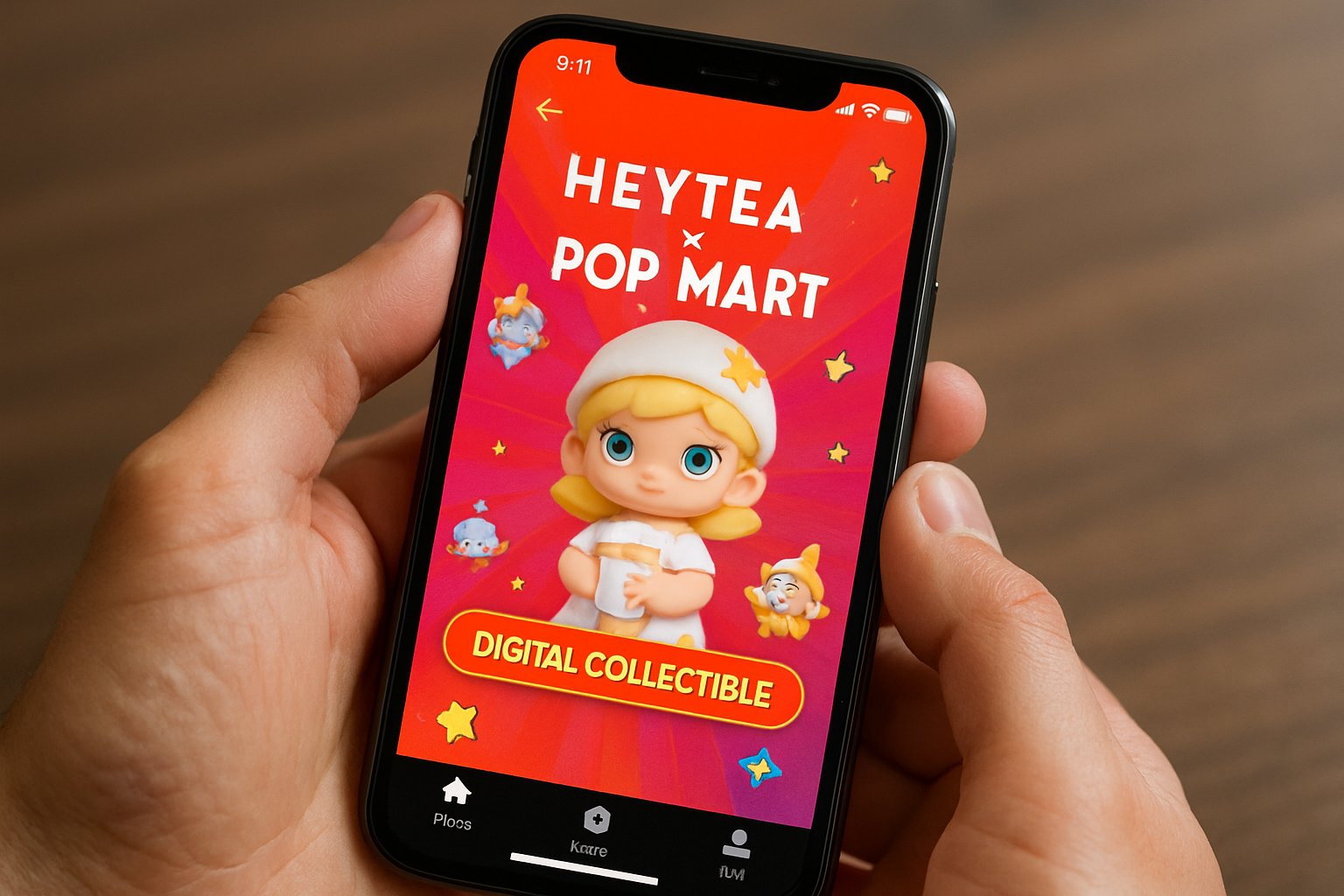
Local media in Shenzhen reported resale prices tripling by nightfall. In contrast, Hong Kong fans joined online lotteries to avoid scalpers. Early indicators show millions of hashtag reads across Douyin, Weibo, and Xiaohongshu, amplifying AI Marketing IP momentum.
These early wins prove global coordination can magnify scarcity buzz. However, scale raises fulfilment risk, which leads directly to operational AI.
Consequently, the next section explores how automation sustains fairness during limited drops.
AI Collector Operations Explained
POP MART Taiwan deployed Appier’s BotBonnie platform in April 2025. Additionally, the company reported a 90% jump in campaign participation and a 30% cut in manual work. Sabrina Yeh noted that automated lotteries insured fairness during high-stakes releases. Although HEYTEA’s December launch never cited generative tools, background systems mirror Taiwan’s approach.
Furthermore, anti-bot filters, dynamic queue assignment, and personalized reminders form the backend spine. Each feature reinforces the core promise of AI Marketing IP—scalable fandom with equitable access. The case also illustrates how conversational AI nurtures new LINE users, which grew 210% during pilot runs.
Nevertheless, automation only solves part of the equation. Creative production for “Twinkle Twinkle” relied on traditional artists, not AIGC. Brands must still confirm disclosure when any synthetic images emerge.
This distinction sets expectations for future co-branded efforts. Subsequently, we evaluate the financial upsides and looming hazards.
Business Upside And Risks
Executives chase collaborative drops for three main reasons:
- Higher average order value through bundled collectibles.
- Expanded reach; tea drinkers meet toy collectors.
- Viral potential; scarcity fuels user-generated content.
Moreover, Statista projects the global toys and games sector will reach US $135.9 billion by 2029. Consequently, fusing beverages with figurines diversifies revenue streams. HEYTEA gains toy shoppers; POP MART gains cafe footfall. The AI Marketing IP strategy thus converts offline drink queues into omnichannel data signals.
Yet risks persist. Inventory misalignment sparks consumer anger when products sell out instantly. In contrast, over-supply can dilute perceived exclusivity. Rapid resale in Shenzhen shows how scarcity cuts both ways. Another hazard involves IP fatigue; viewers might tire if every cup hosts a different cartoon.
These trade-offs underscore why brands balance novelty with restraint. However, regulations can shift the balance further.
Therefore, we now examine the rulebook shaping future campaigns.
Regulatory Landscape Shifts Ahead
China introduced generative content labeling guidelines in mid-2025. Consequently, marketers must flag AI-produced images and narratives. Although the December rollout declared no AIGC assets, any future inclusion will trigger disclosure duties. Meanwhile, Western jurisdictions debate similar transparency rules.
Moreover, data-privacy statutes tighten limits on cross-border personalization. For AI Marketing IP engines, compliance now determines launch timelines. Brands operating from Shenzhen to Seattle must audit training data, licensing status, and consent flows.
Nevertheless, certification pathways can help leaders navigate complexity. Professionals can enhance their expertise with the AI + Robotics™ certification. Such programs clarify ethical deployment standards.
Regulatory vigilance therefore shapes creative freedom and operational scale. Subsequently, the discussion turns to unanswered strategic questions.
Future Questions For Brands
Several gaps remain open:
- Will HEYTEA integrate generative visuals in the next co-branded launch?
- Can POP MART’s AI toolkit handle concurrent western wallet infrastructures?
- How many limited units actually reached end consumers versus resellers?
- What long-term retention metrics justify repeated IP pairings?
Furthermore, confirmation of any AIGC use will decide labeling obligations. Analysts should request asset creation logs before declaring full AI Marketing IP success.
Meanwhile, additional data on second-hand market prices may inform future stock allocation. Balanced transparency could also mitigate backlash. Consequently, the next section provides actionable insights for practitioners.
Actionable Insights For Marketers
First, map every collectible touchpoint to data capture workflows. Secondly, deploy conversational AI to soften queue friction while displaying fairness metrics. Moreover, keep AI Marketing IP mentions grounded in verifiable tooling rather than hype.
Shenzhen teams should pilot small drops to test anti-bot safeguards before scaling globally. In contrast, overseas branches might localize menu flavors to maintain excitement. Additionally, track “Twinkle Twinkle” sentiment through social listening dashboards to spot fatigue early.
Marketers should also cross-train staff through certified programs. Consequently, knowledge of robotics, personalization, and secure data handling becomes a competitive moat.
These measures convert temporary buzz into sustainable brand equity. However, continuous iteration remains vital.
Therefore, the concluding section summarizes the strategic roadmap.
Conclusion
HEYTEA and POP MART demonstrated the magnetic pull of AI Marketing IP across continents. Moreover, automated lottery engines and synchronized storytelling delivered record engagement from Shenzhen to Toronto. Nevertheless, creative authenticity, inventory control, and regulatory compliance still require meticulous oversight. Consequently, marketers must blend bold co-branded storytelling with transparent AI governance. Readers seeking deeper mastery should explore advanced certifications and refine their next campaign blueprint today.
Disclaimer: Some content may be AI-generated or assisted and is provided ‘as is’ for informational purposes only, without warranties of accuracy or completeness, and does not imply endorsement or affiliation.


