

AI CERTS
2 hours ago
Google’s Energy Sustainability Retreat Spurs Texas AI Power Shift
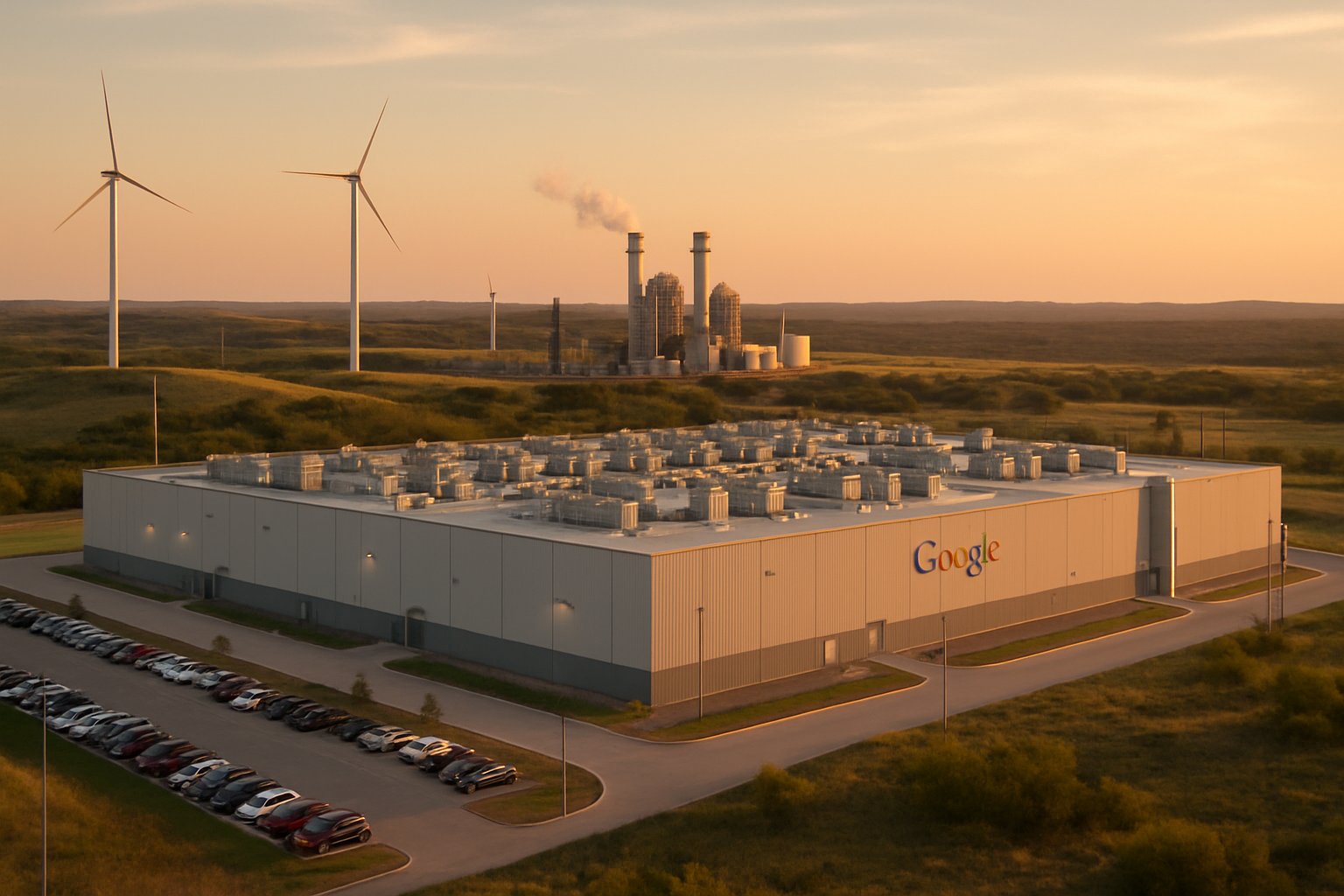
Cleanview uncovered key permit filings that quantify potential emissions approaching 4.5 million tons annually.
Consequently, debate has intensified over how hyperscalers reconcile climate branding with operational realities.
This article dissects the facts, explores competing perspectives, and outlines strategic considerations for energy professionals.
Moreover, readers gain insight into broader industry pivots affecting cloud economics and regulatory planning.
Ultimately, the Goodnight saga exemplifies challenges facing every firm chasing generative AI growth.
Therefore, understanding the intersection of infrastructure, finance, and policy is crucial for maintaining competitive advantage.
AI Demand Reshapes Energy
AI compute needs are exploding.
Consequently, electricity consumption across Data Centers is projected to double within four years.
Interconnection queues remain clogged, delaying renewable projects that once underpinned corporate Carbon Goals.
Therefore, hyperscalers are turning toward on-site gas, nuclear pilots, and long-duration storage.
In contrast, critics see the pivot as a fresh Energy Sustainability Retreat that undercuts public climate narratives.
These trends reveal a hard pivot toward reliability.
Nevertheless, reputational stakes continue rising.
Consequently, detailed project data clarifies the stakes ahead.
Goodnight Campus Project Details
Permit filings show Crusoe seeks 933 megawatts of combined-cycle capacity near Claude, Texas.
Cleanview satellite analysis identified construction activity on at least two Data Centers already.
The application estimates up to 4.5 million metric tons CO2 annually without capture.
Meanwhile, Google confirms a campus partnership but denies signing a binding offtake for the gas plant.
Crusoe cofounder Cully Cavness describes gas as the only scalable option today for latency-critical workloads.
- 933 MW proposed capacity
- 4.5 million tCO2 yearly potential
- $25–$30 billion full campus cost
- Permit No. 182880 filed Jan 30 2026
Additionally, the permit labels the generation “off-grid”, signaling behind-the-meter supply for two initial buildings.
Professionals can sharpen project evaluation using the AI Cloud™ certification.
Analysts argue the scale cements another Energy Sustainability Retreat within Google’s evolving infrastructure portfolio.
The permit reveals substantial emissions exposure.
However, commercial arrangements remain unsettled.
Subsequently, corporate climate targets face renewed scrutiny.
Conflicted Corporate Carbon Goals
Google’s 2025 Environmental Report claims directional progress toward 24/7 clean energy across all regions.
Nevertheless, absolute energy consumption for Data Centers climbed 17 percent year over year.
The ambition-based metric shows 11.5 million tons of company emissions during 2024 operations.
Critics argue on-site gas without robust capture signals another Energy Sustainability Retreat contrary to public Carbon Goals.
In contrast, executives label strategies like Broadwing CCS investments as pragmatic accelerants for emergent decarbonisation technologies.
Moreover, Google stresses investments in fusion, small modular reactors, and long-duration storage to balance risk.
Still, investors watch whether interim gas reliance widens the gap between rhetoric and results.
Each new project invites audits of the Energy Sustainability Retreat narrative across stakeholder groups.
The contradiction between strategy and branding continues widening.
Therefore, transparent metrics will determine credibility.
Meanwhile, industry peers mirror similar decisions, amplifying the pattern.
Industry Trend Towards Power
Microsoft, Chevron and Engine No.1 pursue a 2.5-gigawatt West Texas complex for AI.
Meta and Amazon evaluate modular reactors for future Data Centers, while NextEra promotes hybrid gas plus storage offerings.
Consequently, capacity planners forecast over 55 gigawatts of new firm Power by 2030.
Consultants estimate thirty percent could sit behind-the-meter, bypassing traditional grid approvals.
Moreover, CCS integration remains uncertain because capture economics vary by geography and tax credit eligibility.
Nevertheless, developers cite construction speed and predictable Power pricing as decisive advantages.
Observers warn that multiple projects illustrate a sector-wide Energy Sustainability Retreat challenging earlier Carbon Goals.
Peer activity normalises on-site gas adoption.
Consequently, competitive pressure may escalate emission footprints.
Therefore, stakeholder perspectives merit closer analysis.
Diverse Stakeholder Views Emerge
Local officials praise tax revenues and jobs promised by Goodnight and similar complexes.
Environmental advocates counter that unabated combustion undermines regional health and global Carbon Goals.
Cleanview’s Michael Thomas frames the surge as confirmation of an accelerating Energy Sustainability Retreat across Big Tech.
Consequently, boardrooms must balance reputational risk, regulatory compliance, and uninterrupted Power delivery.
Stakeholders agree reliability is mandatory.
Nevertheless, consensus splits on acceptable emission trade-offs.
Regulation will likely shape final outcomes.
Regulatory Hurdles And Timing
TCEQ opened public comment on Permit No.182880, triggering environmental justice reviews.
EPA precedent suggests large behind-the-meter plants face stringent greenhouse gas best available control technology determinations.
Consequently, legal timelines could stretch beyond commercial targets, raising financing uncertainty.
Developers also monitor evolving IRS guidance on CCS tax credits that influence capture economics.
In contrast, states like Wyoming fast-track nuclear projects, offering alternative firm Power paths.
Therefore, companies pursuing any Energy Sustainability Retreat must anticipate protracted permitting cycles.
Regulatory friction adds cost and delay.
Moreover, mixed federal signals compound strategic complexity.
Executives should distill practical insights now.
Strategic Takeaways For Leaders
Energy leaders must quantify full lifecycle emissions and incorporate realistic scenario planning.
Moreover, diversified portfolios reduce exposure if gas or CCS face unexpected constraints.
Teams should embed flexibility within Power procurement contracts, enabling fuel or technology switching.
Professionals can validate design assumptions by pursuing continuous education and recognized credentials.
Hence, many enroll in the AI Cloud™ program to deepen due-diligence expertise.
Consistent assessment prevents unplanned Energy Sustainability Retreat escalations when market conditions shift.
Actionable planning safeguards competitiveness.
Consequently, informed talent remains a decisive asset.
We now consolidate overarching themes.
Conclusion And Next Steps
Google’s Goodnight partnership encapsulates a pivotal moment for hyperscale infrastructure strategy.
AI workloads require dependable Power, yet corporate Carbon Goals still command investor attention.
Consequently, firms juggle on-site gas, emerging nuclear, and CCS to balance reliability with reputation.
The Energy Sustainability Retreat narrative will persist until transparent metrics validate absolute emission reductions.
Nevertheless, proactive leaders that master procurement complexity and align messaging can thrive in the evolving landscape.
Explore further insights and certifications to strengthen your strategic edge today.


