

AI CERTS
2 hours ago
Federal AI Overrule Sparks National Governance Clash
White House Strategy Push
December’s executive order launched the plan’s first track. Subsequently, it instructed agencies to inventory and challenge “onerous” state rules. Early January saw DOJ form an AI Litigation Task Force to operationalize the Federal AI Overrule. Moreover, the March legislative blueprint urged Congress to codify supremacy while carving narrow exceptions. David Sacks framed the policy as essential for national leadership. In contrast, civil-liberty groups warned the move undermines local democracy.
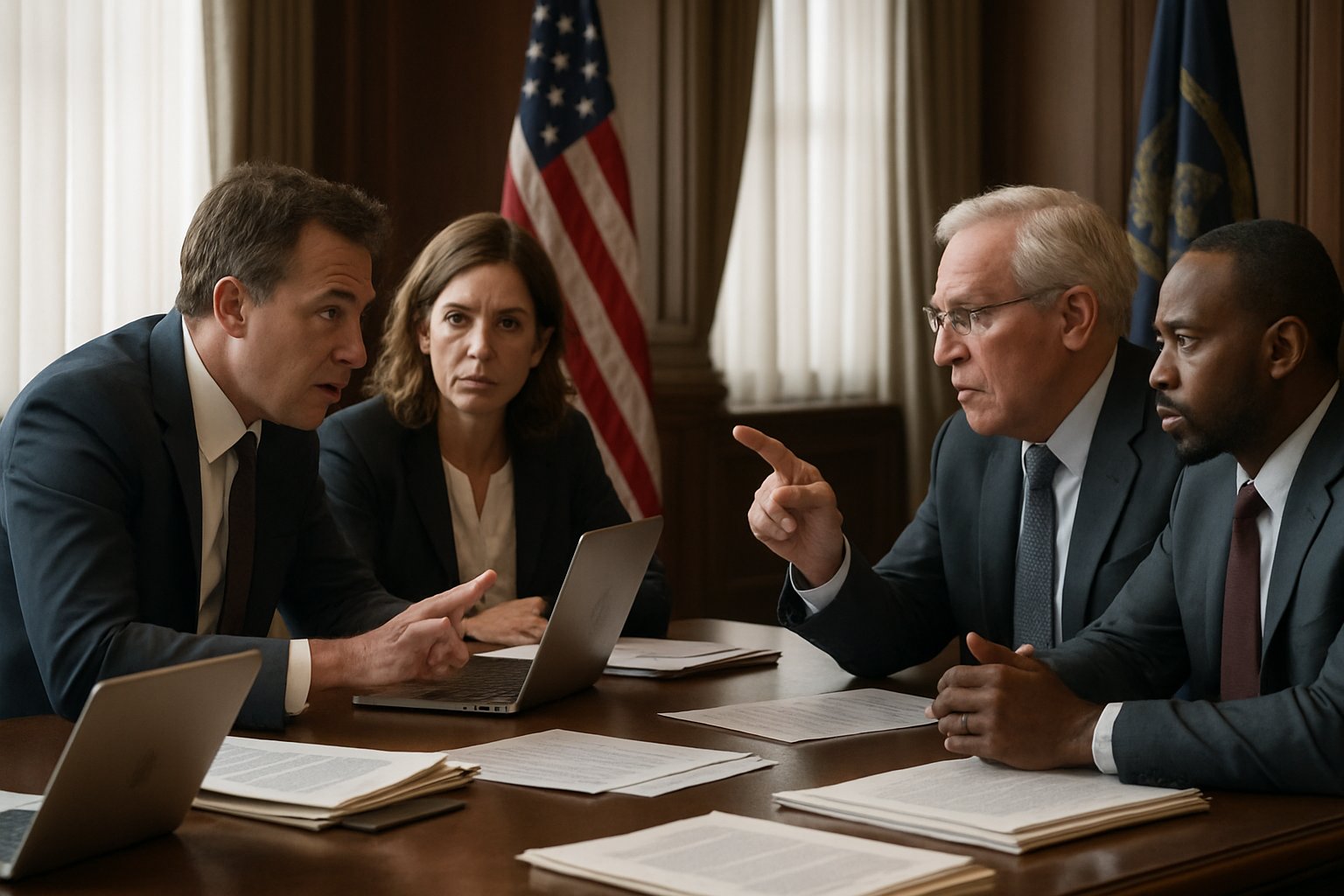
Numbers underscore the stakes. NCSL logged about 1,200 AI bills in 2025. Roughly 38 states enacted near 100 measures. Therefore, any preemption could disrupt a sprawling regulatory mosaic. These facts set the scene. Nonetheless, deeper legal levers reveal how Washington hopes to prevail.
These developments establish aggressive intent. Nevertheless, understanding the legal mechanics is crucial before judging viability.
Key Federal Legal Levers
The administration wields three core tools. First, the executive order directs agencies to condition $21 billion in BEAD non-deployment funds on state compliance. Consequently, governors face budget pressure. Second, the DOJ Task Force will test Dormant Commerce Clause and Supremacy arguments in federal courts. Additionally, officials hint at First Amendment theories attacking compelled model disclosures. Third, the FTC and FCC must craft policy statements that implicitly preempt state mandates.
Legal analysts remain skeptical. Skadden notes an executive order cannot itself nullify statutes. Moreover, Spending Clause precedents limit coercive grant conditions. Ropes & Gray predicts lengthy litigation over every lawsuit the Task Force files. Therefore, companies must still follow California’s stringent transparency law and similar frameworks elsewhere.
These mechanisms provide multiple attack vectors. However, each vector carries constitutional risk, which fuels mounting state resistance.
State Resistance Grows Fast
California officials condemned the Federal AI Overrule within hours of the blueprint’s release. Gavin Newsom’s spokesperson labeled the proposal a “power grab.” Furthermore, Colorado lawmakers filed a joint resolution asserting state authority over algorithmic fairness. Texas took a different tack, threatening to boycott federal broadband grants if conditions materialize.
The National Conference of State Legislatures amplifies those objections. Consequently, bipartisan leaders accuse Washington of chilling Innovation by stifling local experimentation. Nevertheless, some moderate states signal openness if federal standards prove robust.
Early pushback demonstrates that litigation will not be one-sided. Moreover, coordinated defense strategies are forming among attorneys general.
States are digging in. However, businesses remain caught between divergent rulebooks and looming lawsuits.
Business Stakes And Innovation
Tech executives crave certainty. OpenAI warns investors that inconsistent data governance slows global deployment. Meanwhile, small startups fear compliance costs more than future fines. Consequently, lobbyists aggressively support the Federal AI Overrule. They argue one national regime will accelerate Innovation, boost venture capital flows, and cut legal overhead.
Opponents counter with consumer risk statistics:
- Deepfake scams rose 35% in 2025, NCSL reports.
- Algorithmic bias cases exceeded 150 federal filings last year.
- California documented 400 privacy breaches tied to AI analytics.
Therefore, advocates insist stronger state guardrails remain vital. Additionally, civil groups say uniformity without robust rights invites disaster.
Corporate pressure intensifies congressional debate. Nevertheless, unresolved constitutional questions may decide the final outcome.
Profits hinge on clarity. Yet, constitutional headwinds could slow the overrule drive.
Looming Constitutional Showdown Ahead
Legal scholars foresee a monumental Constitutional Conflict. The Supreme Court has never tested AI preemption directly. Moreover, Spending Clause jurisprudence from NFIB v. Sebelius limits federal coercion. Consequently, conditioning BEAD funds risks defeat. Additionally, Dormant Commerce arguments require proof that state regimes burden interstate trade more than they protect residents.
Skadden’s memo stresses continued compliance. “The order does not itself suspend existing state AI laws,” partners wrote. Furthermore, Just Security highlights potential First Amendment pitfalls if Washington claims certain disclosure mandates distort truthful speech.
Therefore, early lawsuits may yield split circuit opinions, prompting rapid Supreme Court petitions. Meanwhile, Congress could moot many cases by passing explicit preemption language.
Constitutional uncertainty clouds every forecast. However, policymakers still race toward impending deadlines.
Watching Next Policy Milestones
Several dates merit tracking:
- Commerce evaluation publication—still pending after the March deadline.
- FTC Section 5 policy statement—expected this summer.
- First DOJ Task Force lawsuit—possible within weeks of the Commerce list.
- House markup of the national bill—tentatively scheduled for September.
Additionally, states may file preemptive suits once grant conditions appear. Consequently, court dockets could flood quickly. Industry groups plan amicus briefs supporting the Federal AI Overrule. In contrast, privacy advocates prepare counters.
Professionals seeking policy expertise can bolster credentials through the AI Policy Maker™ certification. Moreover, hiring managers increasingly demand formal governance training.
These milestones shape near-term strategy. Nevertheless, final resolution will likely stretch beyond 2027.
Final Takeaways Forward Path
The White House wager on a sweeping Federal AI Overrule aims to replace patchwork oversight with one code. States, led by California, promise fierce defense in what could become the century’s defining Constitutional Conflict. Businesses cheer potential uniformity yet dread prolonged limbo. Meanwhile, the innovation economy rides a knife edge.
Consequently, every stakeholder should monitor agency notices, court filings, and legislative markups. Moreover, professionals can prepare by mastering policy nuance through targeted credentials. Ultimately, the battle’s outcome will dictate how American Innovation scales and how citizens are protected.
Stay informed, evaluate compliance gaps, and consider expanding expertise with accredited programs. The governance landscape may shift rapidly; proactive learning will safeguard strategic advantage.


