

AI CERTS
2 hours ago
Energy Innovation Reshapes AI-Ready Nuclear Power
Moreover, vendors promise shorter build schedules and lower operating costs. Critics, meanwhile, warn that assurance, cybersecurity, and public trust must keep pace. This article unpacks the momentum, the pitfalls, and the opportunities for professionals navigating this fast-moving frontier.
AI Accelerates Reactor Timelines
TerraPower and SoftServe recently unveiled an NVIDIA Omniverse platform for the Natrium small reactor. The company says site engineering that once lasted 18 months now finishes in eight weeks. Furthermore, Idaho National Laboratory and NVIDIA target a two-times schedule acceleration across multiple designs. These claims remain unverified externally; nevertheless, they illustrate how simulation convergence, generative design, and automated documentation can compress critical paths. Energy Innovation therefore promises cheaper financing because developers carry interest for shorter periods.
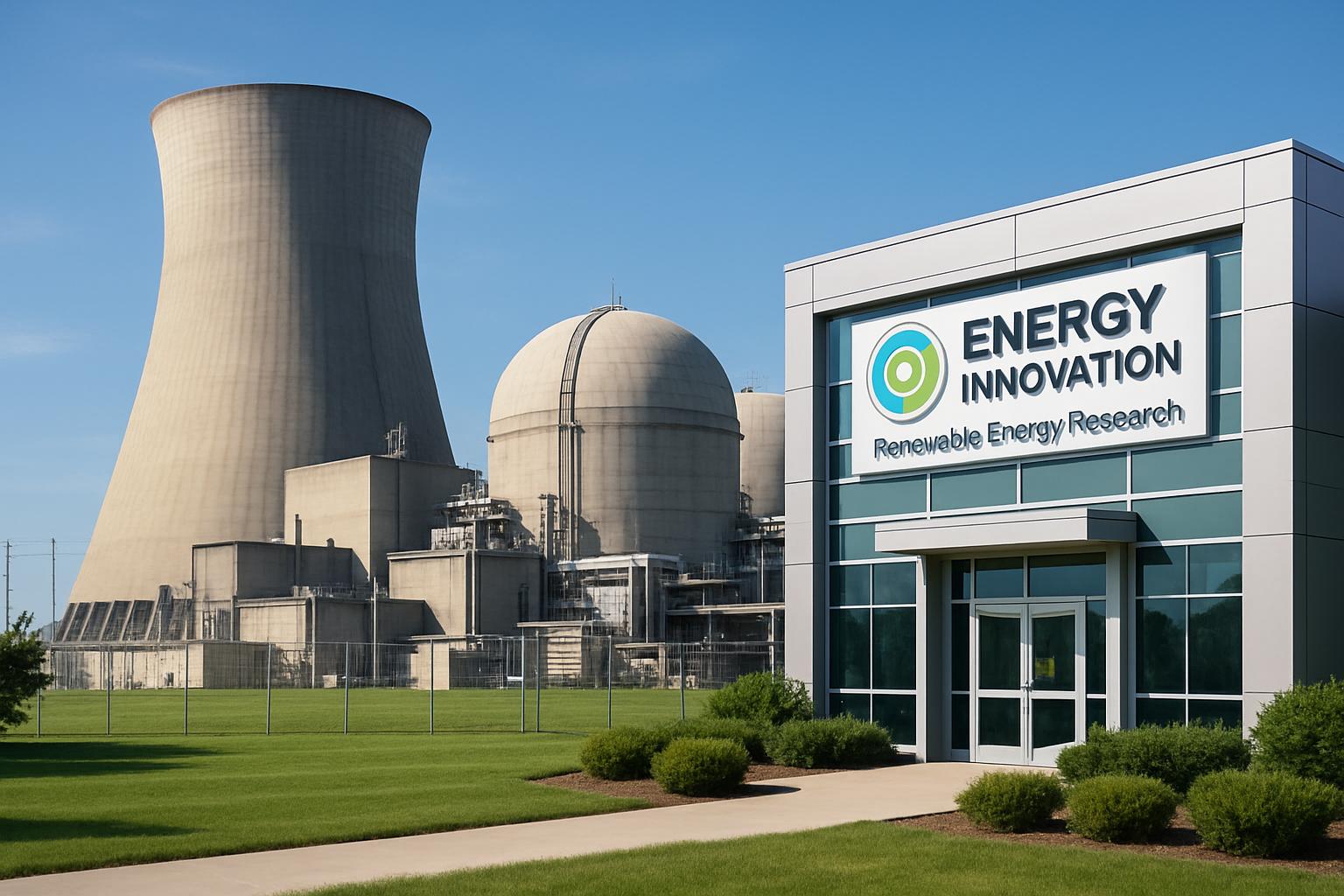
However, regulators still review every calculation. Project teams must provide explainable evidence before concrete is poured. These realities temper the boldest timelines. Yet momentum is undeniable. These developments demonstrate why investors are increasing bets on advanced nuclear ventures.
The acceleration narrative sets expectations. However, project finance hinges on proof.
Digital Twins Enhance Safety
Digital twins create virtual, sensor-fed replicas of physical reactors. They forecast equipment degradation before alarms ring. Argonne’s graph-neural-network models detected pump anomalies weeks in advance during lab tests. Additionally, PG&E’s Diablo Canyon plant now uses a retrieval-augmented AI system to surface procedures within seconds. Operators gain rapid insight without touching control systems, preserving safety margins.
Moreover, twins support licensing by generating validated accident scenarios faster than legacy codes. Some Gen-IV developers intend to maintain a living model through the full plant life cycle. Consequently, maintenance schedules tighten, spare parts stock falls, and radiation exposure drops for staff. Energy Innovation thus links digital trust with physical reliability.
These capabilities strengthen preventive defenses. Still, explainability remains essential for regulator acceptance.
Hyperscalers Drive Market Demand
Google’s master agreement with Kairos Power secured multiple fluoride-salt reactors for data centers. Amazon followed by backing X-energy’s Xe-100 units. Meanwhile, Microsoft and Meta scout similar deals. DOE projects that U.S. data-center demand may rise by up to 580 TWh before 2028. Consequently, hyperscalers consider onsite nuclear generation a hedge against volatile grids.
Furthermore, federal initiatives such as the Genesis Mission tie AI compute growth directly to new nuclear capacity. Venture capital aligns with this vision; X-energy closed a $700 million round in 2025. These dollars fuel R&D on advanced materials, high-temperature coolants, and autonomous inspection drones. Energy Innovation therefore benefits from unprecedented commercial pull.
Corporate demand provides revenue certainty. However, execution risk still looms large for developers.
Regulators Craft Assurance Pathways
The Nuclear Regulatory Commission released an AI strategic plan in 2025 and continues gap workshops. Moreover, the agency flags model validation, data governance, and cybersecurity as principal hurdles. Consequently, early deployments restrict AI to advisory roles with humans firmly in the loop. NRC leaders say clear guidance will emerge iteratively through pilot applications.
International bodies echo this caution. The OECD-NEA urges standard roadmaps and cross-border learning to certify machine-learning tools. Additionally, national labs coordinate shared testbeds to benchmark algorithms under realistic operating conditions. Energy Innovation thrives only when oversight keeps pace with code updates.
Regulatory progress builds confidence. Nevertheless, unclear timelines still worry investors.
Persistent Risks And Challenges
Several barriers could slow adoption:
- Legacy analog systems resist integration with modern AI stacks.
- Black-box models challenge explainability expectations for safety.
- Expanded digital surfaces increase cyberattack vectors.
- High-fidelity data sets raise proliferation concerns.
- Public perception remains fragile after past nuclear incidents.
Moreover, cost savings depend on accurate vendor projections. Independent audits often lag flashy demos. In contrast, any breach or false alarm could erode fragile political goodwill. Therefore, strong governance, transparent metrics, and robust fault tolerance remain non-negotiable. Energy Innovation carries promise only when paired with disciplined risk management.
These obstacles underscore the complexity of nuclear digitalization. However, targeted mitigation strategies are emerging.
Strategic Roadmap For Adoption
Industry coalitions propose phased deployment. Phase one limits AI to documentation and predictive alerts. Phase two introduces closed-loop control in non-safety systems after extensive sandbox testing. Subsequently, autonomous features may enter approved reactors once assurance frameworks mature. Developers also invest in resilient materials able to exploit real-time condition monitoring, thereby extending component life.
Furthermore, shared data standards reduce duplication across vendors and regulators. National labs spearhead open reference models so each license submission builds on validated baselines. Companies can accelerate workforce readiness by earning specialized credentials. Professionals can enhance their expertise with the AI+ Quantum Specialist™ certification.
A phased approach aligns innovation with oversight. Consequently, stakeholder confidence grows incrementally.
Actionable Steps For Professionals
Engineers, analysts, and policy experts can position for this surge:
- Master digital-twin software and multiphysics simulation.
- Study nuclear-grade cybersecurity and data provenance methods.
- Engage with NRC workshops to understand compliance roadmaps.
- Track emerging AI-enhanced materials that raise efficiency.
- Pursue cross-disciplinary certificates, including the linked quantum credential.
Moreover, joining industry consortia like the GENESIS Mission provides visibility into fundable pilot opportunities. Energy Innovation careers reward adaptable, evidence-driven professionals.
These actions foster personal growth. Furthermore, they supply the talent pipeline companies urgently need.
Conclusion: AI-assisted advanced Nuclear projects are gaining traction because they promise faster builds, lower costs, and stronger safety margins. However, model assurance, cyber resilience, and regulatory clarity remain critical. Consequently, professionals who combine technical depth with compliance awareness will shape the next decade of reactors. Keep learning, stay engaged, and explore specialized credentials to lead the ongoing wave of Energy Innovation.


