

AI CERTS
2 hours ago
EmTech 2026: Unified Intelligence in Action
However, buzz alone cannot justify budgets. Decision makers demand concrete sessions, reliable peers, and measurable outcomes. The freshly published agenda meets that demand with enterprise case studies, security deep dives, and orchestration blueprints. Moreover, discounted livestream tickets broaden access for remote teams.
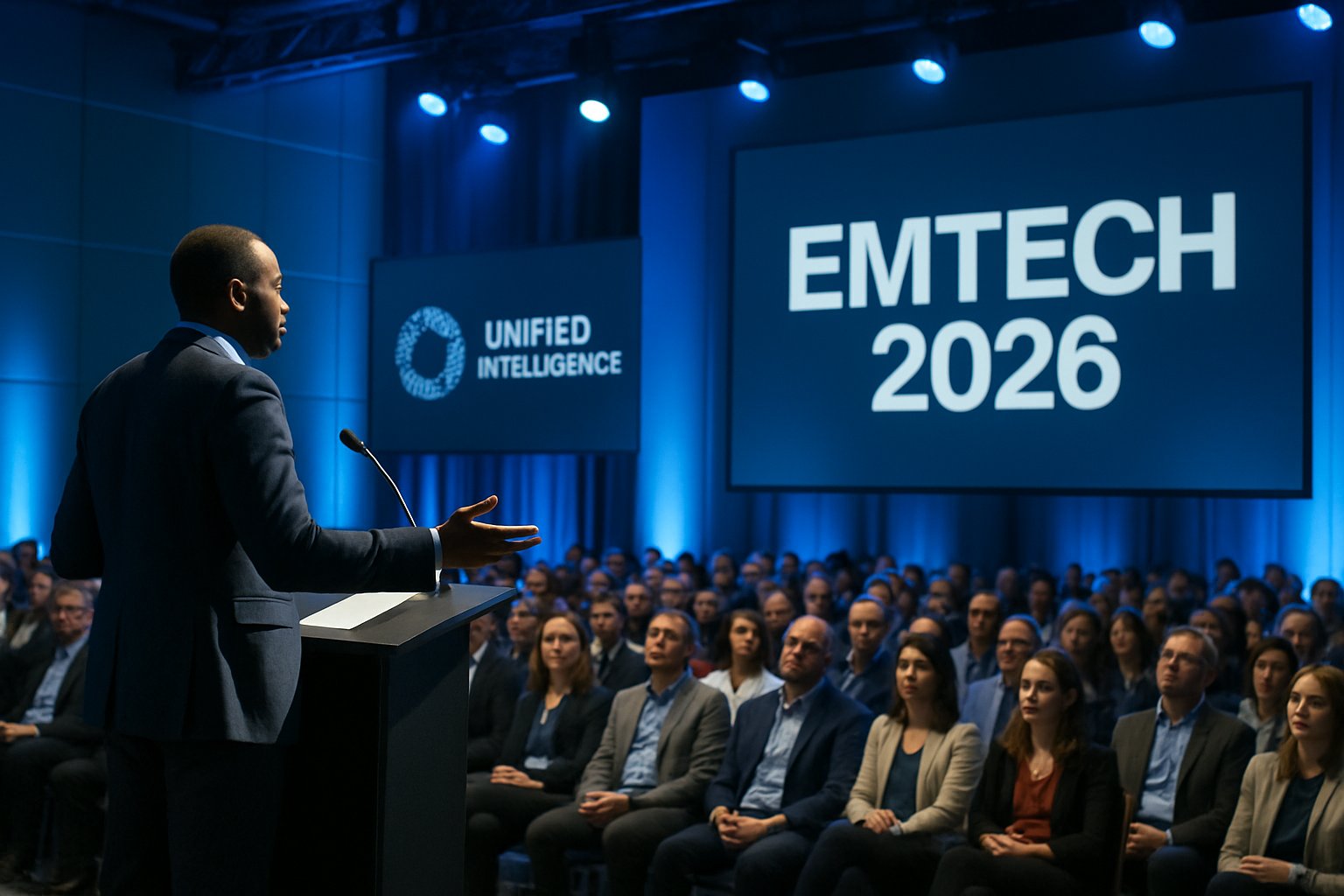
This briefing walks through critical themes, session highlights, and practical logistics. Additionally, it explains why Unified Intelligence matters for every enterprise function. Read on to prepare, register, and integrate AI responsibly.
The Great Integration Context
McKinsey estimates generative AI could add up to four trillion dollars annually. Consequently, executives recognise integration as the true bottleneck. MIT editors echo that sentiment during the conference prologue.
They argue that invention headlines fade while operational gaps widen. Therefore, The Great Integration chapter sets the tone. Discussions cover reliability, hallucinations, and platform standardisation. Meanwhile, agent frameworks mature rapidly, offering modular capabilities for scheduling, memory, and external tool calls.
These conversations clarify baseline challenges. However, they also chart a roadmap toward Unified Intelligence that links data, models, and decisions. The context primes attendees for deeper dives ahead.
Integration dominates strategic talk because infrastructure remains immature. Consequently, leaders crave operational guidance before scaling further. Next, we examine the core drivers behind Unified Intelligence adoption.
Core Unified Intelligence Drivers
Why has Unified Intelligence become the rallying cry? Firstly, productivity gains entice boards seeking margin expansion. Secondly, agentic automation reduces cycle times across design, marketing, and support.
Moreover, reliable orchestration lowers risk, satisfying security chiefs worried about shadow models. In contrast, fragmented tools inflate maintenance overhead. Therefore, organisations pursue platform consolidation to streamline monitoring.
Unified Intelligence also unlocks revenue engines. For example, MIT’s session on Revenue Machines details conversion uplifts using predictive targeting. Additionally, McKinsey’s trillions figure strengthens the commercial case.
Productivity, security, and revenue mutually reinforce the Unified Intelligence agenda. Consequently, demand accelerates across every enterprise vertical. The next section maps these drivers to concrete agenda moments.
EmTech Agenda Highlights Overview
The published agenda spans three immersive days at the MIT Media Lab and online hub. Sessions open with Donna Morris discussing production rollouts at Walmart. Subsequently, Sulman Choudhry outlines platform trajectories inside OpenAI. Editorial moderators encourage audience polling to surface hidden deployment pain points.
Opening Day Core Themes
Opening panels dissect hallucination risks, agentic workforces, and data fabrics. Moreover, editorial staff deliver '10 Things That Matter in AI Right Now' to frame debate. These insights ground Unified Intelligence in immediate operational realities.
- Agents at Work: multi-agent orchestration blueprints.
- Revenue Machines: funnel analytics boosting sales conversion.
- The New AI Stack: securing models and supply chains.
- Imagination to Implementation: creative pipelines at scale.
Security Stack Focus Areas
Security leaders, including Palo Alto Networks, unpack model supply-chain threats. In contrast, HPE experts reveal governance patterns for sovereign deployments. Consequently, attendees leave with actionable checklists.
The agenda blends visionary debate with pragmatic guidance. Therefore, participants align content with internal roadmaps fast. We must now confront the organizational obstacles that hinder adoption.
Key Enterprise AI Challenges
Large enterprises wrestle with legacy processes and siloed data. However, agentic systems demand unified, governed repositories. Moreover, regulatory scrutiny forces transparent model lineage.
Security concerns add pressure. Consequently, Michael Spisak’s session 'Securing the New AI Stack' draws heavy interest. Additionally, attendees want breach playbooks, not marketing slides.
Talent gaps form the third barrier. In contrast to startups, many enterprises lack integrated MLOps teams. Therefore, staff upskilling becomes as vital as tooling.
Professionals can enhance their expertise with the Chief AI Officer™ certification. Consequently, graduates bring governance rigor and strategic clarity.
Data, security, and talent consistently delay Unified Intelligence outcomes. Nevertheless, structured skills pathways offer credible relief. Our following section explores those pathways.
Strategic AI Skills Pathways
MIT Technology Review dedicates workshops to change management and organizational design. Furthermore, Kellie Romack explains how ServiceNow molds an agentic workforce. These lessons translate research into repeatable playbooks.
Learning does not end onsite. Livestream archives remain available for six months. Additionally, the certification mentioned earlier deepens executive fluency.
- Governance frameworks aligned with global regulations.
- Cost models balancing cloud, talent, and risk.
- Communication scripts for board level reporting.
Upskilled leaders accelerate adoption and de-risk investments. Consequently, training supports the broader Unified Intelligence vision. Finally, we review registration logistics.
Essential Practical Registration Details
Registration is open on the event portal. Hybrid passes cost roughly $3,195 during the early window. However, virtual access alone costs $995, easing budget constraints. Subsequently, late registrants face higher fees.
Group, nonprofit, and student discounts apply at checkout. Additionally, press passes remain available through application. Early reservations secure in-person seats because capacity is limited.
International attendees should verify visa lead times. Meanwhile, the virtual hub supports live Q&A and on-demand replay. Therefore, global teams can still engage deeply.
Clear pricing and formats reduce planning friction. Consequently, executives can focus on value, not logistics. We close with final reflections.
EmTech AI 2026 crystallises the shift from isolated pilots to integrated, revenue-driving systems. Leaders will hear candid lessons on data fabrics, security, agentic automation, and cultural change. Moreover, the blended format balances budget realities with interactive depth. The Chief AI Officer™ certification and six-month content archive extend learning beyond three conference days. Therefore, decision makers who register early will exit with actionable roadmaps, peer networks, and renewed competitive momentum. Secure your seat today and transform AI aspirations into operational success.


