

AI CERTS
4 hours ago
Economic Transition Spurs Safer Wire Belts in Food Manufacturing
In contrast, equipment builders in Austin tout simplified stainless systems that safeguard income during volatile markets. Consequently, executives now ask a hard question: do our mesh belts invite rust contamination risk? This article reviews emerging corrosion data, market forecasts, and practical mitigation steps. Each section follows strict engineering and food-safety guidance so readers can act with confidence.
Wire Belt Rust Overview
Open-mesh stainless belts dominate ovens, dryers, and coolers because plastics fail under extreme heat. However, stainless is not invincible. Chlorides, pooled chemicals, and carbon-steel contamination can breach its oxide layer. Consequently, pitting forms and orange stains appear on food contact surfaces.
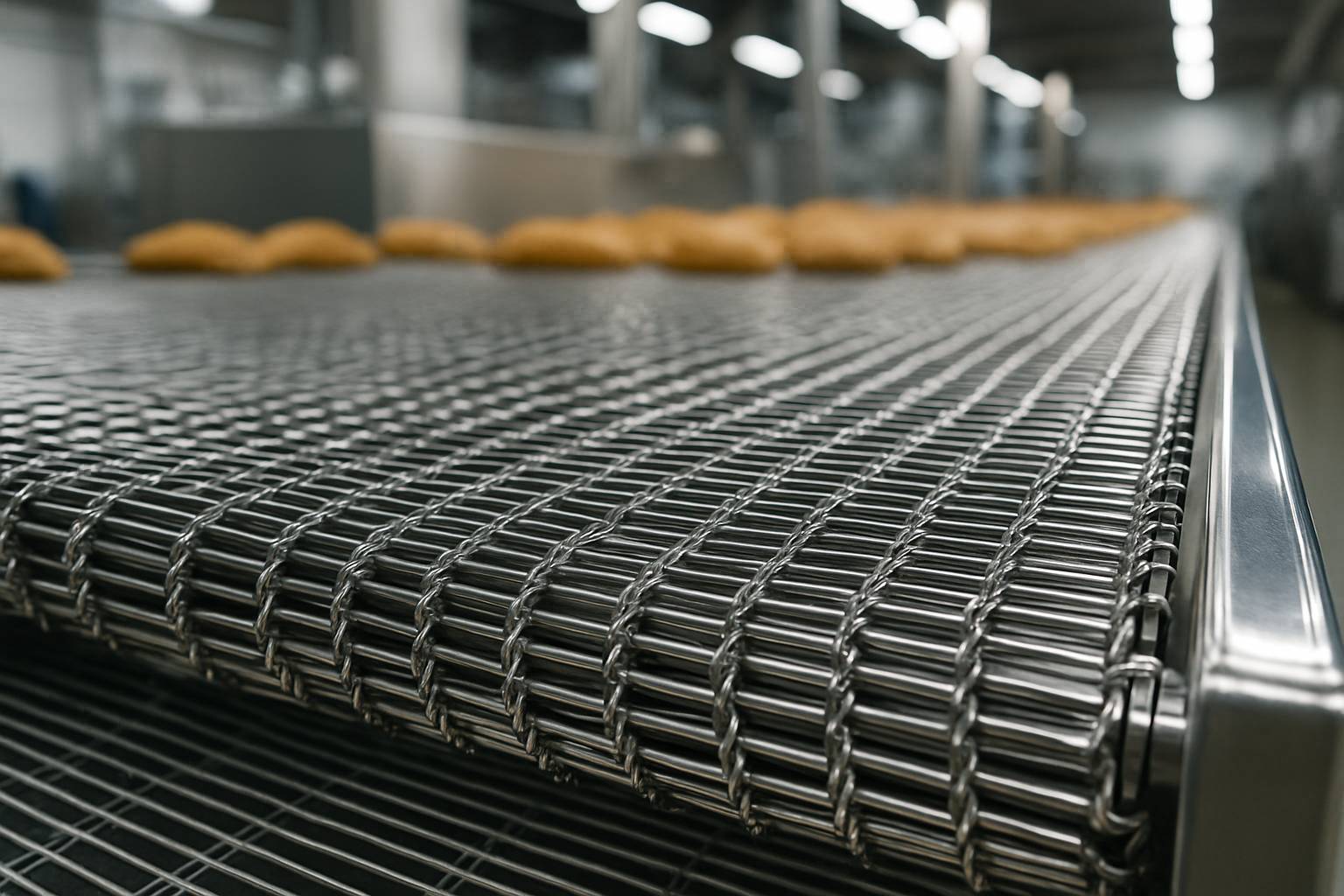
HACCP bulletins warn that tiny wire fragments may escape metal detectors when oriented lengthwise. Moreover, regulatory agencies treat any visible rust as an automatic hygiene non-conformance. Therefore, proactive risk control remains essential for processors seeking stable income streams.
Rust on mesh belts threatens safety and reputation. Nevertheless, market forces still favor metal designs due to heat tolerance, leading into our next section.
Market Growth Forces Today
Analysts place the stainless wire-belt market near USD 1.4 billion for 2026. Moreover, reports expect 6 percent annual growth through 2032. Silicon Valley investors cite connected sensors and predictive maintenance as catalysts. Meanwhile, Austin manufacturers promote local supply chains that reduce logistics emissions. These trends sit within a broader Economic Transition toward automated, resilient food production.
However, growth depends on convincing finance teams that rust mitigation costs less than recalls. Consequently, vendors highlight citric passivation, electropolishing, and smart inspection cameras. Additionally, marketing emphasises better worker income when production avoids downtime.
Demand for stainless belts remains strong despite risk factors. Subsequently, we examine how this Economic Transition reshapes plant design priorities.
Economic Transition Manufacturing Impact
Digital transformation budgets now link directly to economic outcomes. Moreover, board members frame every capital request within the current Economic Transition narrative. They ask whether new conveyors advance automation goals, cut waste, and protect revenue.
In contrast, some Silicon Valley start-ups push all-plastic belts to dodge metal detection issues. However, meat processors in Austin rebut that plastics deform under radiant heat and raise microbial risk. Consequently, hybrid layouts emerge, mixing wire zones in ovens with modular plastic elsewhere.
Meanwhile, workforce expectations shift. Younger technicians demand higher income along with safer, cleaner equipment. Therefore, selecting rust-resistant belts supports retention as well as compliance.
Economic Transition pressures span finance, labour, and safety mandates. Nevertheless, material choice remains the first technical decision, as the next section explains.
Material Choice Essentials Explained
Grade selection dictates corrosion performance. Moreover, DNC Automation recommends 316L for chloride or steam exposure. In contrast, 302 or 304 suffice for dry bakery lines. Consequently, engineers should map chemical loads before ordering belts.
Citric passivation restores chromium-rich films after welding. Additionally, electropolishing smooths rough edges that initiate pitting. Processors embracing the Economic Transition toward net-zero waste often bundle these treatments into commissioning specs.
- Select 316L where salt spray occurs.
- Verify vendor passivation certificates meet ASTM A967.
- Segregate carbon-steel tools from stainless surfaces.
- Budget for periodic belt replacement within predicted fatigue life.
Professionals can deepen project management skills through the AI Project Manager™ certification. Consequently, teams align technical upgrades with strategic funding cycles.
Proper alloy and finishing curb future failure costs. Subsequently, maintenance protocols keep those surfaces intact.
Maintenance Best Practices Checklist
Daily sanitation procedures must avoid carbon-steel brushes. Instead, choose nylon or food-grade abrasives. Furthermore, rinse caustic cleaners thoroughly to prevent chloride pooling.
Passivation verification using copper-sulfate tests should follow any on-site welding. Moreover, create controlled tool cribs to prevent cross-contamination. Consequently, inspection rounds should log black residue, pitting, and wire thinning.
Meanwhile, smart cameras now count broken strands and alert planners. This technology interests Silicon Valley funds seeking scalable analytics. Austin integrators package similar sensors with local support contracts, boosting recurring income.
Consequently, planned downtime drops, and belt life extends beyond expected metrics.
Furthermore, auditors cite Economic Transition indicators when rating operational resilience.
Sound maintenance defers capital expense and supports continuous safety. Nevertheless, detection layers remain the final defense, discussed next.
Detection And Prevention Methods
Magnetic separators capture ferrous debris before packaging. Additionally, metal detectors must align with belt paths to reduce orientation blind spots. HACCP materials emphasise wire fragments lying lengthwise often evade coils.
X-ray units add redundancy; however, they carry high capital cost. Therefore, processors balancing Economic Transition goals and budget may prioritize targeted use in high-risk lines.
Moreover, periodic manual checks remain irreplaceable. Trained staff can spot discoloration long before sensors trip. Consequently, culture and technology must work together.
Passivation Process Key Steps
Firstly, clean parts with alkaline foam. Secondly, immerse stainless in 4-10 percent citric acid at 60 °C. Subsequently, rinse with high-purity water and dry quickly. Finally, validate surface chromium using iron indicators.
Layered detection plugs gaps that no single tool can close. Consequently, organisations preserve quality and protect revenue during expansion.
Wire-mesh belts remain indispensable for heat, drainage, and durability. Moreover, rust risks are real yet manageable through correct alloy, passivation, maintenance, and detection. The ongoing Economic Transition compels factories in Silicon Valley, Austin, and beyond to justify every capital move. Consequently, leaders who link hygiene upgrades to stable income secure competitive advantage. Professionals seeking structured methods can pursue the AI Project Manager™ credential to align projects with strategic metrics. Act now, audit your belts, and implement the steps outlined here for safer, more profitable operations.


