

AI CERTS
2 hours ago
Defense Tech funding reshapes European autonomy
This article unpacks the funding mechanics, partnership goals, market context, and policy debates. Additionally, it highlights career pathways for professionals eager to shape next-generation Defense Tech. Read on for data-driven insights and practical upskilling resources.
Funding Round Signals Shift
Funding details clarify the scale behind the headlines. However, Harmattan closed the Series B at $200 million, lifting total capital to roughly $242 million. Consequently, the post-money valuation reached €1.4 billion, giving Europe its latest defense unicorn.
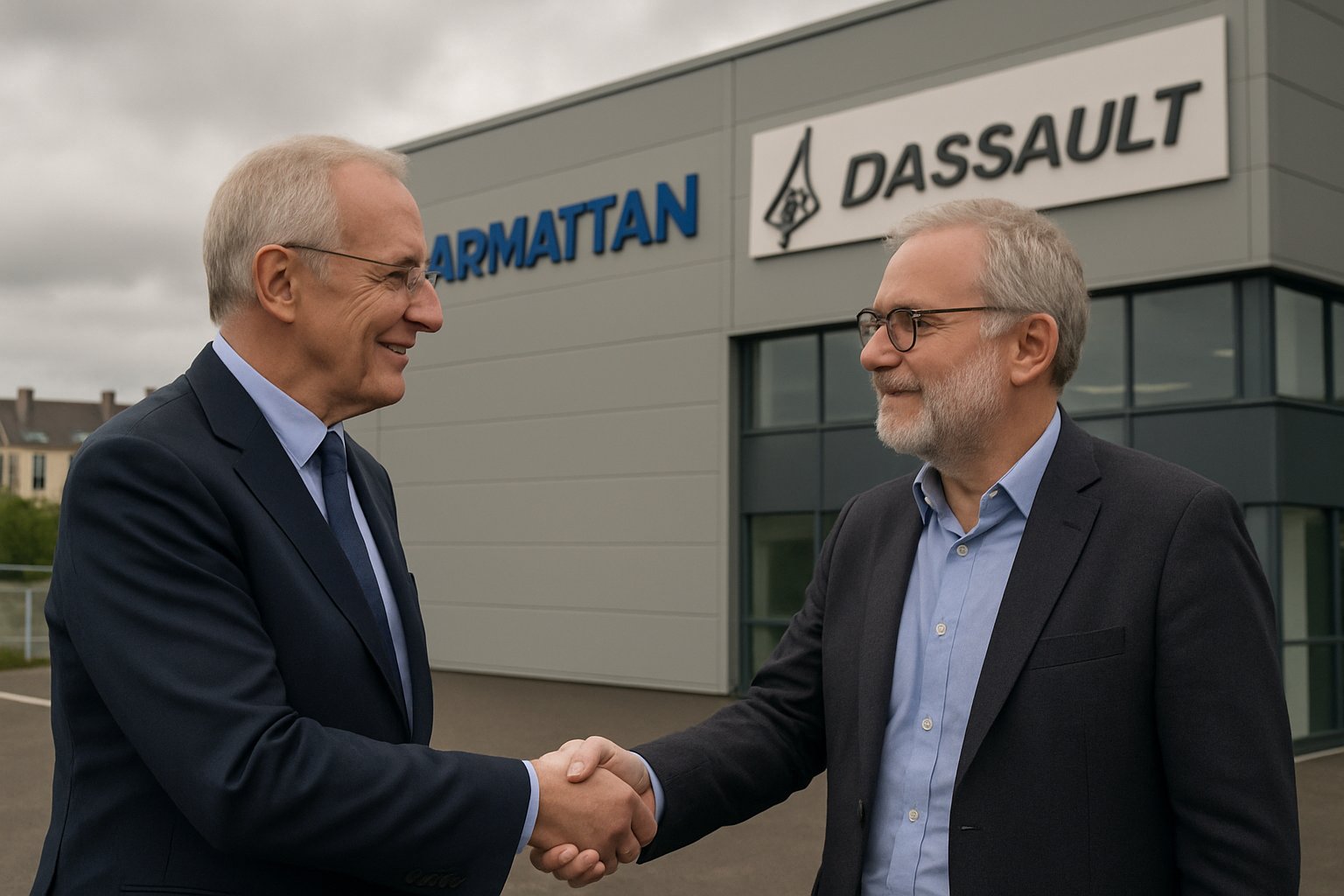
- Lead investor: Dassault Aviation
- Round size: $200 million
- Pre-existing funding: $42 million
- Employees: about 130
- Notable orders: 3,000 UK, 1,000 France units
These figures demonstrate significant momentum. Moreover, they signal Defense Tech capital flows are scaling within continental markets. Next, we examine how the partnership structure underpins that momentum.
Partnership Strategy Details
Dassault entered the syndicate to integrate controlled autonomy into Rafale F5 fighters and loyal wingman drones. Additionally, Harmattan will supply AI stacks that comply with stringent aviation safety cases.
Meanwhile, the companies created joint engineering teams near Bordeaux. In contrast, earlier collaborations often relied on loose licensing agreements. Therefore, the new structure includes board observation rights for Dassault and multi-year procurement options.
Strategic alignment accelerates product integration and certifiability. However, competitive forces shape the surrounding market landscape.
Market Context and Competition
Europe’s autonomous systems market has heated rapidly. Consequently, startups from Sweden, Germany, and France race to meet escalating procurement demand.
Harmattan positions itself against American drones specialists like Anduril and Shield AI. Moreover, the Dassault partnership offers privileged airframe access, a rare advantage among peers.
Competitive intensity forces constant innovation. Subsequently, European sovereignty advantages become pivotal differentiators.
Opportunities For European Sovereignty
French leaders frame the deal as a sovereignty milestone. President Macron stated it strengthens armed-forces technological superiority and the economy.
Furthermore, the financing supports domestic production of interception drones and electronic-warfare pods. Consequently, supply chains remain inside France, limiting exposure to export controls.
Broader industrial benefits include skills retention and ecosystem clustering. Nevertheless, ethical and policy debates shadow these opportunities.
Risks And Policy Questions
Autonomous weapons invite scrutiny from NGOs and multilateral bodies. However, Harmattan emphasizes “controlled autonomy” with human oversight during lethal actions.
Regulators still require clarity on audit trails, failsafes, and certification standards. Nevertheless, Italy and France recently proposed joint guidelines, signaling incremental progress.
Program friction also looms inside the broader Future Combat Air System timeline. In contrast, the prime must harmonize this venture with Airbus partners, a delicate balance.
These challenges highlight policy gaps. Therefore, professionals should track evolving compliance frameworks.
Career And Skill Pathways
Demand for qualified talent rises alongside investment. Consequently, engineers, policy analysts, and project leads now explore specialized Defense Tech credentials.
Professionals can enhance their expertise with the Chief AI Officer™ certification. Additionally, graduates gain strategic planning, governance, and risk-mitigation skills relevant to autonomous drones programs.
Meanwhile, European universities are expanding short courses on military AI ethics. Therefore, upskilling remains a competitive advantage for Defense Tech job seekers.
Continued education supports responsible innovation. Next, we assess near-term scenario projections.
Outlook For 2026-2028 Period
Analysts forecast production ramping within 18 months. Moreover, early unit deliveries could validate performance metrics for Rafale F5 formations and cooperative drones swarms.
Subsequently, revenues may compound through follow-on contracts across NATO and Asia-Pacific customers. Consequently, Defense Tech valuations could trend upward if risk management keeps pace.
Momentum appears sustainable yet contingent on export approvals. Finally, we conclude with practical takeaways.
Conclusion And Next Steps
The $200 million round underscores how Defense Tech momentum is reshaping European industry. Moreover, sovereign production and controlled autonomy signal a maturing marketplace. Consequently, investors watch valuation multiples and export clearances with equal intensity. Meanwhile, developers face strict ethical reviews that will define long-term Defense Tech adoption.
Professionals who master AI governance, safety testing, and program management will lead upcoming Defense Tech initiatives. Therefore, consider pursuing advanced certifications and stay informed as Defense Tech ecosystems evolve. Continuous learning ensures readiness for emerging policy shifts.


